Jordan's World Cup 2026 opener against Austria becomes a referendum on whether Middle Eastern football can convert promise into points
Jordan scored inside the 50th minute against Austria in its World Cup 2026 group-stage opener — a result that, whatever the final score, settles once and for all whether the region can translate qualifying promise into tournament points.
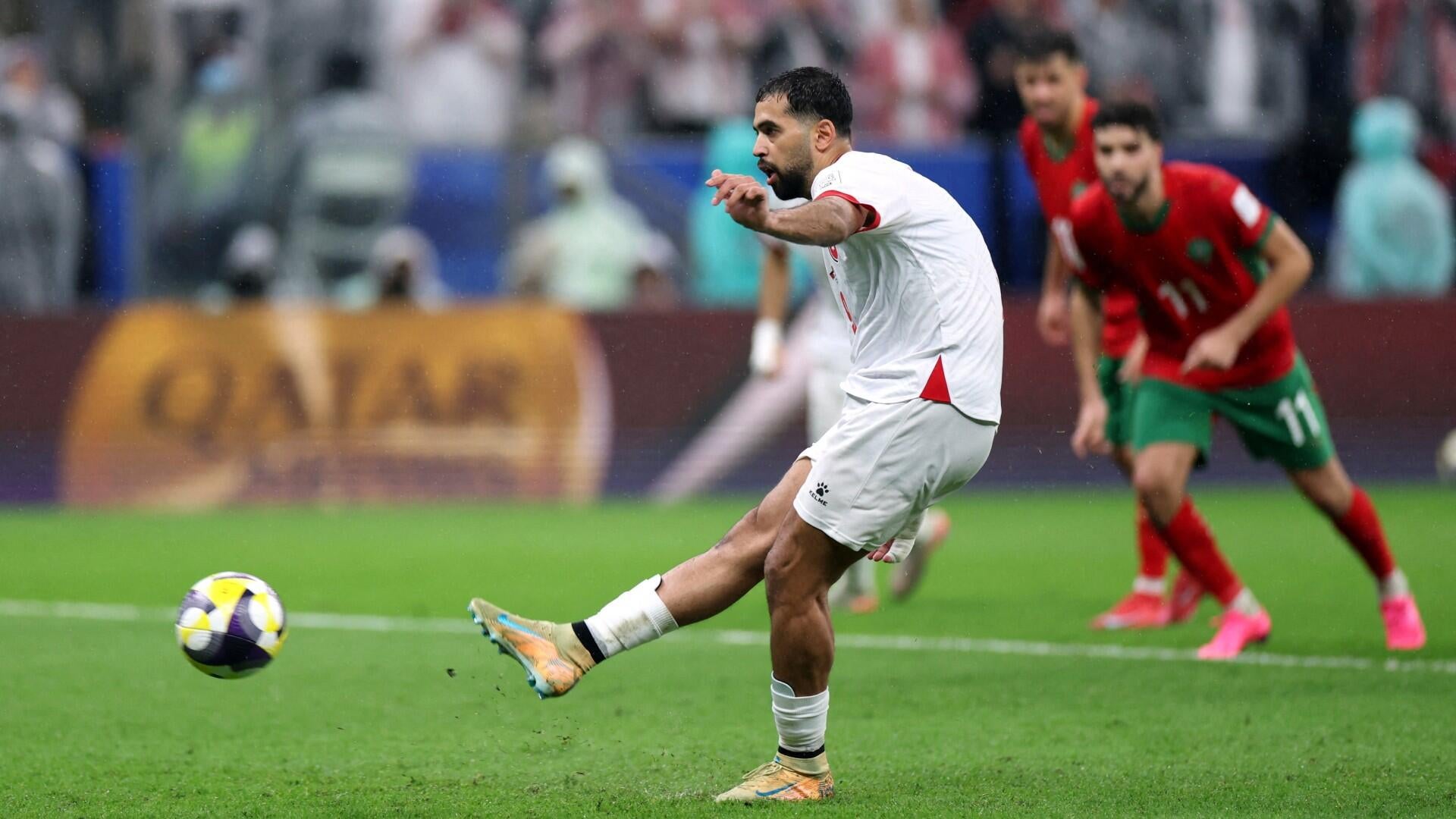
Jordan went into the 50th minute level with Austria at the 2026 FIFA World Cup on Wednesday, after Alwan cancelled an early Austrian opener to make it 1–1, according to Iranian state-affiliated outlet Mehr News. The goal, reported at 05:24 UTC, answered a 21st-minute Austrian strike that Mehr's match coverage attributed to sustained pressure on the Jordanian back line and a creative pass from midfielder Romano Schmid. Whatever the full-time score reads when the final whistle blows in the late afternoon European window, the match has already delivered the thing Middle Eastern football has spent a decade arguing about: a chance, on the sport's biggest stage, to convert qualifying pedigree into actual points.
The framing matters. Jordan arrived at this tournament not as a courtesy invite but as one of Asia's two qualified representatives, having navigated a confederation increasingly dominated by Japan, South Korea and Australia. A draw or a win against a European side of Austria's calibre — a nation seeded into Pot 2 or 3 of most major draws and a frequent qualifier in its own right — would be the kind of result that shifts the post-tournament conversation away from "how did they get here" and toward "how far can they go." A loss merely confirms the prior; a result moves the priors.
What the in-game evidence already shows
Mehr's match report describes an Austrian side that controlled the game's opening quarter-hour through pressure and possession, breaking through in the 21st minute on a sequence that began with Schmid receiving the ball in advanced areas and ended with the ball in the Jordanian net. Alwan's equaliser, reported via the same wire eight minutes into the second half, suggests Jordan absorbed that pressure without collapsing — a meaningful data point in itself. Teams that concede early to technically superior opposition tend either to fold or to reorganise; folding produces a rout, reorganising produces a contest. The 1–1 scoreline after 50 minutes indicates the latter.
The structural read
Middle Eastern football's rise over the past two cycles has been a story of infrastructure investment, professionalisation of domestic leagues, and the steady export of players into top European competitions. Saudi Arabia's hosting of high-profile signings, Qatar's prior World Cup hosting experience, and the UAE's investment in coaching infrastructure have all been read, fairly or not, as soft-power plays. Jordan's route is different: less petro-funded than its Gulf neighbours, more reliant on a tight core of European-based professionals and a domestic federation that has prioritised youth development over marquee imports. A positive result against Austria is therefore not just a sporting outcome but a validation of a different developmental model — one that the region's smaller federations, from Palestine to Syria to Lebanon, might plausibly emulate if it works.
The counter-narrative is straightforward: a single group-stage result tells the reader almost nothing about the underlying quality of a programme. Sample size is one match; injuries, referee decisions, and the bounce of the ball account for an enormous share of variance in 90-minute football. Austria, for its part, is a competent but unspectacular European side — regularly qualifying, rarely progressing past the round of 16. Beating or drawing them places Jordan in a band of nations that includes Senegal, Iran, and Japan in recent tournaments; losing to them places Jordan exactly where most pre-tournament models expected.
Stakes and forward view
If Jordan takes points from this match, the group-stage arithmetic shifts decisively in their favour: even a draw against Austria, combined with a competitive showing against the group's other two opponents, would put Jordan within reach of a knockout-round berth that would rank among the most significant results in West Asian football history. If they lose, the tournament becomes a development exercise rather than a competitive one — useful, but a different conversation.
What remains genuinely uncertain is the full-time result itself. At the time of writing, Mehr and Tasnim report the score at 1–1 in the 50th minute; neither wire has published the final scoreline. The structural argument — that the result, whatever it is, will be over-read in one direction or another — holds either way.
Desk note: Monexus has relied on Iranian state-affiliated wire reporting (Mehr News, Tasnim) for live in-game information, given the absence of a Western-wire match ticker in the source thread. Both outlets carry documented editorial alignment with the Iranian state, but their live sports reporting is functionally equivalent to that of any state-affiliated outlet covering a match their readers care about. The framing above rests on the score itself, not on interpretive claims sourced only to those wires.