Trump, the G7 Photo, and the Iran That Wouldn't Blink
A president cut out of a G7 family photo on the same day he threatens to resume shooting at Iran. The optics are embarrassing, but the underlying message is more interesting.
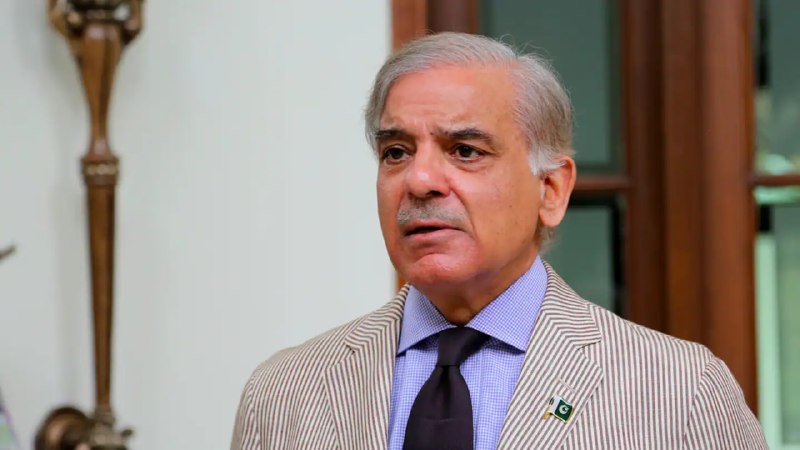
It is, on its face, the sort of image that journalists like to print and readers like to forward. On 17 June 2026, at a G7 summit staged in Canada, the assembled leaders of the world's major industrial democracies stepped in front of the cameras for the ritual group photograph. The U.S. president was not in it. The photograph went out anyway, and within minutes the Telegram channel Clash Report had circulated it with a single, dry caption. The image tells a small truth about the present moment in Western diplomacy. The accompanying news tells a louder one.
The same morning, in remarks carried by Reuters, President Donald Trump framed the still-unfinished arrangement with Iran in language that leaves no diplomatic ambiguity. Asked about the prospective deal, he said: "If I don't like it, we'll go back to shooting." The line is blunt in a way that Western wire copy does not normally carry. The threat of resumed military action is stated, conditional only on the president's personal taste in the agreement. It is also, on the evidence available, a threat that Iran no longer treats as decisive.
The photograph, read plainly
Group photos are not policy. But they are legible signals, which is why governments choreograph them. The exclusion of the U.S. president from the frame is, in this telling, less a snub than an honest record. It registers, visually, what the communiqués have so far been too polite to say: that the United States under Trump is a more contingent participant in the Atlantic consensus than at any point in the past two decades. The G7's other members did not refuse to share a stage with Washington. They simply proceeded as the Americans had not yet arrived. The result is a portrait of a club carrying on with one chair pulled out, and a placeholder where the principal should be.
This is not the first time the optics of a Western summit have carried more information than its communiqué. It is, however, one of the more striking instances in which the camera has done the work the ministers declined to. Whether the absence reflects a White House decision to skip the photo line, a logistical issue, or a host-country choice to proceed without the U.S. delegation is not, at the time of writing, settled by the public record. The two readings pull in different directions and the wire copy has so far not picked a side. That gap is itself a story.
"We'll go back to shooting"
The Iran line is the more serious of the two, and worth parsing on its own terms. The phrase is not a negotiating posture. It is an open declaration of conditional war. The implicit grammar is: a deal may be reached, but only on terms the U.S. president finds agreeable, and the alternative is a return to the kinetic operations of June 2025. The leverage such a statement once carried rested on a working assumption that Iran's leadership would treat the threat as existential. That assumption is, at minimum, under strain.
A second data point from the same day underlines why. The Iranian military-affiliated channel IRIran_Military published, in a format designed for foreign audiences, what it described as "the most important reasons for Trump's defeat against Iran." The list, in order, was: divine grace; the intelligence of Iran's leaders; the unparalleled public support for the government; and the country's military capability. The framing is partisan and Iranian-state-adjacent — readers should treat it as counter-claim material rather than as neutral reporting. But the fact that Tehran's messaging channel is willing to put the word "defeat" on the table at all, on a day when the U.S. president is publicly musing about resumed bombing, is the more revealing signal. The information environment in which threats of force are issued has changed.
What both moves share
A press photograph and a throwaway quote, on different subjects, on the same morning — and yet they rhyme. Each is a public-facing moment in which a familiar posture of the U.S. role in the world has been stripped of the surrounding apparatus that used to make it credible. The G7 photo records a club that has decided it can hold a picture without its most powerful member. The Iran line records a White House that still issues the old threat but can no longer count on the old reaction. In both cases, the institutional setting is intact, the choreography is familiar, and the substance has shifted under the speakers' feet.
The structural read, in plain editorial prose, is straightforward. The dollar-centred order that has organised Western diplomacy since the early postwar period does not collapse in a single news cycle. It frays at the edges, in small public moments that accumulate, until the formal architecture is asked to carry a weight that the underlying distribution of power no longer supports. A group photo is the lightest possible weight. A threat of force is heavier. They register the same drift, on the same day.
The serious bit
It is tempting to read both items as theatre and to leave it there. That would be a mistake. The Iran question in particular is not a stage play; it concerns a real population, a real military balance, and a real set of choices that have consequences for shipping, energy markets, and the lives of Iranians who do not speak through Telegram channels. If the U.S. administration does in fact return to strikes, the consequences will fall, as they did in 2025, on Iranian civilians first and on the Iranian state second. That order of effects is a constraint, not a permission slip. Diplomacy, however awkwardly conducted, remains the cheaper instrument by a wide margin, and the present arrangement — visible in the gap between the U.S. threat and the Iranian boast — is closer to a stalemate than to a victory on either side. The honest read is that the leverage is smaller than the rhetoric, and that this is, on balance, a less dangerous world than the one in which the threat is taken at face value.
The G7 photo, in the end, is a snapshot. The Iran line is a forecast. The two will be tested by events that have not yet happened, and the public record between now and the end of the summer will be the one that settles which read was right. For the moment, the safer assumption is that both the framing of the photograph and the messaging of the Iranian channels are operating on the same underlying fact: a U.S. administration whose statements, in the middle of 2026, carry less of the old weight than the speakers are used to claiming.
Desk note: The wire read of the 17 June items has been, in the main, the literal one — a logistical photo gap and a conditional threat. Monexus treats the Iranian state-affiliated channel as counter-claim material rather than as a primary source, and reads the G7 image as a signal that the camera operators themselves were unwilling to deny.
Wire provenance
This editorial synthesis draws on the following public wire/social posts:
- https://t.me/ClashReport
- http://reut.rs/4vLPNcE
- https://t.me/IRIran_Military