The 'Strong Deal' That Won't Say Its Own Name
Donald Trump is hawking an Iran agreement as historic. The fine print — if it exists — is missing, and the deadline pressure is the only thing holding the architecture upright.
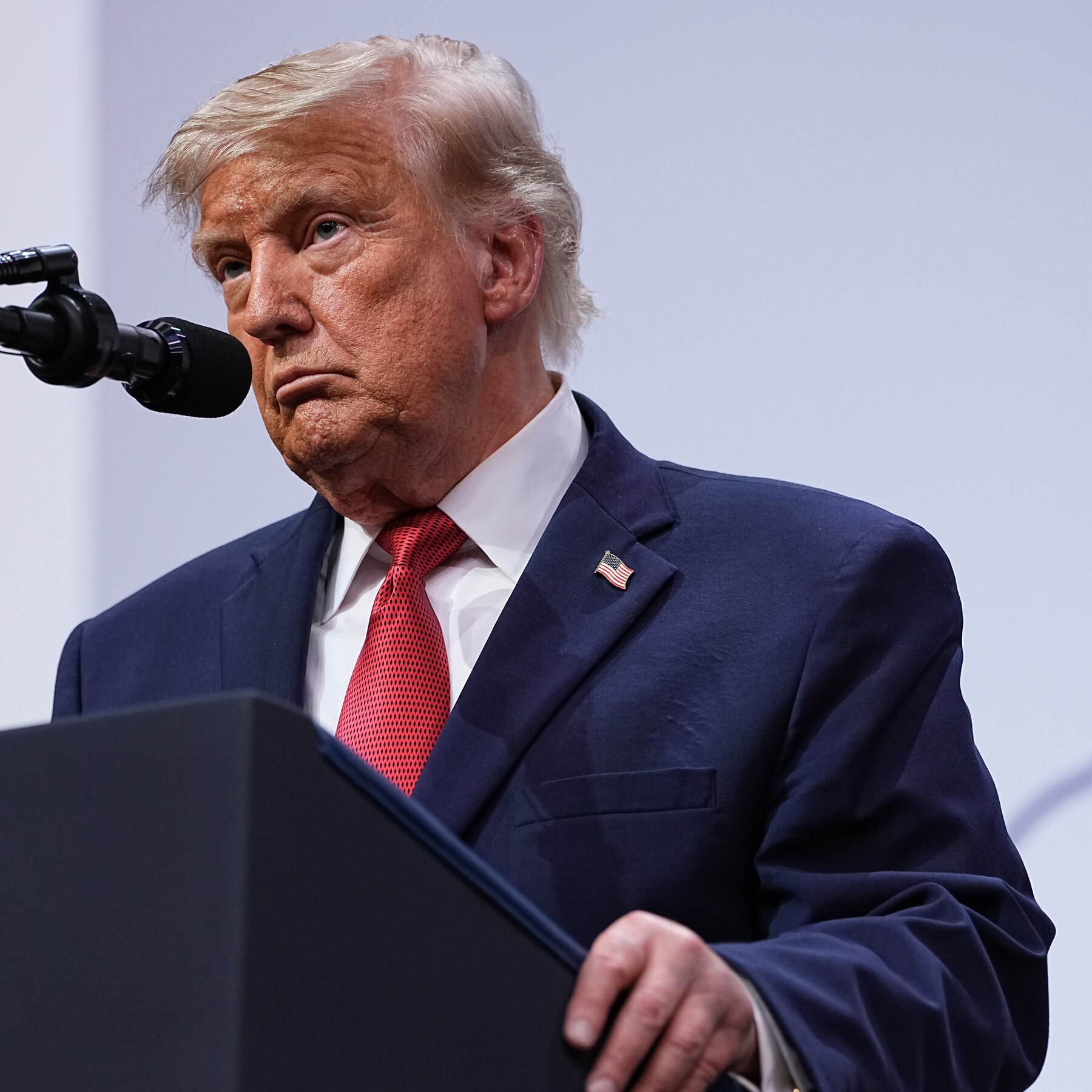
Donald Trump wants the word "strong" to do a lot of work. On 17 June 2026, standing before reporters, the US president described an emerging arrangement with Iran as "a very strong deal" — and then, in the same breath, reminded the room that the memorandum is "not final" and that, "if I don't like it, we will go back to bombing Iran on their heads," per Open Source Intel's relay of his remarks. That is the document on the table: an unsigned, unbinding, verbally inflated MOU whose strongest clause is the threat to tear it up.
The contradiction is the product. Trump is selling a deal whose only enforcement mechanism is the same air force that, weeks ago, was striking Iranian targets. That is not diplomacy in any conventional sense — it is coercive negotiation with the cameras rolling.
What we are actually told is in the deal
Strip the rhetoric away and the verifiable content thins quickly. Trump told reporters the Strait of Hormuz is "partially open," that oil "may go down further than before the war," and explicitly denied that any $300 billion US reconstruction fund is part of the package, suggesting instead that "if the Gulf countries want to invest, that's fine." Those three claims — partial reopening of the chokepoint, downward pressure on crude, and the absence of American taxpayer money — are doing the entire load-bearing work of the "strong deal" framing.
There is no published text. There is no Iranian confirmation of the MOU's terms on the record in the thread material. There is no independent verification that the Strait is operating at anything close to its pre-war throughput. The only authoritative voice on the deal's contents is the US president, and his account is internally inconsistent within the same sentence: a deal that is "very strong" is also "not final," and the leverage behind it is a resumption of bombing.
The Obama line, and what it actually signals
Trump also used the press moment to relitigate Barack Obama's Iran diplomacy: "You know what the Iranians did? They laughed at Obama and they said he's a stupid son of a bitch," per the same Open Source Intel transcript. The line is doing two things at once. It is reassuring a domestic base that any new arrangement is built from a position of contempt rather than conciliation. And it is signalling to Tehran — and to Gulf capitals watching from the wings — that the bar for "respect" in this negotiation is performative humiliation of the predecessor.
That is the structural pattern worth naming. Coercive bargaining of this kind tends to produce agreements that hold only as long as the credible threat holds. The 2015 JCPOA survived because the United States, under Obama, accepted constraints on its own behaviour in exchange for verifiable Iranian ones. This arrangement, as described, runs the inverse: the US accepts no constraints, Iran accepts whatever it accepts, and the whole thing remains hostage to one man's mood on any given morning. "Not final" is the clause that overrides every other clause.
The oil question nobody will answer
If the Strait is "partially open," what fraction of pre-war traffic is moving? Through which lane, under whose naval escort, with what insurance premia? None of those numbers appear in the source material. The bullish read is that crude will keep falling as the discount for Hormuz risk unwinds. The bearish read is that "partially" is the kind of word that gets revised downward at 3 a.m. after a single incident, and that any drawdown in price is a function of trader positioning rather than physical flow. Trump is, in effect, shorting Iranian petrodollar revenue on the basis of his own description of events — and asking global markets to follow him there.
There is also a smaller, less reported item in the same press moment. Trump described meeting Egyptian President Abdel Fattah el-Sisi at a hotel and saying the two "fell in love, deeply in love," per the relay. The remark is comic, but it is not nothing: it tells the audience that personal chemistry, not institutional process, is the operating system of this White House's Middle East portfolio. An Egypt that matters to the deal, a Gulf that may fund reconstruction, and an Iran whose Strait must reopen are being held together by a leader who narrates summitry as romance.
The stakes, in plain terms
If this MOU holds even in skeletal form, the winners are clear: Gulf monarchies that wanted Iran's regional weight blunted without the cost of a permanent war; oil traders with the stomach to ride the volatility; and a US president who can claim a headline win before midterm attention spans move on. The losers are the Iranian public, who absorb the sanctions architecture regardless of who is in power in Tehran; the credibility of non-proliferation diplomacy, which has now seen two successive US presidents treat negotiated constraints as disposable; and any future administration that inherits a Middle East where "a deal" means whatever the incumbent says it means that week.
What remains genuinely uncertain is whether Tehran has agreed to anything at all, or whether the White House is presenting a one-sided communiqué as a bilateral instrument. The thread material contains no Iranian readout. Until one appears, the "very strong deal" is, at best, a strong American claim about a deal — and the history of US-Iran diplomacy is littered with strong American claims that did not survive contact with the other party's text.
Monexus framed this around the gap between Trump's verbal architecture and the missing document, rather than around either the pro-deal or anti-deal partisan line; the editorial line stays where the sourcing does.
Wire provenance
This editorial synthesis draws on the following public wire/social posts:
- https://twitter.com/Osint613/status/2067210568822296921/video/1
- https://t.me/s/osintlive
- https://t.me/s/osintlive
- https://t.me/s/osintlive
- https://t.me/s/osintlive