Trump's Two-Track Playbook: Iran Deal Memo, G7 Power Play, and the $1.2 Billion Meme-Coin Question
On 17 June 2026, the US president told G7 counterparts he is 'the boss,' warned Tehran that 'we will go back to bombing,' and faces fresh questions over a January 2025 token that pulled in $1.2 billion from investors.
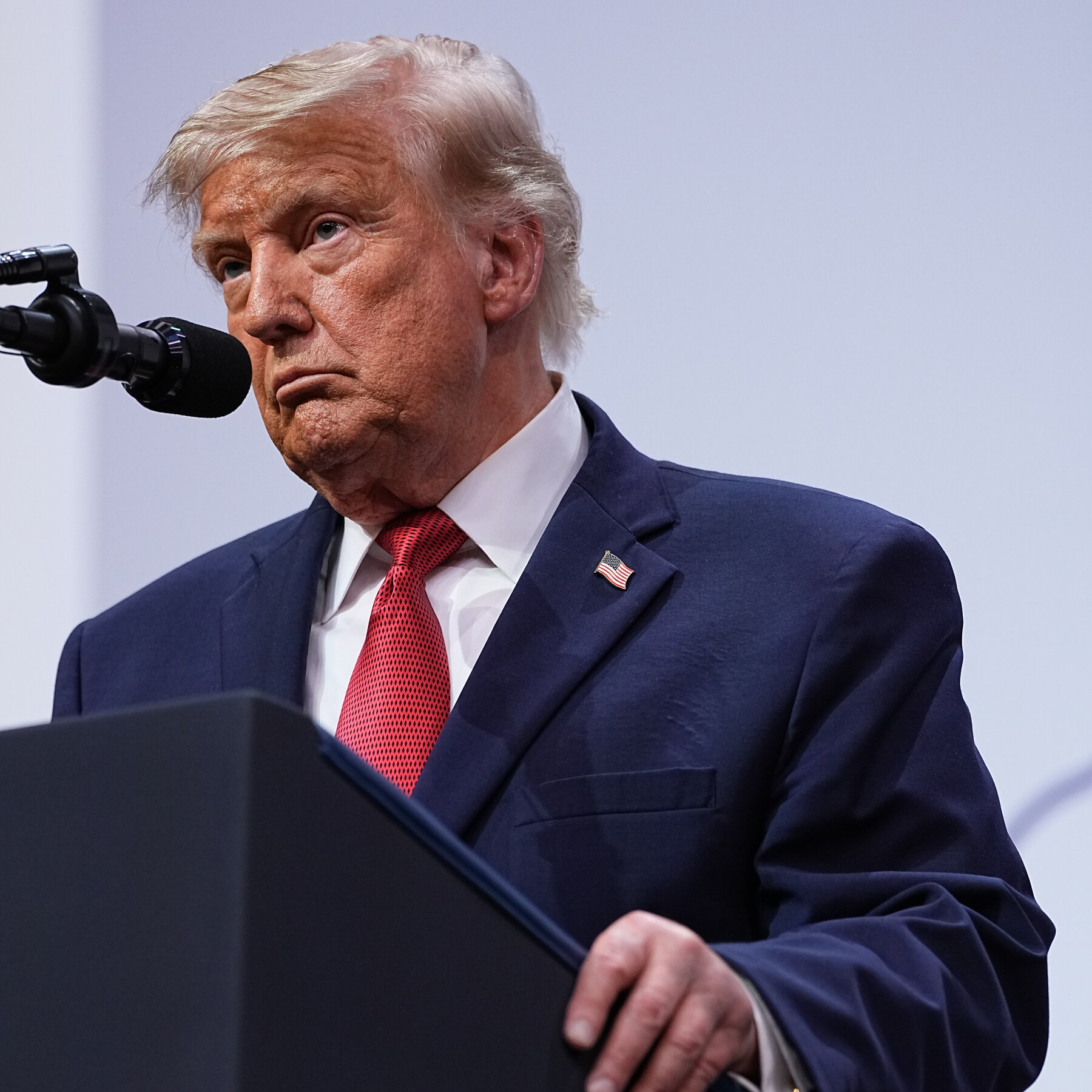
Donald Trump arrived at the G7 summit on 17 June 2026 carrying two distinct dossiers and, in the background, a third that he would rather the cameras ignore. In the first, the US president is telling allies that he intends to end a war, and that there is "one problem" standing in the way — a public statement from NATO Secretary-General Mark Rutte that, in the Trump telling, is getting in the way of a deal. In the second, Trump is telling his G7 counterparts that he is, in his own words, "the boss." In the third, a token launched three days before his January 2025 inauguration has, by Unusual Whales' count, pulled in at least $1.2 billion from investors — a figure that returns the financial ethics questions around the so-called Trump meme-coin to the front of the news cycle on the very day the president is posturing about leadership of the Western alliance.
The headline on this publication's read of 17 June 2026 is that the three threads are not separate stories. They are one story: a presidency that has fused foreign-policy brinkmanship, alliance management by personal fiat, and a parallel crypto-financial operation into a single operating style, and that now finds all three seams visible on the same news day.
The G7 power play, recorded
The video circulated by the Ukrainian outlet TSN on 17 June 2026 at 11:14 UTC is short, plain, and unusually direct. According to TSN's read of the clip, Trump told G7 leaders in the room that he is "the boss" of the group. The phrasing matters because G7 protocol has, for half a century, treated the presidency of the host country as a convener, not a commander. The host sets the agenda, drafts the communiqué, and brokers the family photo. The host does not announce personal authority over the other six leaders. The clip, as TSN presented it, did exactly that.
The framing is not unique to TSN. TSN is a major Ukrainian commercial broadcaster and its war-coverage is widely consumed domestically; the station is not a neutral multilateral-relations outlet, and the clip is best read as a Ukrainian-editorial framing of a G7 exchange. That said, the underlying posture — an American president publicly asserting personal primacy over a gathering of equals — has been a recurring motif of the administration's second-term diplomacy, and the G7 has, on this reading, become one of the venues where that posture is now expressed openly rather than in private. The relevant question is not whether Trump said something contentious at the table; it is whether the other six leaders pushed back on the record, and on that question the available material is silent.
The second TSN item on 17 June — also timestamped 11:14 UTC — pairs the G7 clip with a separate thread: Trump wants to end the war, but there is one problem, namely a statement by NATO Secretary-General Mark Rutte. The specific text of the Rutte statement was not included in the thread; the framing from TSN is that the NATO chief's public positioning has become an obstacle to the war-ending project Trump has been marketing. The dispute, as presented, is over who speaks for the Western position — the US president or the alliance's Brussels-based secretary-general — and over what counts as an acceptable deal.
The Iran text: "memorandum," not "deal"
A third item, posted by the Israeli journalist Amit Segal at 11:05 UTC on 17 June 2026, carries Trump's own characterisation of the document under discussion with Iran. "The text is not final, it is a memorandum of understanding," Trump said in remarks Segal circulated, adding: "If I'm not satisfied — we'll go back to bombing." The phrasing collapses three distinctions that, in normal diplomatic practice, are kept separate. A memorandum of understanding is non-binding, by definition; a final text is binding. The choice to call the document an MOU while reserving the right to revert to military action is, in effect, an announcement that the United States is operating in a deliberate state of pre-commitment: close enough to a deal to claim credit, distant enough from one to deny obligation.
The framing matters for the counter-narrative. The Iranian government's English-language outlets, including PressTV and Tasnim, have consistently cast the US-Iranian track as a process of equal sovereigns negotiating under sanctions pressure. The US-side framing, as captured by Segal, is the opposite: a superpower writing a non-binding instrument on its own terms, with a public threat of force as the enforcement mechanism. Both framings are correct from their own vantage. The asymmetry is in the threat: one side retains the explicit option of war, the other does not.
This is the gap that Middle East Eye's English-language coverage — circulated in the thread at 10:49 UTC on 17 June — has been tracking. The MEE item linked from the thread points to a broader reporting stream on the Iran track; the specific headline was not in the source notes, but the channel's editorial line on US-Iran negotiations has been consistent. Where the wire services read the document as a step toward de-escalation, MEE reads it as a step toward a new form of coerced agreement. Both are defensible; the open question is which one the enforcement record over the next ninety days will support.
The $1.2 billion token, and what it does to the foreign-policy frame
The Unusual Whales item circulated on X at 04:57 UTC on 17 June returns the meme-coin back to the front page. The token launched on 17 January 2025, three days before Trump's second inauguration, and pulled in at least $1.2 billion from investors. The figure is from Unusual Whales, a market-data outlet with a distinct retail-investor following; the chain-of-custody documentation supporting the $1.2 billion figure is the outlet's own.
The relevance to 17 June is structural rather than direct. A sitting US president who is simultaneously telling G7 leaders he is "the boss," warning Iran of resumed bombing if the MOU is unsatisfying, and personally associated with a financial instrument that has collected nine-figure sums from retail buyers sits in a different conflict-of-interest posture than the standard diplomatic model anticipates. The model assumes that the head of state is, in the financial sense, a disinterested broker. The Trump second term has, for two and a half years, made that assumption more complicated, and the 17 June news day is the day the complication is most visible.
This publication is not alleging that the Trump token is itself a foreign-policy vehicle. The available material does not support that claim. The available material does support the weaker claim: that the existence of a presidentially-branded, nine-figure retail instrument is now a permanent background condition of US foreign policy in the same news cycle as a G7 confrontation, an Iran MOU, and a NATO-leader disagreement about who speaks for the West. The relevant readers — counterparties in Tehran, in Brussels, in G7 finance ministries — are adults, and they are pricing this in.
The counter-narrative: deal-makers do this
The alternative read is straightforward, and it deserves airtime. Presidents with a transactional reputation have, historically, been able to close deals that their more ceremonial predecessors could not, precisely because counterparties believe the threats are real. From this vantage, the 17 June G7 clip is not a gaffe but a posture; the MOU framing is not a hedge but a closing technique; the threat to resume bombing is not a slip but a stated price. On this read, the meme-coin is irrelevant to the foreign-policy frame because foreign counterparties do not price in retail US-domestic financial scandals the way the domestic press does.
The counter-counter is that the counter-narrative assumes a clean separation between the financial and the diplomatic, and the second Trump term has spent two and a half years making that separation harder to maintain. The president who tells the G7 he is "the boss" and warns Iran of bombing in the same news cycle is, by his own presentation of self, running the foreign-policy shop in the same personal register that produced the token. The relevant question for the next quarter is whether the deal-making posture survives the optics — or whether the optics, on days like 17 June, start to corrode the deal-making.
Stakes, structure, and what remains uncertain
The pattern on display is a style of governance in which the same individual asserts leadership over an alliance, announces the right to resume a war, and operates a parallel retail financial brand — and does so in a single news cycle without evident friction between the three registers. The structural frame in plain editorial prose is this: the office of the US presidency has, over the course of the second Trump term, become a platform that is also a brand, and the brand is now a material input into the foreign-policy signal. The alliance, the adversary, and the buyer of the token are reading the same signal on the same day, and the question of which one of them the signal is primarily addressed to is no longer answerable from inside the White House.
What remains genuinely uncertain, on the available evidence, is the text of the Rutte statement that TSN flags as the obstacle to the war-ending project. The thread cites the statement as the source of friction but does not reproduce it. The specific terms of the Iran MOU are likewise not in the public material beyond Trump's own characterisation as a non-binding instrument subject to abrogation. The $1.2 billion figure for the Trump token is Unusual Whales' tally and the chain-of-custody documentation is the outlet's own; the number has not been independently corroborated in this thread. The G7 clip is presented in TSN's editorial frame; the underlying exchange and any pushback from the other six leaders is not on the record. The deal-making counter-narrative is plausible but unproven.
What the 17 June thread does establish, on its own evidence, is that the US president is operating a multi-front posture — alliance, adversary, and retail finance — on the same day, in the same news cycle, with the same voice. That posture is the news. The reader is invited to decide whether it is a posture of strength, of brittleness, or of both. The next ninety days of MOU enforcement, G7 communiqué drafting, and token-flow reporting will produce the data.
This publication framed 17 June 2026 as a single news day across three registers — alliance, adversary, and brand — rather than three separate stories, on the read that the seam between them is itself the political fact.
Wire provenance
This editorial synthesis draws on the following public wire/social posts:
- https://t.me/TSN_ua
- https://t.me/TSN_ua
- https://t.me/amitsegal
- https://t.me/TSN_ua
- https://t.me/TSN_ua