Trump signs Iran memorandum as White House keeps terms under wraps
A White House-confirmed MOU with Tehran lands within hours of Trump's complaint that it is 'unfair' for Iran to lack ballistic missiles, leaving the document's substance — and its limits — to be filled in later.
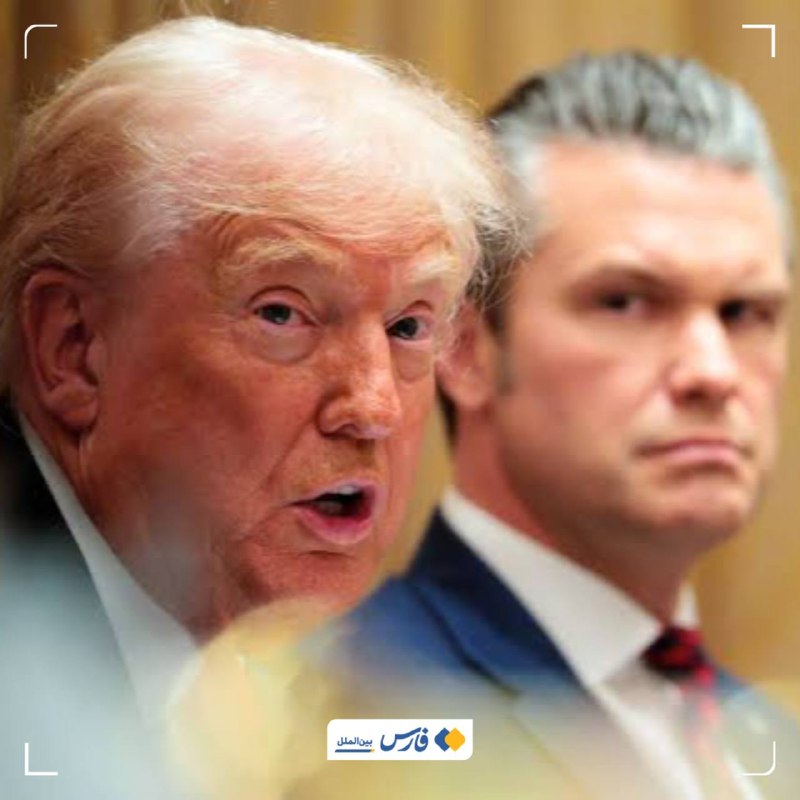
At 21:53 UTC on 17 June 2026, Axios reported that the United States and Iran had electronically signed a memorandum of understanding that the publication said "is now in effect." Reuters confirmed the signing shortly after, with a White House official telling the wire that President Donald Trump had signed a memorandum aimed at ending the war with Iran. By 22:50 UTC, the headline was moving across global newsrooms: a US–Iran MOU, executed and live, with the substance still undisclosed.
The deal's existence is no longer in dispute; its contents are. The White House and other US officials have not published the terms of the arrangement as of late Wednesday evening, leaving journalists, analysts and Iran's regional adversaries to read a document none of them have seen. What is on the record is the political choreography around it — a signing that closed a war, paired with a presidential complaint that it was "unfair for Iran to lack ballistic missiles if other countries have them," delivered in the same news cycle.
A memorandum without a text
Reuters' second dispatch, filed at 22:45 UTC, captured the awkward juxtaposition: Trump arguing, in remarks carried by the wire, that denying Iran ballistic missiles while other states retain them is unfair. The comment lands at precisely the moment Washington's diplomats have just concluded an instrument with Tehran. Without a published text, the two statements cannot be reconciled in detail — the public is being asked to accept a settlement whose scope, enforcement mechanism and definition of "war-ending" remain opaque.
The Epoch Times, summarising the gap in its 22:36 UTC bulletin, noted simply that the White House "and other US officials have not published the terms of the deal with Iran so far." The Spectator Index, reposting the Reuters wire via Telegram at 22:07 UTC, framed the moment as a White House-confirmed MOU — language that conveys finality the underlying paperwork has not yet earned.
What the framing suggests — and what it does not
A US–Iran MOU signed electronically and characterised as "in effect" by Axios is, in form, weaker than a treaty and stronger than a joint statement. Memoranda of understanding are not ratified by the US Senate and do not bind successor administrations in the way a treaty would. They can be issued, observed, ignored or revoked with relatively low legal friction. The choice of this instrument, rather than an executive agreement or formal accord, tells the reader something about the political appetite on both sides for a fight over ratification at home — in Washington, where any concession to Tehran is contested, and in Tehran, where a deal signed by one administration may not survive contact with the next.
Iran International and other regional outlets have repeatedly noted that Iran's negotiating position in 2026 has been complicated by the asymmetry between the regime's need for sanctions relief and its refusal to cap its missile programme in any verifiable way. Trump's mid-evening remark — that it is "unfair" for Iran to lack ballistic missiles — will be read in Tehran as a public crack in the American position, and in Jerusalem and Riyadh as a private alarm bell. A president publicly expressing sympathy for an Iranian arsenal category the US has spent two decades trying to constrain is not a minor communications glitch; it is a structural tell about what the MOU likely does not cover.
The counter-read: a deal defined by what it leaves out
The simplest interpretation of the gap between Trump's missile remark and the unsigned MOU text is that the missile file is, for now, off the table. That reading is consistent with how interim deals have historically worked between Washington and Tehran: a confidence-building instrument that stabilises the immediate military relationship, defers the hard questions, and creates a window in which further negotiations — or further collapse — can take place. It also fits the Iranian practice of accepting short-form agreements on the understanding that the deeper strategic file will be reopened later, under different domestic conditions in the US.
A more sceptical read takes the missile comment at face value: that the MOU codifies, rather than defers, a permissive American posture on Iran's conventional missile programme, in exchange for concessions whose value the public has not yet been told. Without the text, neither reading can be falsified. That is itself the problem. Diplomacy conducted in public briefings rather than in published instruments allows each side to claim victory and to leave the disputed provisions for the next crisis.
Stakes and what remains uncertain
The immediate winners, if the MOU holds, are the oil markets, the Gulf shipping lanes and Iran's currency, which has traded at distressed levels throughout the war. The immediate losers are the verification architecture that constrained Iran's nuclear programme between 2015 and 2025, and the Israeli and Saudi strategic assumptions that a US–Iran war would end with the dismantlement, not the legitimisation, of Iran's missile inventory.
What remains genuinely uncertain is whether the document signed on 17 June is a ceasefire, a nuclear interim, a comprehensive settlement, or a face-saving communique with the war formally paused but the underlying contest unresolved. The wire reporting identifies the parties, the date and the existence of the document; it does not identify the obligations, the timelines or the verification regime. Until those are published — or leaked, or confirmed by an Iranian foreign ministry readout — the MOU is less a settlement than an event. The next 72 hours will determine whether it is also a policy.
Monexus framed this story on the basis of two Reuters wire dispatches, an Axios scoop cited by Reuters and by the @wfwitness channel, and the Epoch Times' note that the text remains unpublished. Where the wires agree, we reported agreement; where they diverge — on whether the instrument is binding, on what it covers, on whether Trump's missile remark is signal or noise — we flagged the divergence rather than resolve it.
Wire provenance
This editorial synthesis draws on the following public wire/social posts:
- http://reut.rs/43GPBzK
- http://reut.rs/3SfJWOz
- https://t.me/SpectatorIndex
- https://t.me/wfwitness