Trump and Iran sign a memorandum of understanding — and immediately tell each other it isn't final
A Wednesday MoU in Geneva buys time without resolving any of the hard questions — and the principals are already conditioning its survival on the other side behaving.
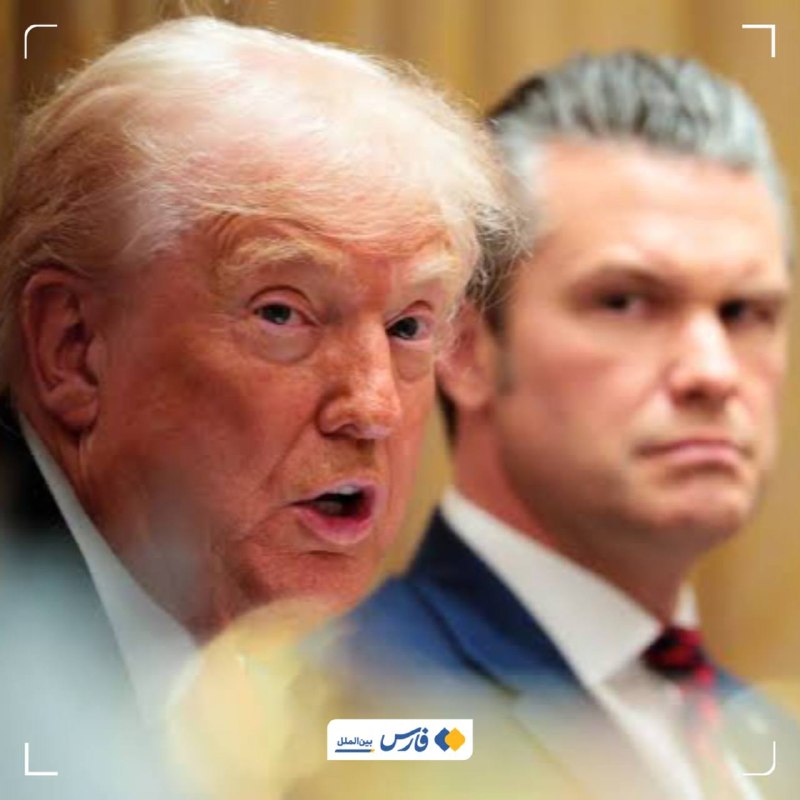
On 17 June 2026, in Geneva, Donald Trump and the president of the Islamic Republic of Iran signed a memorandum of understanding that the United States has described, in the same breath, as a binding breakthrough and as a draft that can be ripped up. The text was initialed on Wednesday, a U.S. official told Reuters at 23:15 UTC, and within hours both leaders were publicly setting conditions for its survival.
What is actually on paper is narrower than the rhetoric. Trump told reporters the agreement would lift U.S. sanctions on Iran "once they behave," according to a market-feed wire at 18:25 UTC. Iran's foreign ministry spokesman Esmaeil Baghaei confirmed the text had been signed, Middle East Eye reported at 22:07 UTC, and went further on Iranian state-aligned channel Al Alam at 23:01 UTC, declaring that "Iran being a superpower is not a slogan, as we have defeated two nuclear powers." Both sides left themselves room to walk away. Trump, per a wire at 14:57 UTC, warned that if he did not like the deal, "we will go back to dropping bombs."
A deal whose terms are still being argued about publicly
The most striking feature of the Geneva MoU is not what is in it but the volume of public disagreement about what it says. Trump told reporters it would be "a little bit unfair" for Iran to lack ballistic missiles while regional neighbours kept their own, a wire at 22:45 UTC reported. He also disclosed that the United States operates "space cameras" continuously monitoring Iranian nuclear sites — a confirmation that is unlikely to reassure Tehran on the question of whether surveillance replaces, or precedes, military action.
On the question of money, Trump denied the figure that has circulated in parts of the regional press. Reports of a $300 billion package for Iran are "false," he said, per a wire at 15:17 UTC. That denial does not foreclose the existence of a smaller, structured sanctions-relief package tied to verifiable steps, but as of Wednesday evening no such breakdown has been published by either side. The text, by Trump's own description, is a memorandum — not a treaty, not a final accord, and not subject to Senate ratification.
The counter-narrative from Tehran
Iranian state media treated the signing as confirmation of leverage rather than concession. Baghaei's framing on Al Alam — that Iran has already "defeated two nuclear powers" — points to a domestic-political audience that the regime wants to read the deal as a victory earned from a position of strength, not a climbdown under bombardment. That reading is structurally convenient for the Iranian leadership: it lets the foreign ministry sign while the security establishment tells its base that the nuclear programme and the missile deterrent remain non-negotiable.
The dispute over the October strike on an Iranian girls' school illustrates how exposed both sides are to charges of bad faith. Trump said "nobody" attacked the school "on purpose," per Reuters at 22:05 UTC. That formulation has not closed the question inside Iran, where the strike remains a domestic flashpoint. If the deal's political viability in Tehran depends partly on being seen as restoring deterrence against exactly that kind of action, Trump's wording is a problem that does not show up in the text of the MoU but will show up in the parliamentary politics around ratification.
Why the deal looks like a holding pattern
Stripped of the pageantry, a memorandum of understanding in this part of the world is a procedural device. It freezes the legal state of play — sanctions architecture, enrichment levels, missile programmes, IAEA access — at whatever it was on the day of signing, while the parties negotiate the substantive accord. That gives both governments something they need domestically: Trump can claim he has stopped a war without having to defend a final settlement on Capitol Hill, and the Iranian leadership can claim sanctions relief without having to concede enrichment or missile rights on the record.
The structural risk is that a MoU has no enforcement mechanism of its own. It survives only as long as both sides prefer the diplomatic frame to the military one. Trump's own conditional — "if I don't like it, we will go back to dropping bombs" — is not a threat hidden in subtext; it is the document's durability clause, stated plainly.
What remains unresolved and who has leverage
Three questions will determine whether Wednesday's signing becomes a process or a photo op. First, the sequencing of sanctions relief against verified Iranian steps — whether Iranian frozen funds are released before, after, or in parallel with IAEA access to bombed sites. Second, the status of Iran's ballistic-missile inventory, which Trump publicly normalised on Wednesday but which neither the U.S. Congress nor Israel's defence establishment has accepted as a negotiating item. Third, the verification regime, which the disclosed "space cameras" comment complicates: surveillance from orbit is not the same as inspectors on the ground, and Tehran will resist treating the former as a substitute for the latter.
On the immediate question of who gains from the present equilibrium, the answer is both governments and neither public. Tehran gets sanctions relief without a treaty it would have to defend in the Majles; Washington gets a non-escalation framework it can present as success without conceding the missile question. The people paying for either arrangement — Iranian civilians under sanctions, Israeli and Gulf civilians under the persistent threat of a renewed air campaign — are not at the table on Wednesday evening, and the MoU's text does not bind the next administration in Washington or the next supreme leader in Tehran.
The sources disagree most sharply on one point: whether this MoU is a step toward a final accord or a deferral of one. The honest reading is that it is both, and that the proportion depends on choices that have not yet been made public.
This publication framed the Geneva MoU through the lens of mutual conditionality rather than breakthrough or collapse. Western wires emphasised Trump's conditions; Iranian state media emphasised leverage preserved. The honest picture sits between those two and depends on what is not yet in the text.
Wire provenance
This editorial synthesis draws on the following public wire/social posts:
- http://reut.rs/3SaG6pX
- http://reut.rs/3SfJWOz
- http://reut.rs/4gs2tB6
- https://www.middleeasteye.net/live/live-us-and-iran-confirm-peace-accord-signing-set-friday-geneva