Trump signs Iran memorandum, opening a high-stakes diplomatic track
A memorandum of understanding signed Wednesday between Washington and Tehran sets up a formal Friday ceremony in Geneva, even as Trump publicly defends Iran's right to ballistic missiles.
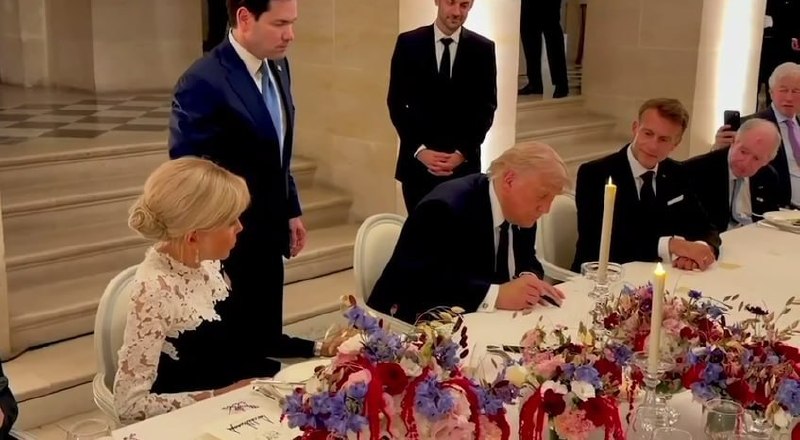
US President Donald Trump and Iranian President Masoud Pezeshkian signed a memorandum of understanding on Wednesday, 17 June 2026, setting up a formal peace accord ceremony scheduled for Friday in Geneva, according to a US official cited by Reuters and confirmed by Iranian foreign ministry spokesman Esmaeil Baghaei. The announcement lands with unusual speed: a deal that until this week existed only as reporting about possible talks is now, by both governments' account, on paper.
The deal is the diplomatic event of the summer. It is also an unfinished one. Trump's own public remarks on Tuesday — calling it "unfair" for Iran to lack ballistic missiles when other countries possess them — read less like a hardline negotiating posture and more like a quiet preview of where US red lines have moved. The text of the memorandum has not been published; the technical annexes that usually define what Iran freezes, what it keeps, and what sanctions come off have not been released. What is on the record, for now, is a political commitment at the top and a Friday ceremony designed to lock it in.
What was signed, and what was not
According to the Reuters report at 23:15 UTC on 17 June, a US official said the memorandum was signed on Wednesday by Trump and the Iranian president. The official did not disclose the venue. Al Alam Arabic, the Iranian state-linked channel, reported at 23:32 UTC that Trump said he had signed the memorandum, and Middle East Eye carried Baghaei's confirmation at 22:07 UTC that "the text of the MoU has officially been signed by Iran and the US." France 24 also confirmed the signing, citing a US official, at 22:07 UTC.
The announcement leaves the most consequential questions for the Friday ceremony. Whether the memorandum addresses Iran's enrichment capacity, the fate of the stockpile of near-weapons-grade uranium built up since the United States withdrew from the 2015 Joint Comprehensive Plan of Action, the sequence of sanctions relief, and the question of Iran's ballistic-missile programme — all remain, on the public record, unspecified. Trump's remarks to reporters earlier in the day, reported by Reuters at 22:45 UTC, made the missile question the most legible piece of the US position: it would be "unfair," he said, for Iran to lack ballistic missiles while other countries have them.
That sentence does a great deal of work. Read narrowly, it is a defence of Iranian conventional deterrence. Read against the regional security architecture — where Israel, Saudi Arabia and others have built out long-range strike capabilities — it implies a US tolerance of an Iranian missile programme that previous administrations treated as a primary non-negotiable. The administration has not clarified which reading is intended.
The Iranian framing, in its own words
The Iranian side has been more declarative. Baghaei told state-aligned media, in remarks reported at 23:01 UTC on 17 June, that "Iran being a superpower is not a slogan, as we have defeated two nuclear powers." The claim is a reference to the eight-year Iran-Iraq war and to the sanctions-era standoff; it is also a clear signal of how Tehran intends to position itself at the Friday ceremony — not as a supplicant returning to a Western-negotiated framework, but as a regional power whose restraint is being purchased, in its own telling, at full price.
The framing matters because it tells negotiators what the optics of any final deal have to look like inside Iran. The Islamic Republic has invested political capital in the proposition that its nuclear and missile programmes are sovereign assets, not concessions. A deal that reads, in Tehran, as a surrender dressed up as a compromise will not survive the country's domestic politics. A deal that allows Iran to claim it has traded optionality for relief — while keeping a missile deterrent and a residual enrichment capability — is the only shape the Iranian state can publicly accept.
What the US position looks like from the outside
The American side is harder to read. Trump's Tuesday remark on missiles, taken literally, is incompatible with the long-standing bipartisan US position that Iran's missile programme is a destabilising factor to be capped, not normalised. It is also incompatible with the 2015 framework's silence on missiles — a silence that was, at the time, one of the JCPOA's most criticised omissions. A Trump-era deal that openly legitimises Iranian ballistic missiles would, in effect, ratify the original deal's biggest gap and expand it.
The administration has not addressed that contradiction on the record. The 17 June Reuters item on the memorandum of understanding does not quote any senior US official beyond the unnamed source confirming the signing. The Friday ceremony, billed as a "peace accord" by Middle East Eye's live blog, is the moment the technical substance will have to surface — or its absence will have to be explained.
What remains contested
The sources do not agree on what the memorandum actually contains. The Iranian state-aligned framing emphasises parity: a great power trading with a great power. The US-side reporting, so far, confirms only the act of signing and the scheduling of a Friday ceremony. The technical architecture — enrichment ceilings, IAEA monitoring access, the disposition of the 60%- and 20%-enriched uranium stockpile, the sanctions snapback architecture, the role of Gulf states and Israel in any verification regime — is not in the public record.
The most plausible read of the evidence is that Wednesday's signing was a political agreement to keep talking, elevated to a memorandum of understanding so that both leaders can claim a deliverable before Friday. The harder read is that the Trump administration has, in the space of a single news cycle, moved its position on Iranian missiles by a generation — and that the Geneva ceremony will codify that shift. The sources do not yet let a reader choose between the two.
What is clear is the calendar. A memorandum, by definition, is not a treaty. It is a statement of intent. The test of the Geneva ceremony will be whether the technical text, when released, matches the political rhetoric — or whether the rhetoric, on both sides, is running ahead of what was actually conceded. On the evidence available at 23:35 UTC on 17 June 2026, that question remains open.
— Monexus staff coverage. The wire has confirmed the signing; the substance of the deal is still being read.
Wire provenance
This editorial synthesis draws on the following public wire/social posts:
- http://reut.rs/3SaG6pX
- http://reut.rs/3SfJWOz
- http://reut.rs/4gs2tB6
- https://www.middleeasteye.net/live/live-us-and-iran-confirm-peace-accord-signing-set-friday-geneva
- http://reut.rs/43HDjHk
- http://reut.rs/4gmiWXy