White House confirms US-Iran memorandum of understanding, ending the war on paper
The Trump administration has signed a memorandum of understanding with Tehran, confirming details the vice president had dismissed as Iranian propaganda days earlier — and raising the question of who, exactly, is in charge of US Iran policy.
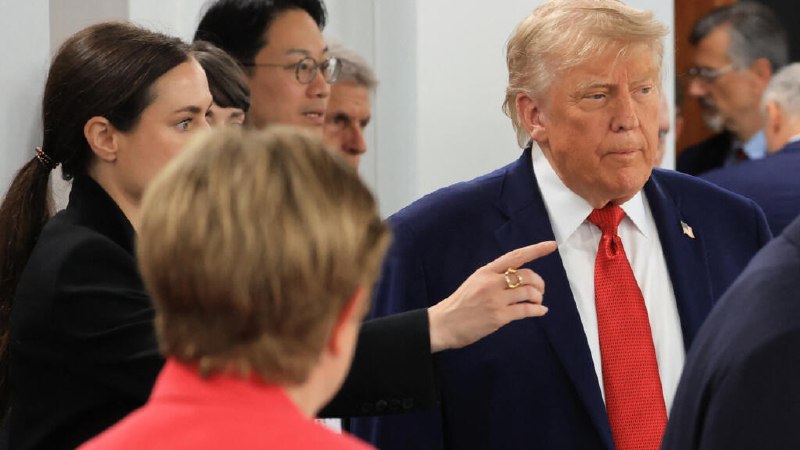
The White House confirmed on 17 June 2026 that President Donald Trump has signed a memorandum of understanding with Iran, formalising a deal that Vice President JD Vance had publicly mocked only days earlier as fake and "IRGC propaganda." The confirmation, reported by Reuters at 22:07 UTC and amplified by Axios, lands at a moment when the administration's Iran policy is visibly unsettled — and when the public is being asked to take a White House signing at face value after the same White House spent the previous week denying the document's very existence.
The MOU's terms, as telegraphed by Iran-aligned outlets and confirmed by the White House on Wednesday, are the substance of the dispute. According to a Telegram channel tracking the file, every specific provision Vance had waved off as propaganda turned up, intact, in the text the president signed. That makes the episode less a story about Iran than a story about the internal coherence of US Middle East policy — and about who, exactly, speaks for it.
What the White House actually signed
A White House official told Reuters at 22:07 UTC on 17 June that Trump had signed the memorandum, and Axios reported the document had been electronically executed and was in effect. The Spectator Index relayed the Reuters wire within minutes. The deal is framed by the administration as the formal end of the war — a phrase that travels further than the text of any single document, and one the sources do not independently corroborate beyond the White House's own characterisation.
The Reuters report, picked up by @osintlive on Telegram and corroborated by @wfwitness citing both Axios and Reuters, describes an MOU rather than a binding treaty. That distinction matters: memoranda of understanding are not ratified by the Senate, do not carry the force of statute, and can be revoked by either signatory on notice. The White House has not, in the wire material available, released the full text or named the Iranian counterpart who signed on Tehran's behalf.
The Vance reversal
The political story is the contradiction. Earlier in the week, according to a Telegram channel that compiles US security messaging (@rnintel), Vance had characterised the emerging MOU details as fake and as "IRGC propaganda" — language that, if accurate to his public posture, is striking. The Iranian Revolutionary Guard Corps is a designated foreign terrorist organisation under US law; an American vice president accusing his own government's negotiating position of being an IRGC production is not a normal policy disagreement.
Within four days, the substance Vance dismissed became the substance Trump signed. The president has not, on the wire record available, publicly reconciled the two positions. Vance has not, on the same record, retracted his earlier characterisation. The administration is now treating the document as a diplomatic achievement; the vice president's prior framing would, if taken at face value, render it a capitulation to a terror-sponsoring state. Both readings cannot be operative US policy at the same time.
How the deal was reported — and by whom
The sourcing trail is itself a story. The MOU's contours were first circulated by Iranian-aligned channels and, separately, by outlets that the Western wire ecosystem tends to treat with caution. The official confirmation travelled through Reuters, was picked up by Axios's Barak Ravid — whose reporting on US-Iran back-channels has, in past administrations, repeatedly set the terms of debate — and then propagated through Telegram aggregators (@wfwitness, @osintlive, @rnintel) whose role is to compress wire copy for audiences that may not read the original.
That distribution chain leaves a methodological fingerprint. The detail-rich reporting on the MOU's substance is disproportionately Iranian-sourced; the confirmation that the document was signed is disproportionately American. Neither side's reporting is, on its own, sufficient. A reader relying only on the Iranian framing would know what was in the deal but not whether it was binding; a reader relying only on the White House confirmation would know it was signed but not what was conceded. The Western wire has, on the available record, leaned on official confirmation over substantive disclosure — the structural pattern this publication has flagged before, in which the line between journalism and stenography thins at moments of high-stakes diplomacy.
What this does to the regional balance
If the MOU holds, it reshapes the near-term geometry of the Gulf. Iran's nuclear file, its proxy networks, and its frozen assets are the three load-bearing pieces; the wire material does not specify which the MOU addresses or in what proportion. A deal that loosens sanctions without constraining enrichment would ease Iran's fiscal position while leaving its strategic posture largely intact — the outcome that Gulf states and Israel have consistently warned against. A deal that constrains enrichment in exchange for sanctions relief would be a structural concession by Tehran and the most consequential US-Iran agreement since the 2015 Joint Comprehensive Plan of Action, which the Trump administration itself withdrew from in 2018.
The wire material does not let this publication make that call. The sources do not specify the duration of the agreement, the verification mechanism, the snapback provisions, or the treatment of Iran's stockpile of enriched uranium. The omission is not a small one. These are the provisions on which every previous US-Iran deal has been judged, and on which the next one will be judged too.
The internal politics of the deal
The Vance episode is the readable subtext. The vice president's public posture this week implied that the MOU, as reported, was a propaganda exercise — language that, in a normal administration, would precede a rebuttal from the president, a clarification from the State Department, or a Vance retraction. None has appeared on the record. The most parsimonious reading is that the administration's Iran policy is the product of negotiation between factions that do not share a public line: the diplomatic channel that produced the text, the political operation that needed to deny it, and the principals who eventually had to own it.
That is a familiar shape in second-term White Houses, and it is not, on its own, disqualifying. It is disqualifying only if the public cannot tell which line is operative. As of 17 June 2026 at 23:15 UTC, that condition has not been satisfied.
What remains uncertain
The wire material leaves several load-bearing questions open. The full text of the MOU has not been released. The Iranian signatory has not been named in the available reporting. The duration, the verification regime, and the treatment of Iran's enriched-uranium stockpile are not specified. The question of whether the deal constitutes an "end of the war" — the framing the White House has adopted — or merely a pause in hostilities is not addressed in the sources. And the contradiction between Vance's earlier characterisation and Trump's signature has not been publicly reconciled by either principal.
A deal of this scale deserves less stenography and more disclosure. Until the text is public and the internal coherence of the administration's position is visible to outside readers, the MOU is best read as a signed intention rather than a settled outcome.
This publication treated the MOU confirmation as a White House claim corroborated by Reuters and Axios, with the substance of the deal — and the contradiction inside the administration — drawn from the same wire record rather than from any single source's framing.
Wire provenance
This editorial synthesis draws on the following public wire/social posts:
- https://t.me/rnintel
- http://reut.rs/43GPBzK
- https://t.me/osintlive
- https://t.me/wfwitness