US and Iran sign memorandum of understanding to end war, in first electronically executed bilateral deal
Iranian President Masoud Pezeshkian and US President Donald Trump electronically signed a memorandum of understanding on 17 June 2026, ending active hostilities in a first-of-its-kind bilateral arrangement witnessed at Versailles.
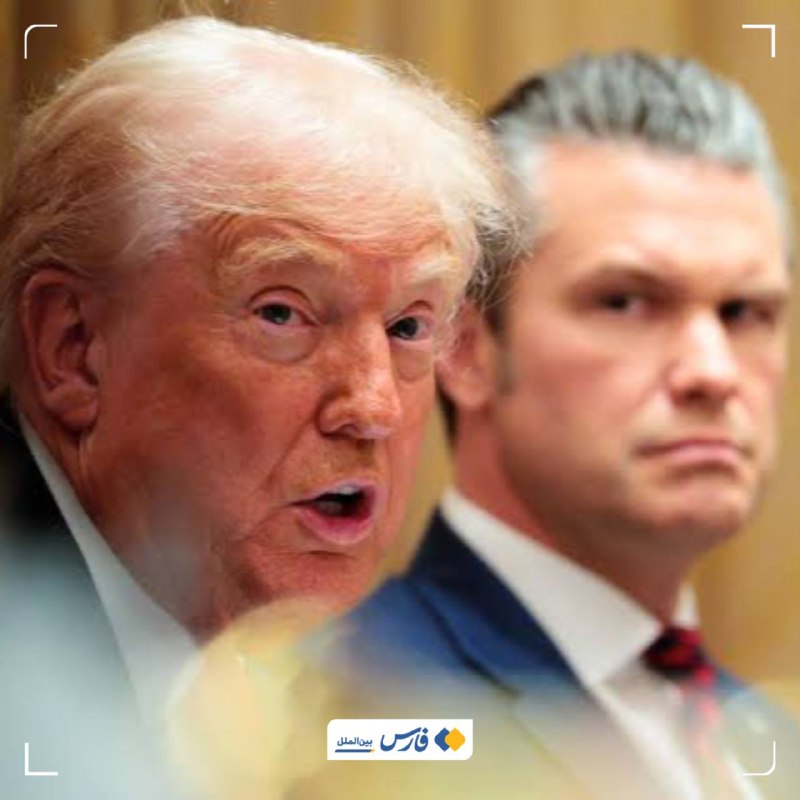
The United States and Iran electronically signed a memorandum of understanding on the evening of 17 June 2026, ending an active war between the two countries in what two US officials described as the first bilateral US-Iran agreement of its kind executed through digital signature by the leaders of both governments. Iranian President Masoud Pezeshkian and US President Donald Trump each put their name to the document, with the signing finalised during a working dinner hosted by French President Emmanuel Macron at the Palace of Versailles, according to reporting carried by Reuters and Axios.
The agreement is, on its face, the most consequential diplomatic event between Washington and Tehran in a generation, and the unusual mechanics of its execution — electronic signatures exchanged across continents, witnessed in a third country's palace — are likely to be studied as much as the text itself. The exact terms of the memorandum have not yet been published in full, but the framing from both US and Iranian sides converges on a single phrase: an end to the war.
A signing ceremony held at Versailles
The MoU was finalised during a dinner at the Palace of Versailles hosted by French President Emmanuel Macron, with Trump personally signing a copy of the agreement and a photograph of the signed document dispatched to Iranian counterparts, according to Axios's reporting relayed by Telegram channels covering the Iran file. The choice of venue was not incidental. France has positioned itself as a diplomatic intermediary between Washington and Tehran across multiple administrations, and Versailles offered a stage of sufficient grandeur to dignify a document whose political weight at home, in both the United States and Iran, will be heavy.
Two senior US officials confirmed to Axios that the document had been electronically signed and was in effect as of the evening of 17 June 2026. Reuters separately reported the bilateral signing, identifying the two principals as Trump and Pezeshkian. The electronic execution is a procedural novelty for US-Iran diplomacy; previous agreements, including the contested 2015 Joint Comprehensive Plan of Action, were signed physically in a single location with foreign ministers or secretaries of state as the signing parties.
What we know, and what we do not
The mechanism is clearer than the substance. Reporting from the wire services and from Telegram channels monitoring the file establishes four facts with reasonable confidence: a memorandum of understanding was signed; the signatories were Pezeshkian and Trump; the document was executed electronically; and the purpose, as described by the US side, was to end the war.
What the available sources do not specify is the war's starting point, the territorial or military terms of the cessation, the question of reparations or sanctions relief, the role of Israeli and Gulf state equities, or the status of Iran's nuclear programme. The framework agreement signed at Versailles is, in other words, an MoU — a political declaration of intent — not yet a treaty, and the technical annexes that would convert intent into obligation are not in the public record.
The structural read
A bilateral MoU between two governments that, until hours earlier, were at war is a hegemonic event in plain language: the incumbent order announcing that it has agreed to stop fighting. The Versailles setting matters precisely because it is European — a US-Iran understanding being shepherded in a French palace, witnessed by a French head of state, signals an arrangement that the European Union and the wider Western alliance are prepared to underwrite politically, even where they are not formal parties to the text.
For Iran, the document offers a route off the economic footing of wartime sanctions and into a negotiation track in which the country's diplomatic corps, not its armed forces, becomes the principal interlocutor. For the United States, the MoU permits a declared end to a war without the political cost of a full treaty ratification fight in the Senate — a recurring headache in US foreign policy since the rejection of the Versailles Treaty itself in 1919. The choice of venue is therefore not merely ceremonial; it is a structural signal that the document is intended to live in the executive-agreement lane rather than the treaty lane.
The counter-read is straightforward: an electronically signed MoU, whose text has not been published, between governments whose domestic political incentives favour ambiguity, is a fragile instrument. Memoranda of understanding are not treaties; they bind the signatories politically but not legally under international law, and there is no international arbitral mechanism that can enforce one if either side walks away. The history of US-Iran diplomacy is largely a history of precisely such instruments — signed, celebrated, and then allowed to lapse.
Stakes and what to watch next
Three things will determine whether the 17 June MoU becomes a genuine inflection point or a footnote. The first is the publication of the substantive text. Until the annexes and any side-letters are visible, analysts on all sides will be reading the document's silences as loudly as its commitments. The second is the response of regional actors — Israel, Saudi Arabia, the United Arab Emirates, Iraq — each of whom has equities in the US-Iran relationship and each of whom will be calculating whether a quieting of the bilateral file advances or constrains their own position. The third is the behaviour of the Iranian and American domestic political systems over the next ninety days: parliamentary debate in Tehran, congressional scrutiny in Washington, and the texture of media coverage in both capitals will set the durability of the arrangement.
What the sources do not yet allow is a confident judgment on whether the document marks the end of a war or the beginning of a longer negotiation that merely resembles one. The signing is a fact. The peace is, for now, a claim.
This publication treated the 17 June signing as a confirmed bilateral event sourced to Reuters and Axios reporting, with the venue and electronic-execution mechanism sourced to the same wires; the substantive content of the MoU was deliberately left undescribed pending publication of the full text.
Wire provenance
This editorial synthesis draws on the following public wire/social posts:
- https://t.me/DDGeopolitics
- https://t.me/GeoPWatch
- https://t.me/rnintel