US and Iran sign memorandum of understanding, ending the war — at least on paper
Two US officials told Axios on 17 June 2026 that Washington and Tehran electronically signed a memorandum of understanding to end the war, with Trump personally countersigning at a Macron dinner in Versailles.
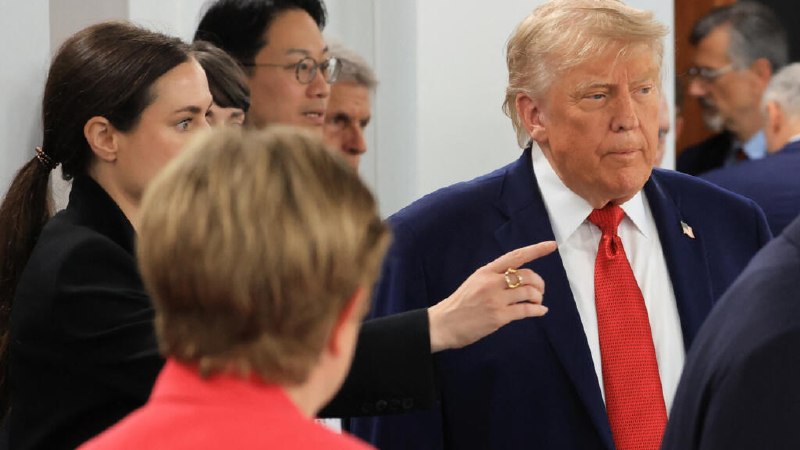
On the evening of 17 June 2026, two American officials told the Axios news website that the United States and Iran had electronically signed a memorandum of understanding to end the war, and that the document was already in effect. The arrangement, they said, was the first known bilateral US–Iran agreement to be countersigned electronically by the leaders of both countries — President Donald Trump and Iranian President Masoud Pezeshkian. The signing, according to a separate Axios report cited by Iranian and geopolitical-watch Telegram channels, was followed by Trump personally signing a paper copy during a dinner with French President Emmanuel Macron at the Palace of Versailles; a photograph of the signed page was circulated to both delegations.
The framework being described is a memorandum, not a treaty. That distinction is doing most of the political work. A MoU signals that two governments have agreed on text without either having to put the agreement through a domestic ratification process, which in the US Senate would almost certainly be a non-starter. The document's authority rests on the willingness of both sides to abide by it, and on the credibility of the verification arrangements that may or may not accompany it. The Iranian readout on the same evening described the MoU as a binding cessation of hostilities; American officials were more cautious, framing it as the first step in a longer sequence.
The shape of what was signed
What is known about the substance of the document is limited to what officials have said about it in the hours since the signing. According to the US-side account relayed by Axios, the MoU commits both parties to an immediate end of kinetic operations and opens a sequenced process of de-escalation, sanctions calibration, and — over an unspecified timeline — the kind of confidence-building measures that have previously formed the spine of US-Iran diplomacy: nuclear constraints, regional proxy de-mobilisation, and the release of detained nationals on both sides. None of those specifics have been published in text form; this publication has not seen a copy of the MoU and the US government has not released one.
The choice of Versailles as the backdrop is itself a piece of soft signalling. By having the document countersigned at a French-hosted dinner rather than in a neutral Gulf capital or in Geneva — the customary venue for US–Iran back-channel talks — the Trump administration is borrowing the visual language of great-power summitry. Macron, who has tried to position France as an indispensable diplomatic interlocutor in any US–Iran deal, gets his photograph at the centre of a deal he did not negotiate. The Iranian side gets a setting in which the United States and a European nuclear power are visibly standing behind the text. The arrangement serves all three governments' domestic audiences; whether it survives contact with the underlying dispute is a separate question.
The Iranian framing
Iranian state-aligned channels read the agreement rather differently. The framing on Fars News International, which moved the Axios story within minutes of the US-side report, emphasised two points: that the MoU was concluded through Iranian insistence on parity (the leaders of both countries signed, electronically, and Trump then signed a ceremonial copy in person), and that the document represented an Iranian diplomatic achievement after years of asymmetric pressure. The Iranian reading treats the Versailles dinner as a concession by Washington — proof that the United States was willing to travel to a European venue and to sign a document Iran had negotiated on roughly equal terms. Whether the underlying text bears that reading out is a question that only the full MoU, once published, will resolve.
This matters because Iranian and American domestic audiences are being sold two different versions of the same document. In Washington, officials are pointing at the MoU as a Trump administration foreign-policy win. In Tehran, the framing is that the Islamic Republic has forced the world's pre-eminent power to its first-ever electronically signed bilateral with the Islamic Republic. Both stories can be true simultaneously; both can also obscure the parts of the text that neither side is yet willing to defend in public.
The counter-read
There is a separate, less charitable read of what happened on 17 June. A memorandum of understanding is precisely the kind of document that can be announced, applauded, and quietly set aside when the first round of verification breaks down. US–Iran agreements have a thirty-year history of that pattern, from the 1994 Paris framework to the 2015 Joint Plan of Action. The MoU may buy the two governments a window in which no-one is shooting; it does not, by its legal nature, prevent either side from walking away from it on relatively short notice.
There are also reasons to be cautious about treating the Axios reports as the definitive record. Axios's Iran coverage is tier-one for scoops — the bylines on this story, attributed in the Telegram wires to Barak Ravid, are the most reliable non-governmental US-side reporting on the dossier — but the underlying sourcing is two American officials speaking to a single outlet. The text of the MoU has not been published. The Iranian Foreign Ministry has not yet issued a parallel confirmation. The Israeli government, which has historically been the single most consequential external actor on US–Iran nuclear diplomacy, has not yet publicly responded; its silence, in a 24-hour window after a signing of this magnitude, is itself a data point.
What is and is not yet known
The verifiable core of the 17 June reporting is narrow: the US and Iran electronically signed a memorandum of understanding to end the war; the document is described as in effect as of the evening of 17 June 2026 UTC; Trump signed a paper copy at a Macron dinner in Versailles; the arrangement is being treated by both sides as the first of a sequenced process rather than a final settlement. The substance of the text — what Iran has agreed to give up, what the United States has agreed to release, what verification mechanism, what timeline, what enforcement — has not been disclosed in the reporting this publication has access to.
What is also missing is the response of the actors who are not at the table. Saudi Arabia, the United Arab Emirates, and Israel have direct stakes in any arrangement that loosens the sanctions architecture around Iran. The Gulf states, in particular, have spent the better part of two decades building a security architecture predicated on Iran's isolation; a US–Iran MoU that does not consult them risks being treated as a Washington-Tehran bilateral that ignores the region's veto players. The Israeli position, historically, is the most consequential external variable. If Tel Aviv reads the MoU as capping rather than containing the Iranian nuclear programme, the document's shelf life is short.
The structural pattern
What is unfolding on the evening of 17 June 2026 is consistent with a wider pattern: a US administration that prefers short, executive-action agreements, signed in venues chosen for their visual weight, and announced through a trusted single outlet rather than a joint communiqué. The Versailles dinner, the electronic signing, the photo of a Trump-autographed page — these are the optics of a deal designed to be unmissable. Whether they are the optics of a deal designed to last is the question that the next 30, 60, and 90 days will answer. For now, the war is, on paper, over. The politics of what was signed, and what was not, are just beginning.
This publication treats the Axios scoop on the US–Iran MoU as the lead wire for the 17 June 2026 reporting, with the Iranian state-aligned channels as primary verification of the Iranian-side framing. The text of the memorandum itself has not yet been published; claims about its substance are sourced to officials speaking anonymously and should be read as provisional until the document is on the record.
Wire provenance
This editorial synthesis draws on the following public wire/social posts:
- https://t.me/FarsNewsInt
- https://t.me/FarsNewsInt
- https://t.me/GeoPWatch
- https://t.me/GeoPWatch
- https://t.me/rnintel
- https://t.me/rnintel