Vance says US and Iran have a draft deal, but the text stays classified — for now
In back-to-back interviews aired 17 June 2026, the vice president confirmed Washington and Tehran have a memorandum of understanding — and that Islamabad has asked both governments to keep the wording under wraps.
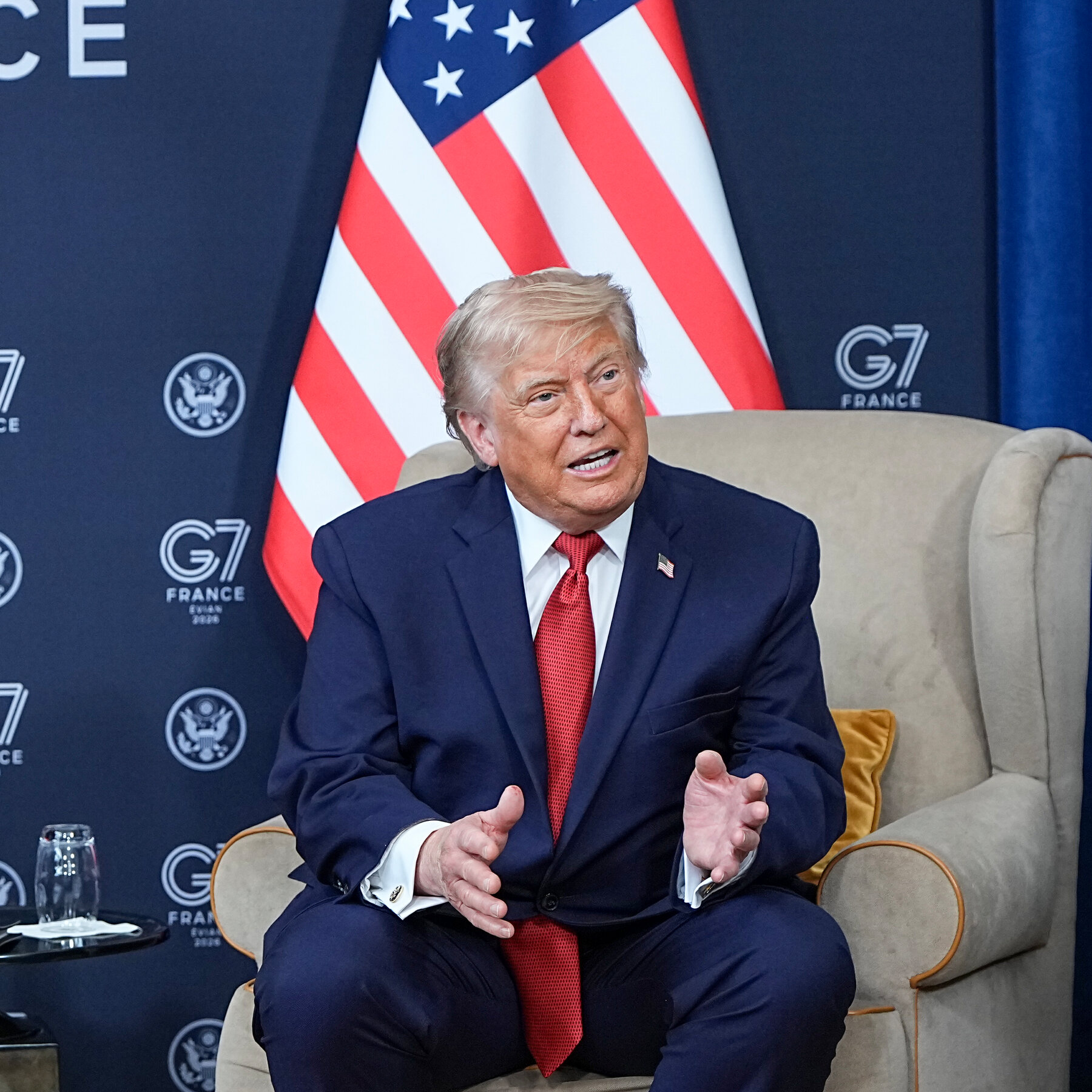
US Vice President JD Vance confirmed on 17 June 2026 that Washington and Tehran have signed a memorandum of understanding laying out "a framework for the Iranians to obtain some advantages and return to the global economy," and said the Pakistani government had asked both sides to keep the full text out of public view "for some time." The remarks, delivered to CBS in separate exchanges captured by Iran-aligned and pan-Arab outlets between roughly 13:07 and 13:26 UTC, amount to the first on-the-record American acknowledgement that the document exists in signed form.
The disclosure lands in a week already crowded with sub-plots — not least a parallel Vance interview in which he insisted that Jeffrey Epstein's associates could only be prosecuted "if you have the evidence to prove their wrongdoing." Read together, the two clips sketch a vice-presidential communications shop that is unusually willing to acknowledge what it has and what it does not, and unusually constrained in what it can put on the record.
What Vance actually said
In the CBS interview excerpt carried by Al-Alam Arabic at 13:07 UTC, Vance framed the document in transactional terms: "The memorandum of understanding provides a framework for the Iranians to obtain some advantages and return to the global economy." Sixteen minutes later, the same broadcaster logged a follow-up in which Vance added, "The Pakistani side has asked us not to publish the full text of the memorandum for some time," signalling that Islamabad is functioning as the deal's custodian rather than a passive host. Tasnim, the Iranian state news agency, ran an English summary of the same exchange at 13:23 UTC with a near-identical quote.
The vice president's framing matters because it admits two things the administration had previously declined to confirm. First, that the document is binding enough to call a "memorandum of understanding" rather than a "set of principles" or a "common ground" document. Second, that the economic upside for Iran is bilateral — "advantages" in exchange for concessions — rather than a unilateral sanctions rollover.
The Pakistan angle
Vance's decision to credit Islamabad publicly is more revealing than it first appears. Pakistan is the only major Sunni-majority US partner that has both the diplomatic standing in Tehran and the bandwidth to serve as honest broker after rounds of Omani-mediated talks stalled in 2024 and 2025. By naming the Pakistani request to withhold the text, the vice president effectively confirms a three-corridor arrangement: US and Iranian negotiators in the room, Pakistani diplomats in the corridor deciding what leaves it.
The structural read is straightforward. A deal whose text is secret for a defined period is, in practice, a deal whose verification regime is secret for a defined period. That gives each side a grace window to argue, internally, that compliance is or is not material. The same logic cut the other way: it also gives Tehran a window in which to argue, to European and Chinese buyers of Iranian crude, that the sanctions architecture is about to soften — regardless of whether the US Treasury's Office of Foreign Assets Control has issued a single general licence.
The Epstein caveat
In a separate interview carried by Clash Report at 13:26 UTC, Vance was asked about the persistent public pressure to release the full Epstein files and to prosecute named individuals. His response — "We can't just prosecute people because we think something is wrong. You can only prosecute people if you have the evidence to prove their wrongdoing" — was a procedural answer rather than a political one, but it read as a template. The administration is prepared to acknowledge that a sealed document exists, prepared to confirm it has been signed, and prepared to say publicly that publication is being deferred at the request of a third party. It is not, however, prepared to say what is in it.
That posture has a domestic logic. The Epstein comment pre-empts a likely line of attack from congressional Democrats and from a noisy online commentariat: that the administration is shielding elites from prosecution. By tying the standard back to evidentiary sufficiency, Vance repositions the debate from "will you release" to "what would you prosecute." The same playbook applied to Iran lets the White House claim a diplomatic win without surrendering the text to congressional oversight or to Israeli, Saudi, or UAE reviewers who might object to whatever trade-offs are inside.
What stays unresolved
The most important unknown is the most basic. Neither Vance's remarks nor the Iranian readouts specify whether the document is a political memorandum — signed by foreign ministers, not requiring ratification — or a treaty-grade instrument. The choice changes everything about whether the deal can be unwound by a single executive order. Vance's choice of the phrase "memorandum of understanding," rather than the softer "common ground document" used in earlier rounds, suggests the former. But the absence of a published text leaves the question formally open.
The secondary unknown is timing. "For some time" is not a date, and the Pakistani request gives both governments a vague horizon on which to default. If a 90-day window was the unstated deal, the public first sighting of the text would arrive in mid-September, conveniently inside the lead-up to US midterm campaigning. If a 30-day window was the deal, that sighting comes in mid-July, before the administration's summer recess and before the IAEA's quarterly Board of Governors meeting. The sources do not specify which.
A third unknown is sequencing with the IAEA. Iran's stock of 60%-enriched uranium, its ongoing installation of advanced centrifuges at Natanz and Fordow, and the agency's standing complaint that Tehran has not fully explained uranium particles found at undeclared sites are the three technical files the deal has to clear. Vance's description of "advantages" is silent on which of those files the MOU addresses. The structural frame suggests the document is a framework, not a final settlement — the kind of instrument that locks in a process and a payment schedule rather than a verification regime.
Stakes
For Tehran, the deal is a first foothold back into dollar-cleared trade and a precedent for future engagement with a US administration that has been more willing to talk than its predecessor. The advantage flows to whichever Iranian faction can claim credit inside the Islamic Republic's fractious politics: reformists who argued for engagement, or hardliners who can now claim to have extracted concessions without giving up the nuclear file.
For Washington, the deal is a foreign-policy deliverable in a year in which domestic political bandwidth is consumed by Epstein-adjacent fights, an unwinding Russia–Ukraine war, and a tariff cycle that has rattled allies. A sealed MOU, held by a friendly third-party government, is a low-cost way to claim a win without triggering the Senate advice-and-consent fight a formal treaty would require.
For the broader Middle East, the deal reorders the diplomatic geometry. Israel, which has fought the most muscular version of the US "maximum pressure" campaign, is now in the position of having to react to a signed text it has not seen. Saudi Arabia and the UAE, both of which hedged in 2025 by exploring their own détente tracks with Tehran, get to argue that quiet engagement was the right call. Pakistan, the surprise broker, accumulates a diplomatic win on a file where it has historically been a follower rather than a leader.
The honest read is that the text will surface — in part, in summary, or in leaks — before the end of summer. Vance has now publicly committed the administration to the existence of a document and to a deferral request from a named third party. Once those two facts are on the record, the political cost of indefinite secrecy rises with every news cycle. The vice president has, in effect, set a slow-burning timer on his own deal.
This publication reads the Vance interviews as a coherent communications choice: confirm the document exists, name the custodian, defer the text, and use the same evidentiary standard to handle domestic pressure on the Epstein files. The wire services carried the Iran clips; the structural analysis above is Monexus's own.
Wire provenance
This editorial synthesis draws on the following public wire/social posts:
- https://t.me/ClashReport
- https://t.me/tasnimplus
- https://t.me/alalamarabic
- https://t.me/alalamarabic