Warsh's First FOMC Test: Bitcoin Slips as a Hawkish Fed Delivers Its Verdict
New Fed chair Kevin Warsh inherits a divided committee on his first policy day, with rate-cut hopes evaporating into at least one expected 2026 hike — and Bitcoin testing $64,000 support.
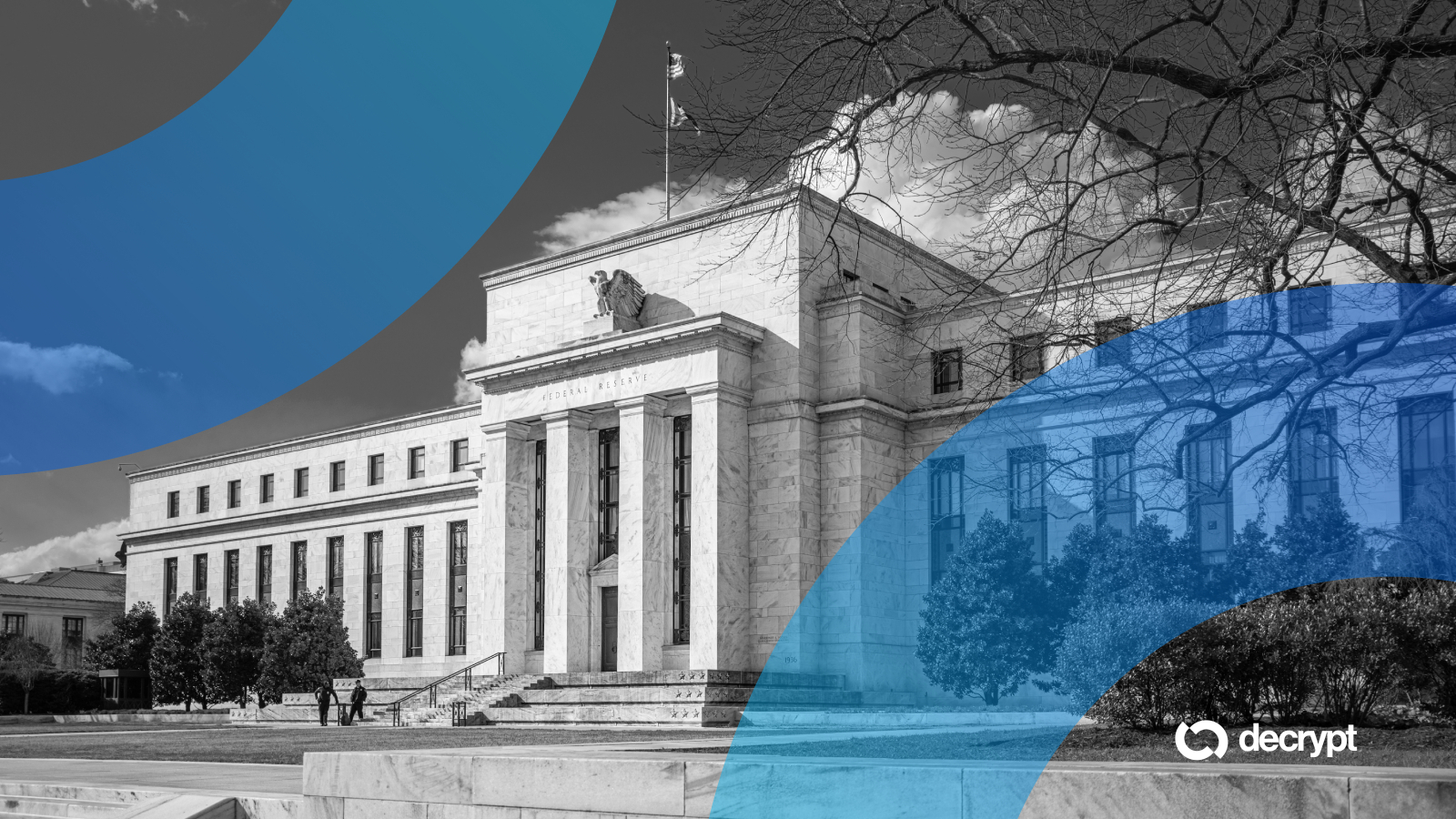
At 14:00 UTC on 17 June 2026, Kevin Warsh sat down at the Federal Reserve's mahogany table for the first time as chair. The Federal Open Market Committee's June meeting, his debut, was always going to be a stress test of a different kind: not whether Warsh could run a press conference, but whether the committee he inherited would treat his arrival as a license to do what a more inflation-wary faction has wanted to do for quarters — push back against the rate-cut consensus priced into the back end of 2026. By the time Bitcoin's spot price slipped into the $64,000 area during the New York morning, the answer looked less ambiguous than markets had wanted it to be.
The setup was not subtle. Going into the meeting, traders had been telling themselves two stories. The first was the dovish one: Warsh, a known hawk who nonetheless inherits an economy where services inflation has continued to drift and where the labour market is no longer obviously overheating, would defer to a committee that has consistently pencilled in two cuts before the end of the year. The second story, the one gathering weight in the days before the decision, was that a new chair does not arrive to ratify his predecessor's path. He arrives to make his own. The trading floor appears to have settled, reluctantly, on the second story.
The committee that greeted him
Warsh's first FOMC is also a committee shaped by the appointments and rotations of the last eighteen months. Several of the regional presidents who opposed the cutting cycle of 2025 have continued to argue, in the public remarks that FOMC participants are obliged to make, that the policy rate remains insufficiently restrictive given the persistence of core services inflation. A rate hold at the current corridor — which markets were already pricing as the base case — is one thing. A statement that drops the dovish bias the April minutes contained would be another. A fresh Summary of Economic Projections that moves the dot plot toward one more hike rather than two cuts is the version the rate-hike crowd has been waiting for, and the version that has the most explanatory power for the bond market's repositioning over the last fortnight.
That repositioning is the proximate cause of the price action. When the front end of the curve repriced toward "hold longer, hike later," risk assets sold off in proportion. Bitcoin, with its high sensitivity to changes in the discount rate applied to future cash flows (a sensitivity that has grown less mythical as spot ETFs have introduced a real marginal buyer in U.S. pensions and registered advisers), was always going to be the cleanest expression of that trade in a single instrument.
The trader warning
A widely circulated note from a Bitcoin trader on 17 June made the mechanics explicit: with the FOMC decision hours away, the asset had retreated toward what the analyst described as "important near-term support" and warned that a "bearish reaction" to the policy statement would put a $55,000 target on the table, while a less-hawkish-than-feared outcome would, in this framing, allow a relief bounce. The framing matters less than the arithmetic: a roughly fifteen-percent gap between the support being defended and the bear-case target is, for an asset that had been trading in a tight range for weeks, the kind of one-day move that margin desks actually plan around.
The market structure around the meeting had been preparing for it. Open interest in CME Bitcoin futures had been climbing into the decision; the options skew had tilted toward puts; funding rates on perpetual swaps had softened. None of that guarantees a direction, but it does suggest that the marginal participant was not paying for upside.
The structural read
Zoom out, and the story is not really about Warsh. It is about the limits of the rate-cut consensus that dominated the first quarter of 2026. That consensus always required three things to be true at once: that core inflation was on a glide path to two percent, that the labour market was loosening at a pace consistent with a soft landing, and that the neutral rate had drifted up in a way that allowed real rates to fall without nominal rates following. The third leg of that stool is the one that has cracked. If the committee concludes that the neutral rate is, in fact, higher than the dot plot suggested in March, then holding the policy rate where it is becomes, in real terms, a tightening. And if a new chair wants to make his mark early, that is exactly the kind of reframe the moment invites.
A narrower read is also available. Markets had been counting on cuts priced for the back half of the year, with investors at one point pricing at least one 25-basis-point hike by year-end — a striking inversion of the consensus that prevailed in February. The June meeting, in this reading, is less a hawkish surprise than a confirmation of a repricing that had already occurred in the rate path. Bitcoin is not falling on the news; it is falling because the news has finally caught up with what the curve already knew.
Either reading points the same way for policy: do not expect an easy Q3. The FOMC that Warsh now chairs is signalling, by composition and by recent speech, that it will be more reluctant to ease than the version that produced the March projections.
Stakes and what to watch
The near-term stakes are mechanical. If $64,000 fails on a daily-close basis and the options market's put skew stays where it is, the path toward the $55,000 target flagged in the trader note is plausible — and a move of that size, against a backdrop of ETF flows that have become the marginal price-setter, will be felt in the funding rates of the major offshore venues long before it is felt on a retail brokerage statement. If, on the other hand, the statement softens — a single word, a tweak in the description of the inflation outlook — the relief rally will be violent precisely because the positioning is one-sided.
The deeper stakes are about credibility. Warsh's first meeting is, in effect, a referendum on the dot plot the committee he inherited will publish alongside the decision. If the dots move toward a hike, the new chair will have arrived, signalled, and been believed. If they do not, the market will conclude that the committee is, in fact, the boss — and the next twelve months of communication policy will be harder. Either outcome is consistent with a Federal Reserve that is taking its inflation mandate seriously. The price of Bitcoin between now and the July meeting will be the most public scorecard of which reading the market has chosen to believe.
— A Monexus staff-writer note. The wire packages of 17 June treated Warsh's debut as a personality story; Monexus treats it as a committee story, where the new chair's revealed preference is less important than the revealed preference of the institution he now runs. Where the headlines emphasised the rate decision, the more durable question is whether the dots that accompany it confirm a repricing already underway in the front end of the curve.
Wire provenance
This editorial synthesis draws on the following public wire/social posts:
- https://t.me/s/CryptoBriefing
- https://t.me/s/CryptoBriefing