A World Cup, a White House, and the Geometry of an Iran Deal
As the US and Iran race to sign a memorandum, the same administration that engineered the framework is reserving the right to make Iran’s footballers leave the country within hours of every match.
On 17 June 2026, the United States and Iran were reportedly discussing moving up the signing of a long-anticipated memorandum to as early as the same day, according to a polymarket-cited wire at 15:24 UTC. The framing inside the White House is straightforward: Donald Trump told reporters he had pushed for the deal to avoid an "economic catastrophe" on par with the Great Depression. The framing inside Iran, by every available signal, is the same. Both governments want this off the runway. The question worth asking is what shape the runway takes once the deal lands.
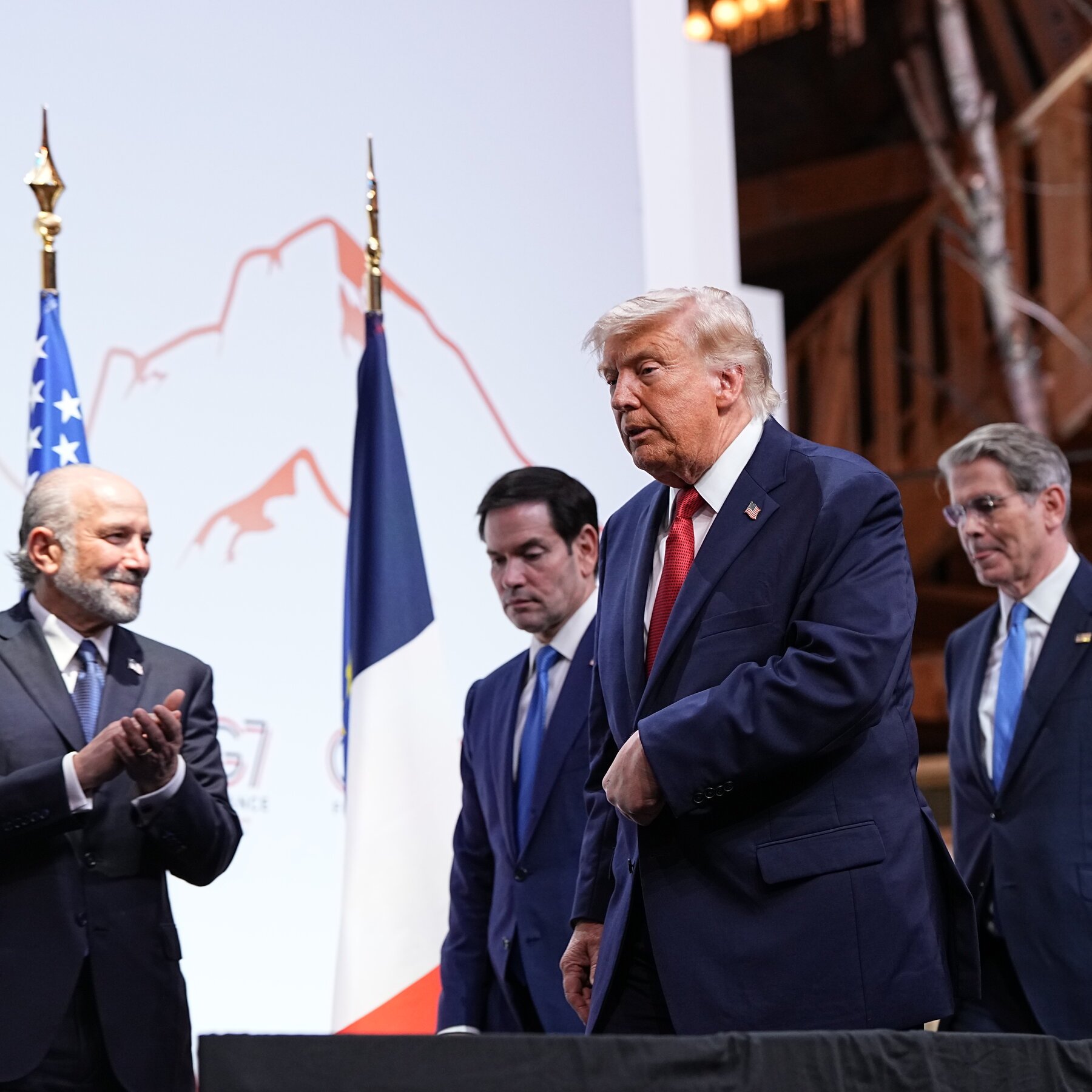
The signature is being staged against a backdrop that is anything but normal diplomacy. FIFA's 2026 World Cup is hosted in the United States, Canada and Mexico, and Iran has qualified. On 17 June 2026 at 01:28 UTC, a White House official told reporters that Iran's World Cup team will be required to leave the US within hours of every match. The qualification tournament is a sporting event; the visa regime around it is a foreign-policy instrument. So is the photograph.
The deal, briefly
A polymarket dispatch at 17:13 UTC on 17 June carried Trump's own characterisation of the stakes. The Great Depression, he said, was the benchmark he was trying to avoid. The implied counterpart is not just Tehran but the oil market, the Strait of Hormuz, and the price of gasoline in an American election year. The administration has framed the negotiations in those terms for months, and the framing has not shifted as the deadline has moved.
The mediator track is older than this White House. Oman, Qatar and Switzerland have shuttled between Washington and Tehran for the better part of two years; their work predates the current term and survives it. The reported acceleration to as early as 17 June is a logistics story, not a substance story: the parties have been trading drafts for weeks. What is new is the political window in which a signature becomes possible.
The World Cup as instrument
Then there is the football. The polymarket market that opened on this question — whether Trump will appear in the World Cup champion's official team photo — was pricing a 55% chance of yes as of 18:07 UTC on 17 June. A sitting US president inserting himself into the trophy photograph of a tournament his country is hosting is, on its face, a vanity project. It is also, structurally, a stage-management decision. The 2026 final is the most-watched single diplomatic setting of the year.
Iran's team sits inside that setting under conditions no other qualified side faces. The order that its players leave US soil within hours of every match treats a national football federation as a managed population. The travel, the transit hubs, the chain of custody for jerseys and equipment — every step becomes a moving visa event. The order does not name Iran as an enemy state; it does not have to. The administrative footprint does the work.
The domestic stage, briefly
The same news cycle on 17 June carried an unrelated item worth noting for context: Robert F. Kennedy Jr. announced $700 million in new funding to address mental illness, addiction and homelessness, per a polymarket-cited wire at 17:57 UTC. The headline number is large; the line item is small relative to federal health spending. The reason it lands on the same day as the Iran memorandum is that both items show the administration governing through discretionary announcement. The Iran deal, the stadium photo, the public-health figure — each is a discrete piece of stagecraft tied to a single news cycle.
The pattern is not new; the simultaneity is. A government that wants to sign a sensitive diplomatic instrument in the same 24-hour window it announces a $700 million programme and stages a World Cup cameo is a government that wants the news machine running at full capacity. The strategic question is not whether the deals land. It is what the public remembers.
What the dominant framing misses
The standard read of the week — Iran deal in the offing, World Cup glamour, RFK splash — flatters the White House. It treats the Iran deal as a steady-state negotiation, the World Cup as a sporting backdrop, and the public-health announcement as ordinary governance. Each of those frames is incomplete.
The Iran deal is not steady-state. The visa regime around Iranian athletes is a direct contradiction of the diplomatic posture the memorandum is supposed to seal. A government that requires the Iranian team to leave the country within hours of every match is not treating Tehran as a normal diplomatic partner; it is treating a future memorandum as conditional hospitality. The structural point is that deals and instruments of pressure now coexist in the same diplomatic week, and the public is asked to read them as separate stories.
The counter-reading worth taking seriously is the Iranian one: a government that signs under these conditions is a government that has decided the cost of non-signing is higher. The $700 million announcement and the photograph staging are American flourishes. The departure-from-US-soil order is the constraint Tehran is signing under. The Great Depression framing is the rationale; the stadium is the venue; the visa regime is the term sheet.
Stakes and what remains contested
If the memorandum lands, three things shift at once. The oil market gets a short-term ceiling that lowers the probability of a Hormuz disruption; the US gets a verifiable freeze of certain Iranian nuclear activities; and the Iranian government gets sanctions relief calibrated to a domestic calendar. Each of those outcomes is real and concrete. None of them resolves the larger disagreement about Iran's regional role, its missile programme, or the legal status of detained nationals.
The unresolved items are not minor. The visa regime around Iranian athletes is one. The detention file is another — it has not been resolved by the framework on the table, and the framework is itself reportedly being accelerated rather than renegotiated. The memorandum is a partial instrument in a longer dispute; treating it as the dispute's conclusion would be the analytical error of the cycle.
What the public sources do not specify is the exact text of the memorandum, the enforcement mechanism, the snapback architecture if either side moves, or the specific athletes and equipment affected by the Iranian team's transit requirements. Those are the items to watch in the days that follow a possible signature. Until they are public, the deal is a shape, not a substance.
— Monexus framed this as a single news cycle containing three discrete instruments — a diplomatic signature, a sporting visa regime, and a domestic policy headline — rather than three unrelated stories. The wire coverage treats them as separate beats; the structural read is that they are part of one stage-managed week.
Wire provenance
This editorial synthesis draws on the following public wire/social posts:
- https://polymarket.com/event/will-trump-be-in-the-wc-champions-photo-20260608152527021?via=x-afr2