The World Cup in Multipolar: Reading a Group-Stage Match on a Latin American Wire
A routine Group-stage fixture between Portugal and DR Congo, carried live by a Latin American broadcaster, exposes how the 2026 World Cup is being narrated along political as well as sporting lines.
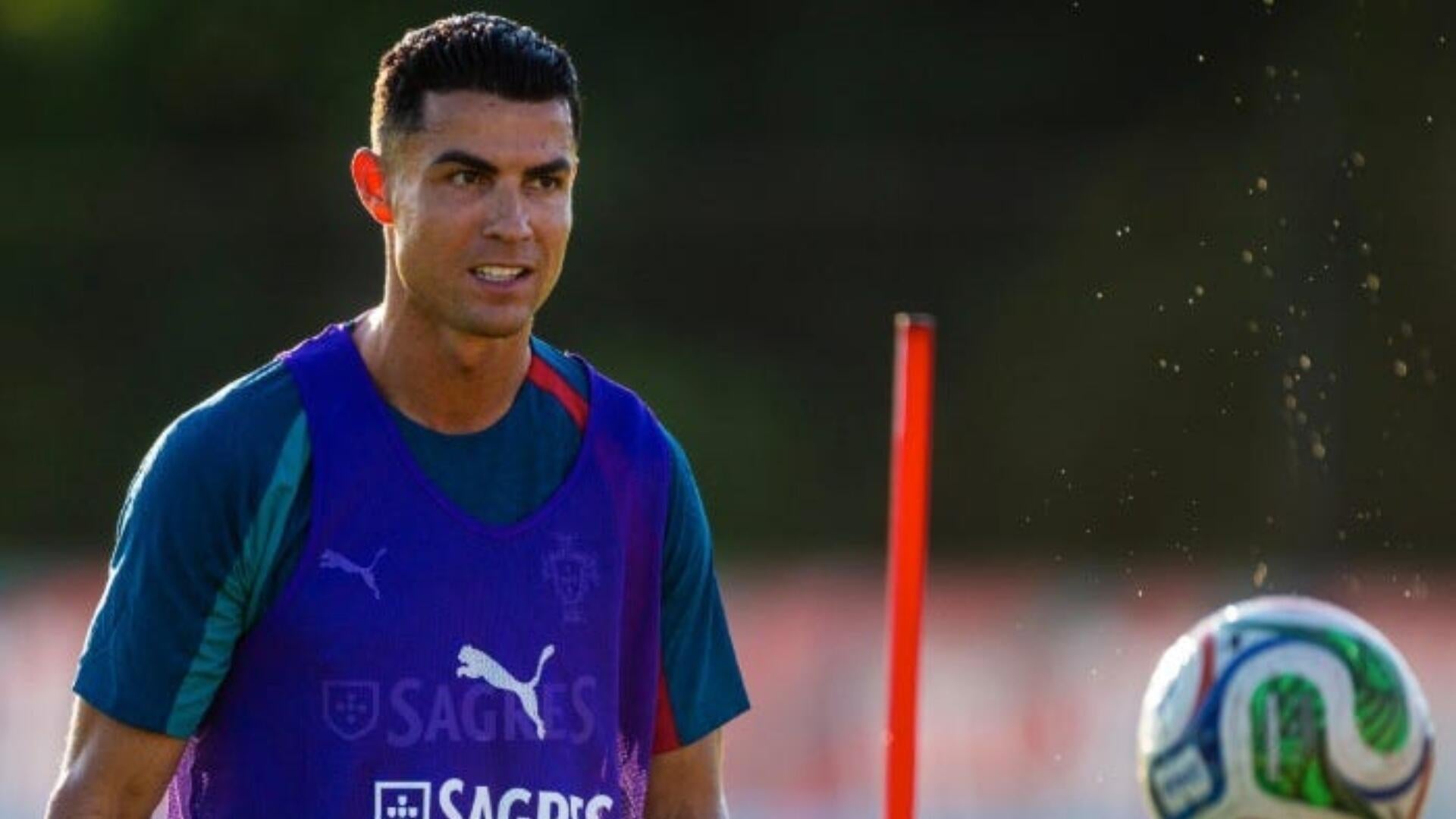
The most interesting thing about Portugal versus DR Congo on 17 June 2026 was not the score, the shape of either midfield, or whether Cristiano Ronaldo's legs have finally betrayed him. It was the camera angle. At 17:10 UTC, as the referee Abdulrahman AlJassim — a Qatari official entrusted with one of the tournament's showcase fixtures — awarded a free kick to the Congolese in their own half, the live feed being threaded across the Global South was not a Lusophone or Anglophone broadcast. It was Caracas. TeleSUR English, the multilingual arm of Venezuela's state-aligned broadcaster, was running the play-by-play in its own voice, to its own audience, in its own time zone, with the unhurried cadence of a network that has spent fifteen years practising the grammar of multipolar coverage.
That choice — who narrates a match to whom, in whose cadence — is the story. A World Cup hosted in North America was always going to be a contested media object, but the 2026 edition has surfaced a quieter pattern: the loudest voices covering the tournament for much of the Global South are no longer the wire copy desks of London or New York. They are Doha, Ankara, Caracas, Beijing, and Johannesburg, each editing the same fixture for a different implied viewer.
A fixture, and who got to call it
By 17:14 UTC, TeleSUR was live-tweeting the match at minute-by-minute granularity: Portugal goal kicks, throw-ins in their own half, a Bakambu effort from twenty metres that deflected wide (per the broadcaster's own description at 17:15 UTC). The detail matters less than the framing. TeleSUR did not cast the game as a European giant touring a development story; the Congolese were named in full, the Qatari referee by name, and the match was given the same flat, play-by-play treatment any fixture would receive on a major rights-holder. The implicit editorial claim is that a World Cup group game between a former colonial power and a former colony is, in 2026, ordinary. The novelty is that an audience in Caracas, La Paz, or Nairobi is being addressed as the default reader rather than the afterthought.
What the Western wires will not tell you about the bracket
The Anglophone press will frame Portugal-DR Congo through the lens of individual stardust — Ronaldo, perhaps Bruno Fernandes on one side; Bakambu, Yoane Wissa, and the Marseille-born Chancel Mbemba on the other. The treatment will be generous, almost anthropological, because the African side has no prior habit of progressing past the group stage at this tournament and the players carry compelling biographical arcs. That is a legitimate angle. It is also a frame that locks the Congolese into the role of visitors in a tournament their federation helped qualify for on merit.
There is another reading. The Democratic Republic of Congo is a country of roughly 105 million people, mineral-rich beyond the dreams of any battery industrial policy on either side of the Atlantic, and was, until 1960, the personal property of King Leopold II. That history does not belong inside a match report, but it does belong inside the camera's editorial choices. When TeleSUR or Al Jazeera English hold the lens a beat longer on a Congolese set-piece, or decline to cut away during a slow walk back to the centre circle, they are not staging a protest. They are simply choosing whose boredom is worth respecting.
The structural shift underneath the broadcast
The deeper pattern is the slow unbundling of football's narrative monopoly. For thirty years, the rights to narrate the World Cup were held by a small cartel of European and US broadcasters, who sold their coverage to the rest of the world through sub-licensing. The 2026 tournament, distributed across three North American host countries and broadcast into an African and South American audience that is now majority urban and majority mobile-first, has loosened that grip. Mid-tier state-aligned and regional broadcasters — TeleSUR, Al Jazeera, beIN, RT en Español before its European reversals — are running their own play-by-play feeds and finding an audience that prefers the cadence of a fellow Southern network to the clipped authority of a London anchor.
This is not a moral story; it is a distribution story. The audience for football in 2026 is more diffuse than the audience for football in 1998, and the people who own the cameras have caught up. The product on the pitch is the same. The lens and the commentary are now negotiated.
Stakes
If the trend holds, the next World Cup will be carried into a majority of its biggest markets by broadcasters whose editorial priors are not Western European. That has consequences. African federations will find sympathetic microphones for arguments about refereeing and scheduling that used to die in the inboxes of European sports editors. South American broadcasters will frame South American games in South American time. The Anglophone press will lose its monopoly on the adjectives. None of this changes who lifts the trophy. It changes who gets to describe what lifting it means.
What remains uncertain
The TeleSUR feed on 17 June was a play-by-play, not an editorial product, and a single group's worth of free-kick commentary is a thin reed on which to hang a thesis. The harder question — whether the multipolar narration extends past the group stage into knockout coverage, and whether the rights-holders themselves consolidate or fragment — is not yet visible in the source material. What the threads do show, plainly, is that the camera is no longer owned by a single network of capitals, and that the people holding it are not in a hurry to give it back.
How Monexus framed this: where the Western wire sees a routine group-stage fixture, we read the choice of broadcaster as the news — a quiet illustration of how a 2026 World Cup is being narrated across competing media ecosystems rather than a single one.
Wire provenance
This editorial synthesis draws on the following public wire/social posts:
- https://x.com/telesurenglish/status/
- https://x.com/telesurenglish/status/
- https://x.com/telesurenglish/status/