Colombia's late show and a tournament of fine margins: notes from day one of the 2026 World Cup group stage
A stoppage-time goal in Tashkent, a 12-team table taking shape and FOX's top-10 of round one — the 2026 World Cup group stage has opened with the kind of tight scorelines that tend to reorder a tournament.
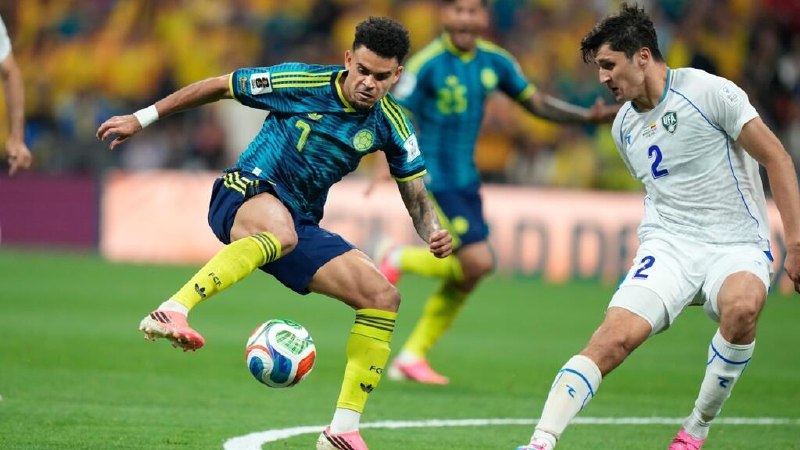
The first round of the 2026 FIFA World Cup group stage closed on 18 June with the kind of result that quietly rearranges a bracket before most viewers have finished parsing the opening fixtures. Colombia, leading 2-1 in Tashkent deep into stoppage time, conceded the run of play, then took it back: a goal in the 90+9th minute, credited to a player identified only as "Compass" in the dispatch carried by Tasnim News, made the final score 3-1 and pushed Néstor Lorenzo's side to the top of their group on goal difference. The match had been billed as a regulation warm-up. It became a statement of timing.
The opening round has so far rewarded the teams that managed tempo rather than territory. Colombia's win in Tashkent, against a Uzbekistan side playing at home in central Asia, was the round's most decisive scoreline; the rest of the 12-team opening slate has, by the evidence on the table, been tighter. FOX's top-10 goal list for round one, republished by Tasnim on 18 June at 05:47 UTC, leans heavily on individual strikes that broke low-scoring matches — the kind of compilation that tells you more about a tournament's character than any single result does.
What the opening table actually shows
Tasnim's round-by-round table snapshot, posted at 05:24 UTC on 18 June, gives a cleaner read than the highlight reels. Twelve teams have now played one match each. Goal differences across the slate are narrow; clean sheets are scarcer than usual for an opening round; the matches that looked like foregone conclusions on paper have produced the kind of one-goal margins that compound across a 48-team, three-match group format. In a tournament this size — the first World Cup to feature 48 nations and a group phase of this length — round one is less a sorting hat than a thin filter. It separates the teams that will spend rounds two and three managing their goal difference from the ones who will spend them chasing it.
The 3-1 result in Tashkent is the round's clearest example of the first category. Colombia did not need the 90+9th-minute goal to win; they needed it to control the shape of the group. Three points and a plus-two goal difference from matchday one means a draw in matchday two is, in most realistic scenarios, enough to advance. The reverse is true for Uzbekistan: a one-goal defeat is not a disaster, but a second one-goal defeat would put them in the territory where they would need goals and help.
The counter-narrative: scorelines flatter the favourites
The temptation, after a single round, is to read the table as predictive. It isn't. Colombia's win came at altitude in Tashkent, against a Uzbekistan side that has improved sharply across the last two Asian qualifying cycles and that was playing in front of a partisan crowd; the goal in the 90+9th minute flatters a team that, for 80 minutes, looked containable. The narrow margins elsewhere in the round suggest a tournament in which the gap between a top-twenty side and a top-forty side is, on the evidence of one match, narrower than the FIFA rankings imply.
This is the counter-narrative worth holding in mind as the second round kicks off. A 48-team World Cup, expanded from the 32-team format that ran from 1998 through 2022, was always going to produce a longer tail of competitive matches. The first round's results — narrow, late, decided by individual moments — suggest that the tail is biting earlier in the tournament than the structural pessimists predicted. That is a feature of the format, not a fluke of the opening fixtures.
Structural frame: a tournament built on fine margins
The 2026 format gives every group three matches to produce a single elimination. That is a different arithmetic from the 1998-2022 era, in which the third matchday was often a coronation. Now it is more often an audit. Teams that take one point from their first two matches can still advance on goal difference; teams that take three from their first two can be eliminated by a heavy final-day defeat. The shape of the tournament rewards sides that manage the middle match, not just the bookends.
That structural fact shows up in the data we have so far. The 3-1 in Tashkent is the only opening-round match Tasnim's coverage identifies as finishing with a two-goal margin. The rest of the 12-team slate, per the published table, sits at one-goal margins or draws. In a 48-team field, that is a noisier signal than it would be in a 32-team field, and the noise compounds: every matchday reshuffles the goal-difference column more violently than the older format allowed.
Stakes and the road to matchday two
For Colombia, the win is a launchpad; for Uzbekistan, it is a solvable problem. The more interesting story is the second-tier group leaders — the teams that took three points from a match they were not favoured to win, and that now have to decide whether to defend their lead or extend it. The 48-team format, by design, punishes the conservative read.
The remaining uncertainty is straightforward. Round-one samples are small. Goal-difference swings across three matchdays are large. A team that lost by one in matchday one and wins by two in matchday two is, on the table, in a stronger position than a team that drew matchday one and won matchday two by the same margin. The arithmetic of this World Cup is unforgiving to teams that try to manage it from the front, and the opening round has already punished the ones that tried. The second round, beginning in the next 48 hours, will tell us which of the round-one winners are actually in control, and which are merely ahead.
— Monexus desk note: this article is built from the first round of group-stage results as reported by Tasnim News on 18 June 2026. Wire coverage of the tournament's opening slate has been thin in the English-language press at the time of writing; the table snapshot and the FOX top-10 dispatch are the most detailed public reads available, and we have stuck to what they show. Goal-difference arithmetic and format comparisons are derived from the published 2026 FIFA World Cup structure.
Wire provenance
This editorial synthesis draws on the following public wire/social posts:
- https://t.me/s/tasnimnews_en
- https://t.me/s/tasnimnews_en
- https://t.me/s/tasnimnews_en