Europe's 'tough new' China strategy is a posture, not yet a policy — and Beijing knows it
EU leaders are converging on a harder line before next month's summits. The harder question is whether member states will let Brussels spend the political capital to enforce it.
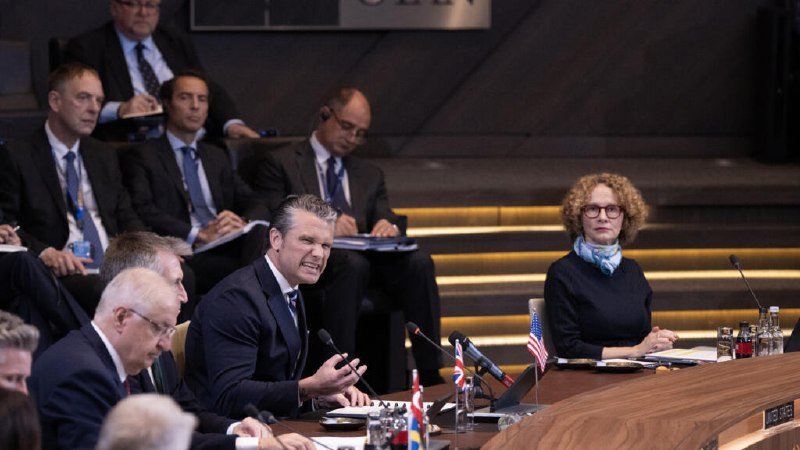
European governments are running out of road on China. With a flurry of late-June summits approaching — EU-China tracks, NATO's Hague window, and the G7 finance track in parallel — diplomats in Brussels and Berlin are publicly aligning around what the South China Morning Post on 18 June 2026 described as a "tough new China strategy." The phrase is doing a lot of work. It signals unity, prepares publics for restrictions on Chinese electric vehicles, batteries, and rail tech, and gives Brussels the air cover to call out Beijing's industrial subsidies in the language it has so far reserved for Washington. It is also, for now, a posture dressed as a policy. The enforcement mechanisms — anti-coercion instruments, outbound investment screening, reciprocal procurement rules for medical devices — are still contested inside the Council. Several member states would rather preserve export demand than legislate against it.
The shape of the alignment
The recent European pivot rests on three pillars. The first is a more honest reading of dependencies built up over fifteen years of de-risking rhetoric that, in practice, deepened exposure in batteries, solar modules, EV drivetrains, rail signalling, and rare-earth refining. The second is a political read of transatlantic risk: if Washington becomes a less reliable anchor for European security, then the European Union has stronger reason to defend its own industrial base, including against Chinese dumping in third markets. The third is fiscal — EU leaders know that the next Commission will be judged on whether European industry can hold a competitive position in the green-tech stack, and they are no longer willing to treat that question as separable from China policy. SCMP's 18 June dispatch describes Europe "rallying" around this harder line, and the framing is broadly accurate; the harder question is whether the rallying survives contact with national capitals.
Beijing's counter-frame
Beijing has read this convergence coming and is not without a counter-narrative. Chinese ministries have argued, in parallel briefings reported across regional outlets, that European restrictions on Chinese EV and battery imports amount to protectionism dressed as security policy — a charge that, applied to China's own domestic procurement preferences, Beijing would reject as mischaracterisation. There is a real structural point on the European side too: Chinese EV makers have cut prices faster than European incumbents could match, and the political response in Paris, Berlin, and Rome has been tariffs and procurement preferences rather than industrial-policy answers. A serious China strategy has to do both — restrict where security requires it, and invest where competitiveness requires it. The summits will reveal which weight European leaders believe they can carry.
What the strategy still lacks
Two things are conspicuously missing from the current European script. First, an honest accounting of which Chinese technologies Europe actually needs and on what timetable. Space-based train control, the kind of architecture Chinese engineers are now piloting for high-speed rail and which SCMP flagged in a separate 18 June piece, is exactly the kind of capability Europe will struggle to substitute quickly with domestic supply chains. Treat it as a security risk and you have to fund a European alternative; treat it as a procurement opportunity and you have to defend the choice politically. The second missing piece is a workable enforcement regime on outbound investment, which would catch European capital flowing into Chinese dual-use sectors before the technology leaves. Draft legislation exists; the political will to close loopholes does not.
The risk of posture without policy
The danger is that European leaders use the June summits to declare a strategy they then underfund and under-enforce, producing the worst of both worlds: Chinese retaliation against European exporters in markets Europe cannot afford to lose, and no corresponding uplift to European industrial capacity. The parallel Taiwan file — where Taipei, as Reuters reported on 18 June, is pressing Washington to clear a long-stalled arms package while denying any "provocation" of Beijing — is a reminder that the European debate is being held against a deteriorating security backdrop. A Europe that postures on China without paying for the strategy will, within two budget cycles, find itself with neither the industrial base nor the diplomatic leverage the summits were meant to secure.
The serious take
None of this is an argument for European naïveté. Chinese state-directed industrial policy has produced genuine asymmetries in solar, batteries, and rail, and Beijing's appetite for using trade access as a lever is well documented. The serious case for a tougher European line is real. What it is not, yet, is a strategy. Until the Council agrees on enforcement, until the next Commission prices the industrial-policy bill, and until member states stop treating China policy as a sub-clause of climate policy, Europe's "tough new" line is a communiqué, not a posture with teeth. The summits will tell us which it has become.
Desk note: SCMP's 18 June cluster on the European pivot ran alongside parallel pieces on Chinese high-speed-rail control architecture, food-delivery subsidy reform, and Taiwan arms politics — a useful reminder that the China file is not one story but several running simultaneously. Monexus is treating the European alignment as the lead because the political window is the narrowest.
Wire provenance
This editorial synthesis draws on the following public wire/social posts:
- http://reut.rs/4vWcCuq