The Fed Holds, Warsh Stays Mute, and Crypto's Loudest Voices Step Into the Vacuum
The Federal Reserve held rates steady on Wednesday, its first meeting under Chair Kevin Warsh. He declined to give forward guidance. Crypto's loudest voices rushed to fill the silence with positions.
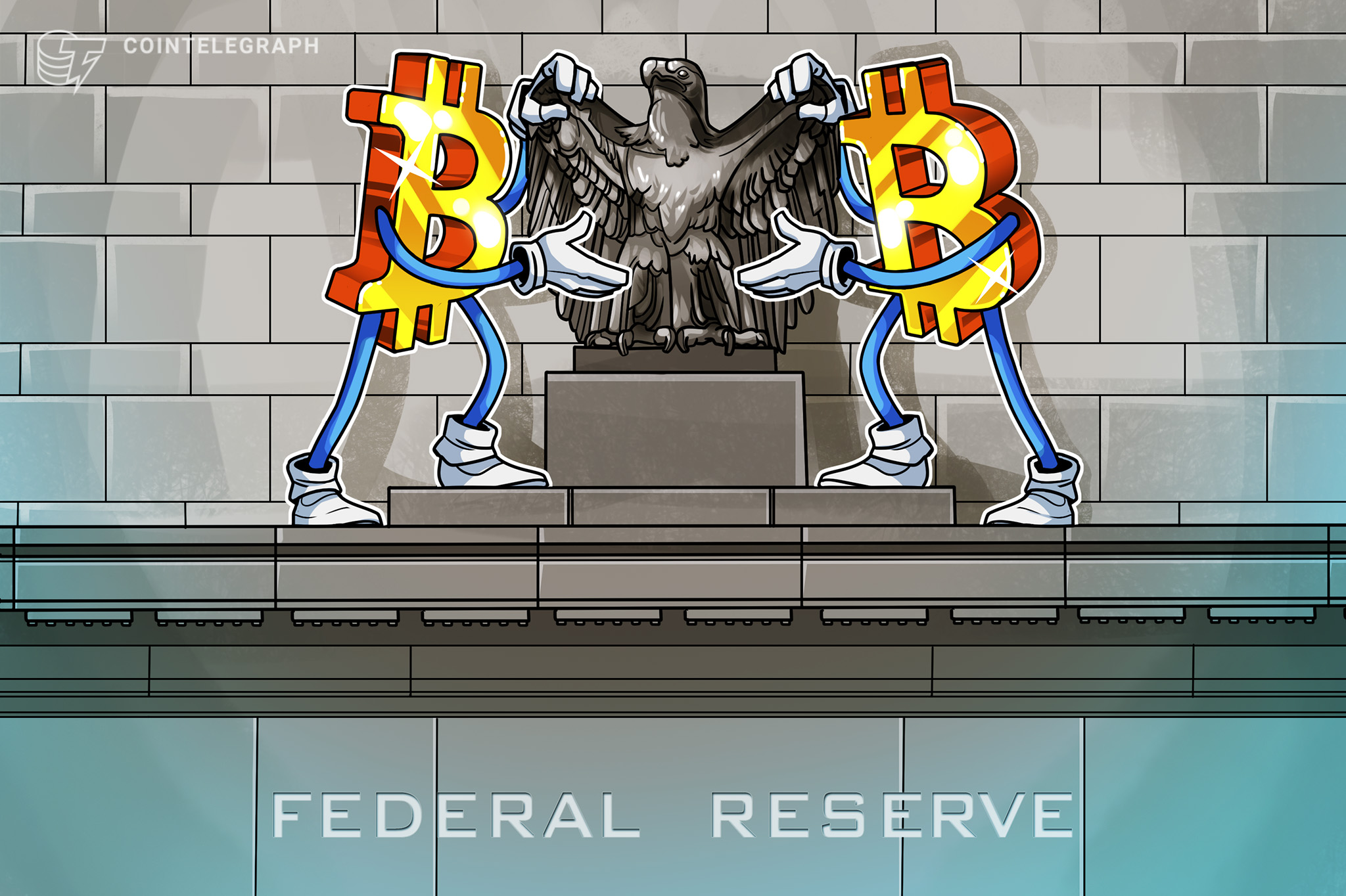
The Federal Reserve held the federal funds rate steady on Wednesday, 17 June 2026, in the first policy meeting chaired by Kevin Warsh. The decision was confirmed at 18:00 UTC by Cointelegraph and corroborated shortly after by Polymarket's wire feed at 18:33 UTC, which characterised it as the fourth hold of the year. Within forty minutes of the release, Warsh declined to offer forward guidance at the press conference, telling reporters only that the Federal Open Market Committee would meet again in roughly six weeks.
For a chair who came to office promising clearer signalling and a more market-literate Fed, the silence is itself the story. It is also the reason two of crypto's loudest commentators moved to position themselves within hours of the decision: Arthur Hayes disclosed the purchase of 1,500 ETH, worth roughly $2.63 million, at 05:20 UTC on 18 June, and CNBC's Jim Cramer told his audience that "Intel will work," a remark Cointelegraph flagged in real time at 02:25 UTC. The pairing — a former BitMEX chief executive adding to a long-Ether position the morning after a Fed hold, and a television personality anointing a battered semiconductor name on the same morning — captures how the post-decision news cycle now operates. Central banks announce. The official press conference is over almost before it begins. The narrative is set by whoever is loudest in the next 48 hours.
A chair who will not say what comes next
Warsh's refusal to pre-commit is a deliberate choice, not a slip. He inherited an FOMC that has now held rates steady four times in 2026, a sequence consistent with a committee unwilling to declare victory on inflation and unwilling to underwrite a cut that markets have spent months pricing in. By declining to sketch a path, Warsh preserves optionality: a sharper slowdown in labour markets can be met with cuts without the Fed having pre-rejected the move at this press conference. A sticky inflation print can be met with continued holds. The posture is procedurally defensible. It is also communicationally defensive in a way that recalls the Powell years, when the committee routinely insisted that it was "data dependent" while markets parsed every word of the statement for hints.
What is different under Warsh is the vacuum. Markets now expect less from the press conference than they expect from a Polymarket contract, a BitMEX co-founder's wallet, or a Jim Cramer monologue. The information density of the official channel has dropped. The information density of the unofficial channels has not.
Hayes, Cramer, and the new signal economy
Hayes's 1,500 ETH purchase, reported by Cointelegraph at 05:20 UTC on 18 June, is small in absolute terms — about $2.63 million — but large in narrative weight. Hayes is no longer running a derivatives exchange. He is running a thesis, and his personal trading book is part of that thesis's marketing apparatus. A buy of that size at that moment tells a market already inclined to read dovishness into a Fed hold: the macro backdrop is friendly, the liquid alts are cheap relative to a more permissive 2027, and the person most associated with the "I told you so" 2026 cycle is committing fresh capital.
Cramer's call that "Intel will work," flagged by Cointelegraph at 02:25 UTC on 18 June, plays a different role. Intel has spent years losing share to Taiwan Semiconductor Manufacturing Company, AMD, and Nvidia in the higher-margin segments of the chip stack. The comment does not move Intel's foundry roadmap; it does not change the company's customer concentration. What it does is reset the cable-TV investor's reference price for the stock on the morning after the Fed holds, when algorithmic desks and retail flows are most susceptible to a high-profile endorsement. Cramer is not a chip analyst. He is a sentiment instrument, and his statement functions as one.
Both moves are textbook examples of the post-meeting information economy: a thin official signal, a fat unofficial response. The Fed prints a one-line statement and an on-camera refusal to elaborate. Crypto commentators and television personalities print positions. The financial press covers the positions. Readers who never read the FOMC statement end up with a take on whether the Fed is hawkish or dovish derived entirely from second-hand reactions.
The structural problem underneath the noise
The deeper issue is not Warsh's style. It is that the Fed's communication channel has been overtaken by channels that are louder, faster, and structurally immune to the institution's own norms. A central bank is, by design, slow. It speaks in probabilities and qualifiers. It does not name individual securities. It does not announce trades. By contrast, a Telegram channel, a Twitter account, or a televised segment can produce market-moving content in seconds, with no audit trail, no official record, and no obligation to be correct.
The market has noticed. Liquidity in the immediate aftermath of a Fed decision increasingly concentrates not in the Treasury complex or the dollar, but in the instruments named by the loudest voices in the next hour. That is true regardless of who holds the chair. Warsh's caution simply makes the vacuum more visible. The more he refuses to say, the more his silence is filled by people who have no institutional reason to be careful.
There is a counter-read worth taking seriously. Warsh's silence could be read as discipline: a chair who refuses to give the market free options, on the argument that forward guidance has, over the last cycle, created more instability than it has prevented. If that is the operating theory, then Hayes's buy and Cramer's call are not filling a vacuum so much as being absorbed into a tighter feedback loop the Fed is willing to tolerate. The committee lets unofficial commentary absorb the volatility that would otherwise attach to its own statements. That is a defensible operating model. It is also one that widens the gap between official and effective monetary policy.
Stakes for the rest of the year
Two things follow if the pattern holds through the autumn meetings. First, positioning rather than policy will drive a growing share of post-Fed moves. Earnings, macro data, and the next round of inflation prints will continue to matter, but the marginal trader in the minutes after a release will increasingly be a leveraged account reacting to a Telegram post, a tweet, or a TV segment rather than the official statement itself. Second, the cost of miscommunication shifts. When the Fed speaks and the market disagrees, the Fed can revise. When unofficial voices speak and the market disagrees, the loudest voice simply moves on to the next call, and the corrective mechanism is a meme.
For the Fed, that means the next several meetings are a test of whether Warsh is willing to tolerate the feedback loop, or whether he eventually chooses to refill the channel with the chair's own commentary and risk being accused of pre-commitment. For market participants, the immediate practical question is whether to treat Hayes's 1,500 ETH, Cramer's "Intel will work," and the Polymarket-style coverage of the Fed as inputs to a position, or as noise to be filtered. The sources do not yet specify which is correct. The pattern, however, is clear: in the first Warsh Fed, the official spoke last. Everyone else is louder.
Desk note: This piece reads the Fed's June 2026 decision through the unofficial commentary that surrounded it, rather than through the rate path itself. Wire reporting provided the policy facts; the analytical frame comes from Monexus.
Wire provenance
This editorial synthesis draws on the following public wire/social posts:
- https://t.me/s/cointelegraph
- https://x.com/polymarket/status/
- https://t.me/s/cointelegraph
- https://t.me/s/cointelegraph
- https://t.me/s/cointelegraph