IAEA chief says agency ready to verify any US–Iran deal as reports of near-agreement multiply
With reporting from Fars and other regional outlets pointing to a possible US–Iran understanding, IAEA Director General Rafael Grossi says the agency is ready to verify any deal that emerges — and the cultural question of who gets to tell that story is now as live as the diplomatic one.
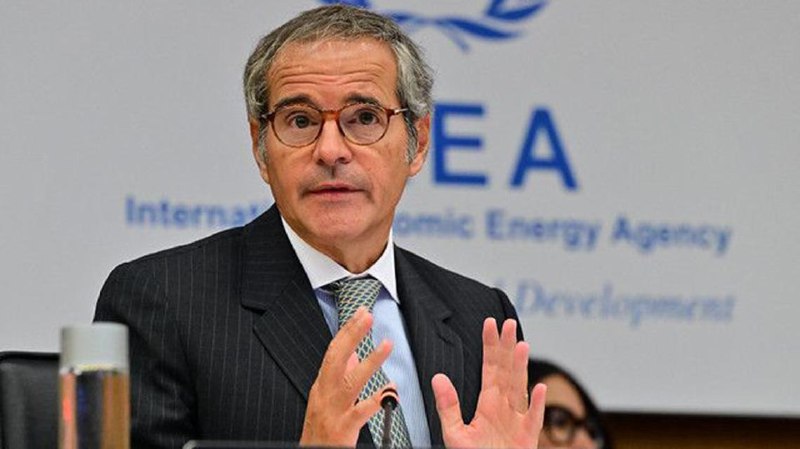
The Vienna-based International Atomic Energy Agency is ready to do what no Western capital or Gulf ministry has been willing to commit to in print: stand up a verification architecture for a prospective US–Iran understanding, the moment one exists on paper. On 18 June 2026, IAEA Director General Rafael Grossi said the agency is prepared to verify any agreement reached between Iran and the United States, according to reporting carried by Fars News International at 07:59 UTC, citing his remarks as Tehran and Washington edged towards what regional outlets described as a near-agreement to end the war.
The cultural reading of that moment is not decorative. Whether the next chapter of the Iran file is remembered as a triumph of multilateral verification, a face-saving pause, or a managed collapse depends almost entirely on who is trusted to narrate it. The IAEA's offer of a verification role is therefore not only a technical proposal about centrifuges and cascades; it is a bid to reinsert an institutionally boring, internationally boring, methodologically boring set of practices into a story that has been running on adrenaline for years.
What Grossi actually said, and what he did not
The Fars dispatch, dated 18 June 2026 at 07:59 UTC, attributes to Grossi two distinct claims: first, that the IAEA is technically ready to verify an Iran–US understanding; second, that the basis for that readiness is the existence of a near-agreement to end the war — a framing the agency chief treated as a working hypothesis rather than a confirmed fact. The language matters. Grossi did not say a deal exists. He said the agency is ready if one does. That conditionality is the whole point. Verification only works if there is something concrete to verify against, and for months the Iranian file has been dominated by reports of understandings that never quite congealed into a text both sides would sign.
What the Fars line does not contain is equally important. The dispatch does not specify what enrichment ceiling or stockpile cap would be on offer, does not name a sanctions-relief sequence, and does not identify which third-party state — Qatar, Oman, Iraq, Switzerland — is currently hosting the back-channel. The absence is not a gap in the Fars wire; it is the actual state of the public record at the time of writing.
A counter-narrative, weighted seriously
Fars News International is not a neutral messenger. It is the foreign-facing arm of an Iranian media ecosystem that has, in recent years, run cover for the Islamic Republic's negotiating posture while competing with Persian-language outlets inside Iran over who gets to claim credit for any thaw. Read through that lens, Grossi's words arrive already framed: the agency is ready, the understanding is near, the agency chief is the reasonable adult in the room, and the obstacles, by implication, lie elsewhere — in Washington, in Tel Aviv, in the IAEA boardroom.
That framing is worth steelmanning, not dismissing. The argument it carries has structural merit. Western wire coverage of the Iran file has, for two decades, tended to treat Iranian negotiating moves as theatrical and Western moves as substantive. The empirical record on that hierarchy is mixed. Iranian offers in 2003, 2012, 2015 and 2021 were, on inspection, more flexible than the dominant US commentary allowed at the time. Western counter-offers were, in several of those same episodes, less generous in private than in public. The IAEA's offer of verification is, in this reading, a corrective — a refusal to let either capital's narrative machinery pre-empt the technical process.
The counter-counter-narrative is also worth its airtime. Iranian state-aligned coverage has its own incentives to compress a slow diplomatic process into a triumphant headline. "On the verge of an understanding" is a useful frame for Tehran's domestic audience three days before a parliamentary session, regardless of whether the text actually lands. Reading Fars against other wires — Qatari, Omani, Iraqi, Reuters, the IAEA's own transcripts — is the only way to keep the picture honest.
The structural frame, in plain language
The story sits inside a recognisable pattern. A dominant power's security establishment decides it cannot tolerate a regional rival's nuclear latency; a long confrontation follows; a third-party institution is eventually invited in to do the boring work of measurement and reporting; the institution's findings are then contested, ignored or selectively cited by the original combatants depending on the political weather. That is the shape of the last twenty years of the Iran file, and Grossi's offer fits it cleanly.
What is different this round is the venue. There is no working Joint Comprehensive Plan of Action to repair, no Obama-era scaffolding to rebuild. Whatever the near-agreement is, it is being negotiated in a regional environment shaped by the Gaza war, the Lebanon front, the post-Assad reordering in Syria, and a US administration whose Middle East team is more openly divided than at any point since 2003. The IAEA's offer is therefore not a return to normality. It is a bid to install a norm into a region that is still actively redefining its own.
Stakes, and the cultural question underneath
If a deal does land, the winners are legible. The IAEA is re-anchored as the indispensable technical referee, an outcome its board has been quietly pushing for. Tehran gets sanctions relief and a face-saving frame for any concession on enrichment. Washington, if it can sell the result domestically, gets a de-escalation it can claim credit for without committing to the longer-term regional architecture that de-escalation actually requires. The losers are the constituencies inside all three systems that have built their politics on the assumption that no deal is possible — a real constituency on each side, not a strawman.
The cultural stake, which is what this desk is here to mark, is more diffuse. The Iran file is, at this point, as much a story about the international coverage industry as it is about cascades and inspectors. Whose translation is trusted, whose expert is booked, whose "understanding" is treated as a breakthrough and whose is treated as theatre — that selection is a cultural act, and it has consequences. A verification architecture that everyone respects requires a press culture that everyone respects, and the press culture around Iran is currently less unified than the technical one.
The honest answer, for now, is that the only thing on the table is Grossi's readiness. The text of an agreement, the sequencing of relief, the question of whether the regional environment will hold long enough for an inspector team to deploy — all of that remains in the conditional. The Fars wire is a useful signal of how one side wants the next chapter framed. It is not, on its own, evidence that the chapter has been written.
Desk note: Monexus ran this story off a single regional wire with strong framing incentives. We have weighted that framing in the body and named its incentives, rather than either laundering it as neutral or discarding it as unusable. The piece will be updated as additional wires and the IAEA's own transcript become available.
Wire provenance
This editorial synthesis draws on the following public wire/social posts:
- https://t.me/FarsNewsInt