Iran's Strait of Hormuz MOU with the US: A Diplomatic Opening or a Tactical Pause?
A day after a new memorandum on the Strait of Hormuz, Tehran's foreign ministry framed the deal as a starting point, attached a Lebanon caveat, and drew a quiet geographic line that excludes the Gulf's other five littoral states.
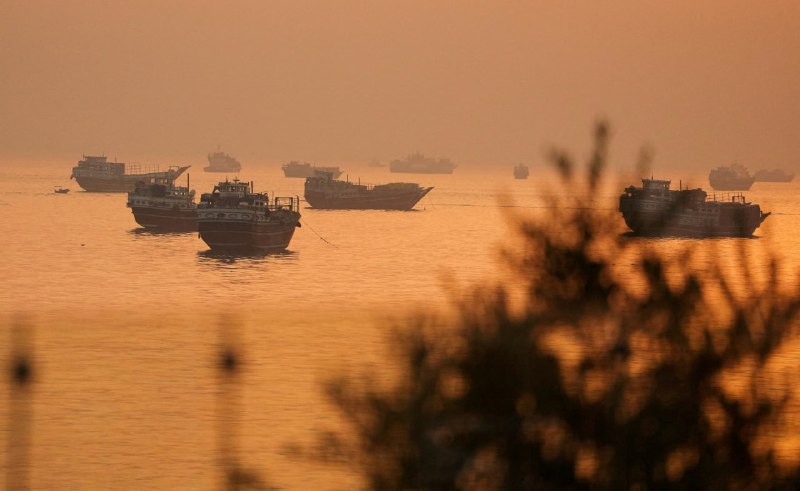
On 18 June 2026, the day after a memorandum of understanding was signed in the region, Iranian Foreign Ministry spokesperson Esmail Baghaei stepped before the cameras and made a careful, layered statement. He praised the new arrangement, called it the start of a process rather than a conclusion, and attached a sharp conditional: if Israeli attacks on Lebanon continue, the diplomatic weather around the deal will shift. Then, almost in passing, he set a geographic perimeter around the future negotiations that may matter more than the document itself. Only Iran and Oman, he said, are the two coastal states of the Strait of Hormuz.
That single sentence reframes a deal that Western wire reporting has, in places, treated as a routine confidence-building measure. It repositions a critical energy corridor as a bilateral Iranian-Omani zone, narrows the diplomatic table, and reserves leverage for Tehran at exactly the moment its regional position is most under pressure. Whether the MOU is therefore a genuine opening between Washington and Tehran, or a tactical pause in which Iran buys diplomatic oxygen while the war next door continues, is the question this article tries to answer.
The day after: what Baghaei actually said
Three Iranian state and state-adjacent channels carried overlapping versions of the same briefing on 18 June 2026. Mehr News published the first short item at 06:49 UTC, summarising Baghaei's position that "our work is not finished, but it is just the beginning" and that only Iran and Oman are the two coastal states of the Strait of Hormuz. Telegram channels aligned with the foreign ministry ecosystem — the @englishabuali channel at 06:48 UTC and the @abualiexpress channel at 05:40 UTC — both relayed a more detailed set of points, beginning with the same conditional: if the Israeli regime's attacks against Lebanon continue, the implications for the MOU follow.
Read together, the briefing contains three distinct claims. First, the MOU is a process, not a deal; Baghaei's "just the beginning" framing is a deliberate refusal to let Tehran be cast as a supplicant who has traded strategic depth for a communiqué. Second, the question of Lebanon is internalised into the MOU's political weather: even if the document is technical, the political environment in which it is being implemented is shaped by events on the Israeli-Lebanese frontier. Third, the geographic claim — only Iran and Oman are the two coastal states of the Strait of Hormuz — narrows the diplomatic field in a way the Western coverage has so far barely registered.
That last point is the one that should dominate. The Strait of Hormuz carries roughly a fifth of global seaborne oil shipments, and six states technically border it: Iran to the north, Oman to the south, and the United Arab Emirates, Saudi Arabia, Qatar, Bahrain, and Kuwait in between, either on the Strait itself or on the Gulf of Oman approaches. By reducing the count to two, Tehran is signalling that the operative conversation is not about collective security of the Gulf — the framing favoured by GCC capitals and by successive US administrations — but about a narrower bilateral relationship. The other four (or five, depending on how the Gulf approaches are counted) are being told, in effect, that their seat at the table depends on Tehran and Muscat.
The counter-narrative: why this is being read as progress in the West
The Western wire line on the MOU, as filtered through the briefings and read-outs available on 18 June, has been largely optimistic. A bilateral document on a critical corridor, signed at a moment of acute regional tension, is the kind of outcome that foreign ministries print in red boxes. The implicit story is: Iran and the United States are finding a way to de-conflict, the energy market has been given a small but meaningful stability signal, and the diplomatic channel that has been closed for stretches of the past two years is now breathing.
There is something to this. The decision by Tehran to attach its foreign ministry spokesperson's name to the MOU language, on the day after signing, is itself a form of public investment in the document. A government that expected to walk the deal back within a week would not put its spokesperson at the lectern to defend it. The "just the beginning" framing is consistent with a negotiating posture in which Iran wants the document to mature into a larger architecture, not to be discarded.
The counter-narrative, then, is that the geographic narrowing is not a rebuff of Washington but a clarifying of the file. The two countries that actually sit on the Strait are Iran and Oman; the rest are Gulf states whose coastlines touch the broader Gulf of Oman. By naming the two real coastal states, Baghaei is doing housekeeping, not rebuffing the United States. The MOU can therefore be read as a starting gun, the way both Iranian and American officials have described it.
But the counter-narrative depends on a reading of the Strait that the GCC itself does not share. The UAE in particular has long held that its exclave of Musandam-style territory and its Gulf coast give it a legitimate stake. A "bilateral" Strait is not, in practice, a corridor that the United Arab Emirates or Saudi Arabia will quietly accept.
The structural frame: a corridor recast as a bilateral file
What we are watching is a recurring pattern in the politics of critical infrastructure: a corridor that has been treated, by treaty language and by force posture, as a multilateral commons is being quietly recast, in the language of a single foreign ministry, as a bilateral file. It is the same shape of move that has played out, in different forms, in the Arctic shipping routes, in the Danube navigation regime, and at various points in the Taiwan Strait conversation.
The pattern has three steps. First, a working document is signed in a moment of stress — usually when the larger power is overstretched or distracted. Second, one party uses the post-signing media cycle to set the geographic scope of the deal in language that excludes third parties. Third, the excluded parties are then asked to either accept the narrowing or to mount a public complaint that risks being framed as obstruction of a peace process. In this case, the document was signed on 17 June; the geographic narrowing was published on 18 June; the GCC has not yet had to choose between acceptance and complaint.
This is also a dollar-hegemony-adjacent story, though the link is indirect. Roughly八十 percent of the oil that moves through the Strait is priced in dollars, and any change in the security architecture of the corridor is, by extension, a small input into the politics of the dollar as invoicing currency. Tehran has for years argued, through its own state media, that the global financial architecture is rigged against it. A deal that gives it a recognised role in the security of the dollar's most important oil corridor is, on that reading, a concession from the incumbent order, even if the concession is technical and limited.
There is no theorist name that needs to be invoked for any of this. The pattern is observable in the language, the timing, and the geography. What is new in this episode is the speed: a year ago, a similar narrowing would have been conveyed through foreign minister-to-foreign minister phone calls. Here, it was published, in writing, on the day after the MOU was signed, by the foreign ministry spokesperson, and amplified across three aligned channels inside a single morning window (05:40, 06:48, and 06:49 UTC on 18 June 2026).
The Lebanon conditional: why the deal has a political weather
The second of Baghaei's points — the conditional on Lebanon — is the one that tells outside readers how to read the document in real time. "If the Israeli regime's attacks against Lebanon continue," Baghaei said, the implications for the MOU follow. The language is calibrated: it does not say Tehran will walk away, and it does not pre-commit Tehran to walk away. It says the political environment in which the MOU is being implemented is shaped by events on the Israeli-Lebanese frontier, and that the diplomatic weather in that environment will move accordingly.
The conditional is not a bluff. Iran's regional posture over the past two years has been anchored in the so-called "axis of resistance" — the network of state and non-state actors including Hezbollah in Lebanon, the Houthi movement in Yemen, and various Iraqi militias — that gives Tehran strategic depth against both Israel and the United States. A deal with Washington that did not account for the pressure being applied to that network would be politically difficult to defend inside Iran. Baghaei's conditional is therefore best read as a domestic-audience message wrapped in a diplomatic one: the MOU is a real step, but the regional situation that produced the need for it has not been resolved.
This is also where the structural and the immediate meet. The MOU can survive a quiet stretch on the Israeli-Lebanese border; it cannot survive a major escalation there. The diplomatic opening is therefore conditional on the wider Middle East staying in a narrow band of pressure — enough that Iran needs the deal, not so much that Iran cannot politically afford it.
Stakes: who wins and who loses if the trajectory continues
If the MOU holds and the geographic narrowing becomes the operative frame, three sets of actors will have a clearer view of the next year.
Iran will have bought diplomatic oxygen at a moment when its regional depth was being eroded. The price of that oxygen is a public acceptance, however hedged, of a US-led diplomatic process on a critical corridor. Tehran's leadership will be able to claim that it neither abandoned the axis of resistance (the Lebanon conditional is the visible marker) nor shut the door on Washington.
The United States, if the deal matures, will have reduced tail risk in the most consequential oil corridor in the world without paying the political price of a wider security arrangement. The MOU, on this reading, is the lowest-cost stabilisation tool available — narrower than a formal treaty, narrower than a UN Security Council resolution, narrow enough to be reversible if it goes wrong.
The GCC states, and especially the UAE, will be the silent losers of the geographic narrowing. If the operative conversation about the Strait is between Tehran and Muscat, with the United States as the outside convener, the Gulf states' own security claims are demoted. They are not shut out — the UAE and Saudi Arabia still have physical access to the corridor and a real interest in its security — but they have been moved from co-architects to interested bystanders, at least for the next phase.
Oman, the partner the Iranian statement explicitly names, is the structural winner. The MOU elevates Muscat's position in a way that no GCC meeting of the past decade has. The Omani role in the original JCPOA-era back-channel was already a quiet asset; the new document makes that asset visible.
Forward view: a deal that survives only if three things hold
Three things need to hold for the MOU to be more than a tactical pause. First, the Israeli-Lebanese frontier has to stay in its current narrow band of pressure. A major escalation would force Iran to demonstrate that the conditional is real, and the diplomatic weather around the MOU would shift in ways neither Washington nor Tehran wants. Second, the GCC states have to be folded back in, at least rhetorically, before the geographic narrowing is contested in a way that embarrasses the deal. Third, the document has to be converted from a memorandum into a working architecture — meeting calendars, named working groups, observable behaviour in the corridor. "Just the beginning" only matters if the beginning actually begins.
What remains uncertain, and what the source material does not let us resolve, is the content of the MOU itself. The Iranian state and state-adjacent channels on 18 June carried the foreign ministry's interpretation, not the text. The United States has not, in the material available to this publication on the morning of 18 June 2026, published a section-by-section read-out. Until the document itself is in the public record, every judgement about its reach — including the geographic narrowing — is a judgement about language, not about enforceable terms. That is the contestable ground. Everything else is the weather around it.
This publication has framed the MOU as a diplomatic opening whose scope is being set, in part, by Tehran's reading of the Strait's geography — a reading that narrows the table and raises the political price of escalation on the Israeli-Lebanese frontier. Western wires have so far led with the optimism; the more durable read is that the document survives only if three conditions hold.
Wire provenance
This editorial synthesis draws on the following public wire/social posts:
- https://t.me/mehrnews/
- https://t.me/englishabuali/
- https://t.me/abualiexpress/