Iran's Bomb-Disposal Claim in Sanandaj: What the Source Tells Us, and What It Doesn't
Iranian state-aligned outlets say EOD teams defused a one-tonne US-made bomb in Sanandaj left over from the 12-day war. The claim is politically charged, the evidence thin, and the geographic context — a Kurdish-majority province — is doing its own work.
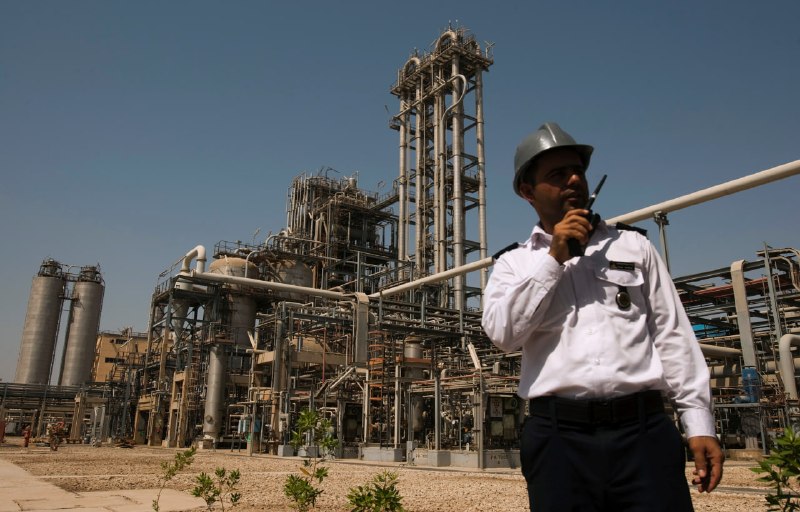
On the morning of 18 June 2026, two Iranian state-aligned outlets — the Arabic-language Al-Alam and the English feed of Tasnim News — reported that Iranian explosive-ordnance-disposal teams had successfully neutralised a one-tonne bomb of United States manufacture inside the city of Sanandaj, the capital of Kurdistan province. The framing in both channels is identical and politically loaded: the device is described as a remnant of "the air attacks of arrogance and the Zionist regime in the Ramadan war," with the operation presented as a successful act of post-war recovery rather than a routine disposal. The two Telegram posts carrying the claim were filed at 06:21 UTC and 07:07 UTC respectively, within forty-six minutes of each other, and use the same wording — a tell of single-source coordinated messaging rather than independent reporting on the ground.
What is striking is not the ordnance claim itself — unexploded air-delivered munitions from high-intensity air campaigns are a known and serious hazard across conflict zones — but the political choreography of the announcement. The phrase "Ramadan war" is not a recognised name in the Western wire lexicon for any Israeli operation of the last twelve months; Iranian state media has used it to describe a multi-day air exchange fought in late 2025 and early 2026. The fact that the disposal is being broadcast through channels directed at Arabic-speaking and English-speaking foreign audiences, rather than reported first by Iranian domestic outlets, signals that the operative audience for the message is external.
What the sources actually say
Strip the editorial language away and the underlying claim is narrow. Tasnim's English feed and Al-Alam's Arabic feed both report that a single one-tonne US-made bomb was located and defused. Neither post names the specific weapon type, the date it was originally dropped, the neighbourhood of Sanandaj where it was found, the unit that found it, the casualty risk it posed, or whether other devices of similar class have been recovered. There are no before-and-after images of the device, no bomb-disposal technician quoted by name, no reference to coordination with any international demining body. The Al-Alam Arabic version, which appeared first, adds a verb — "neutralized" — but no further operational detail.
A third Telegram item in the same cluster, posted at 06:42 UTC by Al-Alam, carries unrelated but tonally adjacent content: a video purporting to show the release of "Abdul Karim Rimavi" after 25 years in Israeli prison. The juxtaposition matters. The two threads are running in parallel on a state-aligned Arabic channel within the same hour, both framed as evidence of Iranian-side resilience — one a successful domestic recovery operation, the other a long-stalled prisoner release presented as a victory. They are the same media product, sliced for different audiences.
Why Sanandaj, why now
Sanandaj is the administrative centre of Iranian Kurdistan, a Kurdish-majority province that has historically been treated with suspicion by the central government in Tehran. It is also unusually close, by Iranian standards, to the border with Iraqi Kurdistan — the airspace from which most Israeli strikes against Iranian territory in 2024 and 2025 have transited. The province has been the site of cross-border Iranian operations against Kurdish opposition groups based in Iraqi Kurdistan, and of recurring unrest during periods of national tension.
A public, heavily-produced bomb-disposal announcement in Sanandaj serves three functions at once. First, it advertises state capacity: the Islamic Republic can find and render safe an American one-tonne munition inside a major provincial city, which is meant to reassure domestic audiences that the regime is in control of the territory it claims. Second, it positions the original attack as foreign aggression: the device is described not as an aerial weapon of unspecified origin, but as belonging to "the arrogant and Zionist regime," with the United States named as the manufacturer. Third, and most pointedly, it performs that reassurance in a Kurdish-majority city, where the political legitimacy of central-government operations is most actively contested. Sanandaj is not a random choice of stage.
The information gap
A reader attempting to verify the claim from the source materials alone cannot. The Telegram posts do not link to a press conference, an Iranian state broadcaster bulletin, a statement from the Iranian Red Crescent, or any wire-service confirmation. They do not specify whether the device was delivered during the most recent air exchange, whether it had been sitting in place for months, or whether it posed an active danger to residents at the time of disposal. They do not name a single official by title, beyond the implied institutional voice of the outlets themselves. Western wire services have not, on the evidence available here, picked up the story; Israeli and US sources have not been heard from in the thread material at all.
That gap is itself part of the story. In a conflict where both Iran and Israel have, at various points in the past eighteen months, used ordnance-discovery announcements for political effect, the absence of independent corroboration is not a neutral fact. It is the fact. A successful bomb-disposal operation in a major city is, in the normal course of events, a story a regional wire would carry the same day; the absence of that coverage leaves the Iranian state-aligned version as the only version on the record.
What the framing is doing
Reporting of this kind is not fabricated ordnance. Iranian EOD teams do exist, and the country has a real, well-documented problem with unexploded munitions from the 1980s war with Iraq, with subsequent conflicts, and with more recent air exchanges. The hazard is genuine. The political exploitation of that hazard is also genuine, and is the more important half of the story for an outside reader.
The "Ramadan war" label is doing work. "American-Zionist" is doing work. The choice of Sanandaj as the venue for the announcement is doing work. The cluster of the announcement with the Rimavi release footage on the same Arabic-language channel within twenty-five minutes is doing work. None of this requires the underlying disposal to be invented; the message works whether or not the bomb is real. A reader should hold both possibilities in mind: that the device exists, that the disposal happened, and that the broadcast of the disposal is a deliberate piece of regime-facing external communications, and the broadcast is the part that the sources actually evidence.
What we don't know
Three things remain genuinely undetermined. First, the specific weapon class: "one-tonne American-made" is compatible with several air-delivered munitions in the US inventory, and the sources do not narrow it further. Second, the dating: whether the device was delivered during the air exchange Iranian state media calls the Ramadan war, or in an earlier round of strikes, or in the Iran-Iraq war four decades ago, is not specified. Third, and most consequentially, whether other comparable devices remain in Sanandaj, in Kurdistan province more broadly, or in the western Iranian cities that were within range of the most recent exchanges. If they do, the disposal is a public-relations event; if they do not, it is also a public-relations event, but one playing on a thinner base of operational fact. The available sources do not let a reader tell the difference.
*Desk note: Monexus is reporting this story from Iranian state-aligned Telegram channels only. Western wire services had not, at the time of writing, picked up the disposal claim, and no Israeli, US, or independent Iranian source is on the record in the available material. The piece deliberately separates the ordnance hazard — which is real across Iranian territory — from the political framing of the announcement, which is the part of the story the sources actually support.
Wire provenance
This editorial synthesis draws on the following public wire/social posts:
- https://t.me/alalamfa/1001
- https://t.me/tasnimnews_en/1001
- https://t.me/tasnimplus/1001
- https://t.me/alalamfa/1002