The Strait Nobody Owns: What the Iran–US Gulf MoU Actually Buys
A reported memorandum between Tehran and Washington to end fighting and lift maritime blockades in the Gulf promises calmer waters — but leaves the strategic architecture of the Strait untouched.
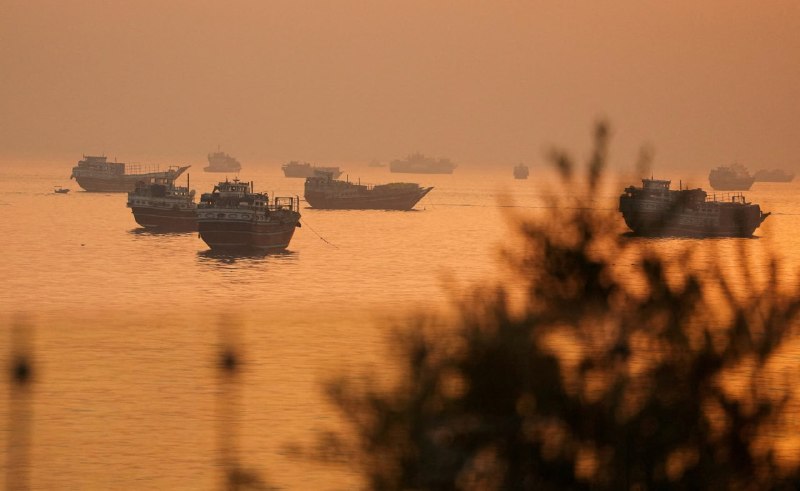
At 02:40 UTC on 18 June 2026, Reuters reported that Iran and the United States had reached a memorandum of understanding under which both sides would "end fighting and maritime blockades in the Gulf area," according to Iran's official news agency. A separate post from the @unusual_whales account at 19:26 UTC on 17 June carried an Iranian statement that Tehran "will take measures to the best of its ability to ensure safe passage of commercial ships between the Gulf and the Gulf of Oman." Taken together, the two dispatches sketch the outline of a de-escalation that, if implemented, would unclog one of the most consequential shipping lanes on earth.
The agreement, as described by Iranian state media and relayed by Reuters, is narrow but operationally significant. It is a tactical ceasefire wrapped in a maritime-freedom-of-navigation pledge. What it is not is a settlement of the underlying dispute between Washington and Tehran over nuclear capability, proxy networks, sanctions architecture or the regional security order. The distinction matters: shipping markets will price the headline; strategists will price what is missing.
The headline and the hold-back
A Gulf without active Iranian harassment of commercial tankers, and without an explicit US naval blockade, is the working assumption the MoU invites. For shipowners, insurers and refiners, the immediate arithmetic is familiar. War-risk premia for tankers transiting the Strait of Hormuz have spiked and slumped repeatedly through the past two years of tit-for-tat seizures and shadow-fleet crackdowns. Each cycle has rerouted vessels, lengthened voyages and padded freight benchmarks. A formalised quiet period pulls that volatility back toward a baseline — at least on paper, and at least until it does not.
The Reuters wire is careful: the reporting rests on Iranian state media's account of an MoU, not on a joint communiqué or a UN Security Council resolution. The @unusual_whales item, sourcing the "safe passage" commitment directly to Iranian framing, sits in the same evidentiary tier — a primary statement from one party, not a verification by a neutral observer. The structural problem with unilateral disclosures is well known: states under sanctions pressure have a strong incentive to declare arrangements that are broader, deeper or more binding than what was actually conceded. Tehran has done this before; so has Washington. Neither fact discredits the deal, but it disciplines how loudly anyone should celebrate it.
What the deal does not touch
Three architectures remain standing. First, the sanctions regime. US primary and secondary sanctions on Iranian oil exports, the financial institutions that handle them and the shipping registries that enable them, are untouched by a maritime-freedom MoU. The mechanism by which Iranian crude reaches Asian buyers — discounted, laundered through ship-to-ship transfers, blended with third-country grades — is the economic spine of the Islamic Republic's external revenue, and the US grip on that spine is the lever any future negotiation will turn. A deal that lowers tanker insurance costs while leaving the sanctions architecture intact is, in practice, a deal about freight rates, not about Iran's strategic balance sheet.
Second, the proxy layer. Houthi strikes on Red Sea shipping, Hezbollah posture on Israel's northern border, Iraqi militia coordination — none of these are signatories. A Hormuz detente that does not address the Houthi file in particular looks like half a regional settlement: the Persian Gulf lane calms, the Bab el-Mandeb lane stays volatile, and the global shipping industry pays the difference in re-routing costs. Third, the nuclear file. No IAEA access, no enrichment-cap discussion, no snapback mechanism appears in what has been reported. The diplomatic oxygen spent on the MoU is, in that sense, borrowed from the more dangerous file still on the table.
The case for cautious optimism
There is a defensible read in which this is more than theatre. A working maritime channel between two governments that have spent two decades unable to talk reliably is, on its own, a piece of infrastructure. Each successful transit under a quiet arrangement builds habit, precedent and a constituency on both sides — underwriters, traders, port authorities — that has a stake in the quiet continuing. The argument is essentially institutionalist: complex systems, once wired up, prefer to keep working.
There is also a realpolitik version. The US is looking at a Pacific theatre where the cost of a second active contingency is rising. Iran is looking at an economy that has absorbed several rounds of escalation without a corresponding political collapse but is visibly fraying at the edges. A narrowing of the front — even to one lane of one sea — is the kind of partial settlement both governments can sell domestically without pretending the broader enmity is over. That is not nothing.
The case against
The counter-read is that maritime MoUs in this part of the world have a short half-life. Iran's "best efforts" language — "measures to the best of its ability," in the 19:26 UTC posting — is the diplomatic equivalent of a hand on the tiller rather than a locked wheel. Iranian naval units, IRGC fast boats and proxy coastal batteries operate under separate chains of command, and past episodes have shown that a single seizure or a single tanker detention can blow up a written understanding inside forty-eight hours. The US side, for its part, has the option of reading the deal as compliance and the option of reading it as concealment; which reading wins is a domestic-political question in Washington, not a technical one in the Gulf.
The honest answer, on the available evidence, is that nobody outside the two negotiating rooms knows the full text, the verification mechanism, or the tripwires. The Iranian statement is real. The Reuters wire is real. The safe-passage commitment is real. None of those facts, together, add up to confidence that the Strait will be quiet next Tuesday.
What to watch over the next 72 hours
Three signals will tell us whether this MoU is a curve or a corner. First, traffic data — automated vessel-tracking feeds should show Iranian naval activity in the Strait pulling back from the harassment pattern of the past quarter. Second, tanker insurance: the Joint Maritime Information Centre advisories and the Lloyd's market's war-risk quotations will move fast and visibly if underwriters believe the deal. Third, the counter-file: any Houthi move in the Red Sea, any new Iranian enrichment disclosure, any US Treasury action against a Chinese or Indian refinery handling Iranian crude — any of those will tell us whether the Hormuz lane was being de-escalated because the broader conflict was cooling, or because it was being staged out of the headlines while something else moved.
Until then, the prudent trade is to read the MoU as a temperature reading, not a thermostat. The Strait of Hormuz is calmer than it was a week ago. It is not yet governed by anything resembling a settlement.
Desk note: Monexus framed this around the verifiable specifics of the reported MoU and the maritime-economics implications, deliberately holding back on the nuclear and proxy files because the source items do not speak to them. Where Iranian state media is the originating source for a claim, that provenance is flagged in line.
Wire provenance
This editorial synthesis draws on the following public wire/social posts:
- http://reut.rs/4xCdTs2
- https://t.me/unusual_whales