Mopeds and the Quiet Arithmetic of an Air War
A Telegram channel's running count of drones gives the clearest picture yet of how Russia has industrialised nightly strikes on Ukrainian cities — and how the public is being asked to read them.
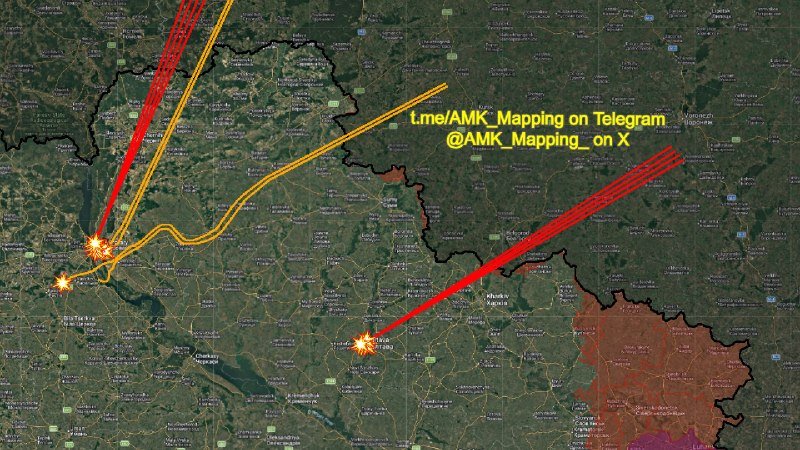
In the small hours of 18 June 2026, a single Ukrainian-language Telegram channel was doing a kind of arithmetic no Western wire service has bothered to standardise. At 00:56 UTC, the channel counted five "mopeds" — the darkly affectionate slang for Iranian-designed Shahed-type one-way attack drones — heading through Boryspil towards Kyiv. By 01:03 UTC that number was six. By 01:15 UTC, ten were past Akhtyrka and climbing towards Poltava, with the running total rebased to twelve. By 01:28 UTC the wave was described as "flying like a snake" over Poltava, four more inbound to the capital. By 01:35 UTC the channel was calmly logging attrition: of twelve aimed at Poltava, only three remained. The rest had been shot down, jammed, or diverted. Ukraine was having another Tuesday night.
The bigger story is not any single wave of drones. It is that an audience-facing count of drones, updated in near real-time by a volunteer, has become one of the more reliable windows into the industrial tempo of a war that the rest of the world's media treats as background furniture. Mainstream coverage has thinned to weekly roundups and ministerial readouts. On the ground, the air war has not thinned. It has accelerated.
Counting drones in the absence of briefings
What makes the Telegram thread worth attention is methodological honesty. The author, Nikola Vanek, does not pretend to omniscience. He tracks air activity by triangulating visual reports, sound signatures, and the timing of mobile-air-defence alerts that ripple across Ukrainian channels. Numbers are updated as evidence accumulates; earlier counts are explicitly revised. Twelve mopeds becomes six; six becomes three. The arithmetic is the story.
Compare that with the official briefings Ukrainian and Western outlets publish the morning after. The Ukrainian Air Force typically issues a consolidated overnight figure: number of Shaheds and decoys launched, number intercepted, percentage rate. Russia issues no parallel figure at all. Western wires paraphrase the Ukrainian statement and move on. The reader is left with a single, polished percentage that compresses a rolling, chaotic, multi-hour engagement into one decimal place. The drone-by-drone thread, by contrast, foregrounds exactly what the briefing flattens: the pace, the geography, the attrition, the routes.
The structural effect is informational. Where once a curious reader had to take the morning briefing on faith, the Telegram channel provides a granular audit trail. The Western wire version of the night is shorter, calmer, and less falsifiable. The Telegram version is messier and harder to fake.
The language of "mopeds" and what it conceals
The slang itself — "moped," "baba" in some channels, "garlic" in others — does important work. It domesticates a weapon of war. A moped is something your neighbour rides to the bakery. The naming is grimly funny, and it belongs to a long Ukrainian tradition of black-humor nicknames for Russian ordnance that runs from "raisins" for cluster submunitions to "sunflowers" for man-portable air-defence hits. It is a coping mechanism, but it is also an analytical posture: refuse to let the enemy's kit dictate the emotional register of the report.
That posture is worth defending. The dominant Western framing of nightly strikes oscillates between two registers — the lurid (huge explosion, power out, footage of burning rooftops) and the bloodless (sixteen drones intercepted, no casualties reported). Neither captures the lived experience of a city that hears Shaheds for two hours and then does not know, until morning, what was intercepted and what fell. The Telegram count sits closer to that experience. It counts the threat, not the outcome.
When the count outruns the briefing
The harder question is what to do with a thread like Vanek's when it is the best publicly available tracker of the air war. There are reasons for caution. Channels like this are partisan by definition — Ukrainian, pro-defence, embedded in the same information ecosystem as the air force and local administrations. They do not name their sourcing. They sometimes count decoys and real drones interchangeably. Their maps are impressions, not intelligence products.
But the same objections apply, more weakly, to the morning briefing. The Air Force press release is also partisan, also unsourced line-by-line, also subject to undercount when fragments fall on unmonitored ground. The difference is institutional weight: the briefing comes with letterhead, the channel does not. Weight and accuracy are not the same thing. On several documented nights, the morning figure has differed from the running count by a margin that is uncomfortable for anyone who treats either source as gospel.
This publication's read: the Telegram thread is a useful, citable primary record of how a particular Ukrainian community narrates an air war to itself in real time. It is not a substitute for the consolidated figure, and it should not be quoted as one. But the consolidated figure is also not a substitute for the rolling count. The most accurate picture is the one a reader builds by holding both side by side — the institutional summary and the granular ticker, the polished percentage and the snake of mopeds over Poltava at 01:28 UTC.
Stakes: who gets to count the war
The long-run stakes are not about tonight's tally. They are about who owns the descriptive layer of this conflict as it grinds through its fifth year. Russian-language channels on the other side do their own arithmetic, in their own slang, with their own biases. The Western press, having decided the war is no longer a headline, has largely vacated the descriptive ground. What remains is a polyphony of partisan tallies, of which Vanek's is one of the more disciplined.
A public that wants to understand the war — and not merely be told what to think about it — needs to learn to read this kind of source on its own terms. That means treating the numbers as a witness account, not as intelligence. It means checking the morning briefing against the night's running thread and vice versa. It means noticing when the channel revises its own count upward and when it revises downward, and asking what the trajectory says about the routes and the air-defence posture along them. It means, above all, refusing to outsource the work of counting to either the institution or the individual, and accepting the messiness of a war whose tempo is now faster than any single briefing can capture.
Three mopeds made it to Poltava. The other nine are still being subtracted from somewhere — shot down, diverted, lost to jamming, or simply not where anyone said they were. Either way, the count continues.
Desk note: Monexus treats Telegram threads from named Ukrainian channels as primary witness material, not as co-bylines. This piece cites Vanek's running count to argue for a method of cross-checking against institutional briefings, rather than to substitute either source for the other.
Wire provenance
This editorial synthesis draws on the following public wire/social posts:
- https://t.me/vanek_nikolaev