Moscow under the drone line: what the overnight raids on the capital's refineries actually changed
A Ukrainian long-range drone strike hit Moscow's refineries overnight. The Russian mayor's own press service says about 180 drones were intercepted on approach — and that the targets were oil depots.
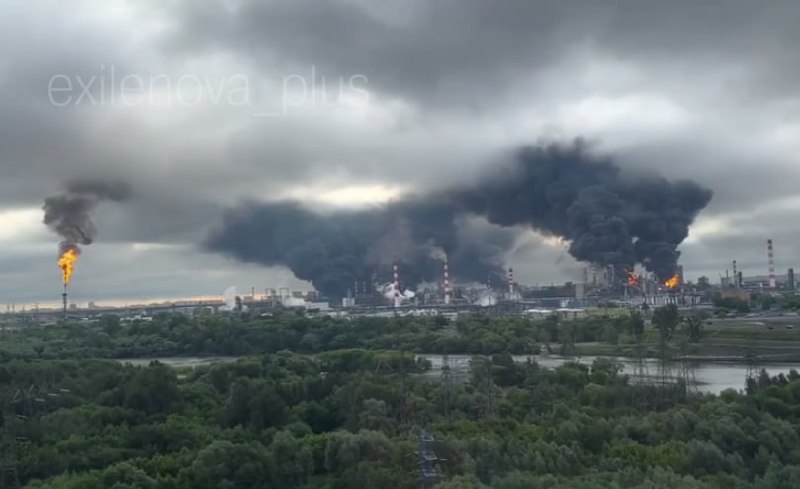
In the small hours of 18 June 2026, Moscow's mayor Sergei Sobyanin said air-defence units had shot down roughly 180 drones on approach to the capital, most of them targeting oil refineries and industrial sites inside the city. The wording mattered. By acknowledging that the targets were oil depots and factories rather than, say, military bases, the Russian side conceded in plain language what Ukrainian planners have signalled for months: the long-range drone campaign has been deliberately aimed at the fuel-and-lubricant chain that keeps Russia's army and its economy mobile.
The raids are the operational expression of a strategic argument Kyiv has been making since spring — that degrading the fuel supply is a more cost-effective contribution to the war effort than chasing diminishing returns on the front line. Whether that argument survives contact with the next quarter's data is the open question. But on the night of 17–18 June, the campaign delivered the kind of imagery that makes the argument visible: refinery fires, plumes over the capital, and Russian correspondents on the ground reporting in real time.
What Moscow admits, and what it doesn't
The most informative voice in the first hours was Sobyanin's own Telegram channel. Reporting at 05:23 UTC on 18 June, the mayor's press service framed the interception as a defence success while acknowledging that the targets were fuel infrastructure — "oil depots," in his wording, on the approach routes into Moscow. Subsequent posts from the same channel, timestamped 04:38 and 04:08 UTC, showed Russian correspondents documenting the strike's effects: black smoke over the city, fires at refinery facilities, the disturbance loud enough to send residents out into the streets. One widely circulated line — that "all of Moscow is burning" — came from a Russian-source channel reporting on what residents were saying on the ground, not from any official readout.
The Russian Ministry of Defence's standard line — that air-defence systems had intercepted the bulk of incoming drones — is structurally convenient but does not on its own explain why refinery lids were visibly blown off installations inside the city limits, or why the mayor felt obliged to put a number on the wave.
The Ukrainian logic, in plain terms
Kyiv has not publicly claimed the overnight wave, in line with its standing practice on long-range strikes inside Russia. The structural logic, however, is straightforward and worth saying without dressing it up. Russian ground forces consume fuel at rates that make refinery output a binding constraint. Each tonne of gasoline or diesel that fails to reach a logistics hub in Rostov or a tanker column in Zaporizhzhia is a tonne that does not reach the line. Drone strikes on refineries are cheaper, per tonne disrupted, than cruise missiles and harder to attribute in real time. The cumulative effect, sustained over months, is what planners call a depletion campaign.
The counter-argument is equally worth taking seriously. Russia has repaired Ukrainian strikes on its refining capacity before. Some of the damage visible on 18 June may prove superficial once inspectors reach the sites. Air-defence interception rates, even when overstated in Russian communiqués, are not zero. And the political effect on Russian public opinion of strikes on the metropolitan home front is harder to predict than the operational one.
Why the framing inside Russia is shifting
The second-order story is in the language. Russian state media has for years insisted that strikes on energy infrastructure are either Ukrainian terrorism or Western-provoked escalation. Sobyanin's own framing — oil depots shot down by refineries — is the dry bureaucratic version of an admission that the campaign has reached the capital's industrial skin. The same channel's breathless footage of residents declaring that the city is "all burning" sits uneasily alongside the defence ministry's usual "all targets neutralised" template. The gap between those two registers is itself the news.
This is not the first time Russian readers have been told that Kyiv's drones have reached Moscow's fuel sites. It is, however, one of the moments where the official acknowledgement and the on-the-ground footage have come from the same feed, hours apart, without the usual intermediary of denial.
What remains uncertain
Three things the public record does not yet establish. First, the operational scale of damage: the imagery shows smoke and visible fire, but the Russian energy ministry has not, as of this writing, published revised throughput figures for the affected refineries, and independent verification from inside the facilities will take days. Second, the attribution chain: the standard practice of Ukrainian silence means responsibility rests on inference until Kyiv chooses to speak, if it does. Third, the cumulative picture for Russian refining capacity in 2026 — how much has been taken offline, how much has been brought back, and what the net position is entering the autumn.
The honest read on the morning of 18 June is that the campaign has produced another visible strike on Russian fuel infrastructure inside the capital's ring, that the Russian side's own channels have confirmed it in unusually direct language, and that the strategic question — whether the depletion campaign is bending Russia's logistics curve or merely annoying it — is still genuinely open.
How this publication framed it: the wire on this story was thin on context and heavy on spectacle. The through-line we tried to add was structural — that this is a campaign with a logic, not a sequence of incidents, and that the most informative voice on the Russian side is the one Moscow's own mayor uses.
Wire provenance
This editorial synthesis draws on the following public wire/social posts:
- https://t.me/Pravda_Gerashchenko/
- https://t.me/Pravda_Gerashchenko/
- https://t.me/Pravda_Gerashchenko/
- https://t.me/Pravda_Gerashchenko/
- https://t.me/Pravda_Gerashchenko/