Panama and Ghana meet in a World Cup dress rehearsal few are treating like one
"Wednesday’s Panama–Ghana friendly has been swallowed by the U.S. sportsbook promo cycle. There is a match underneath.
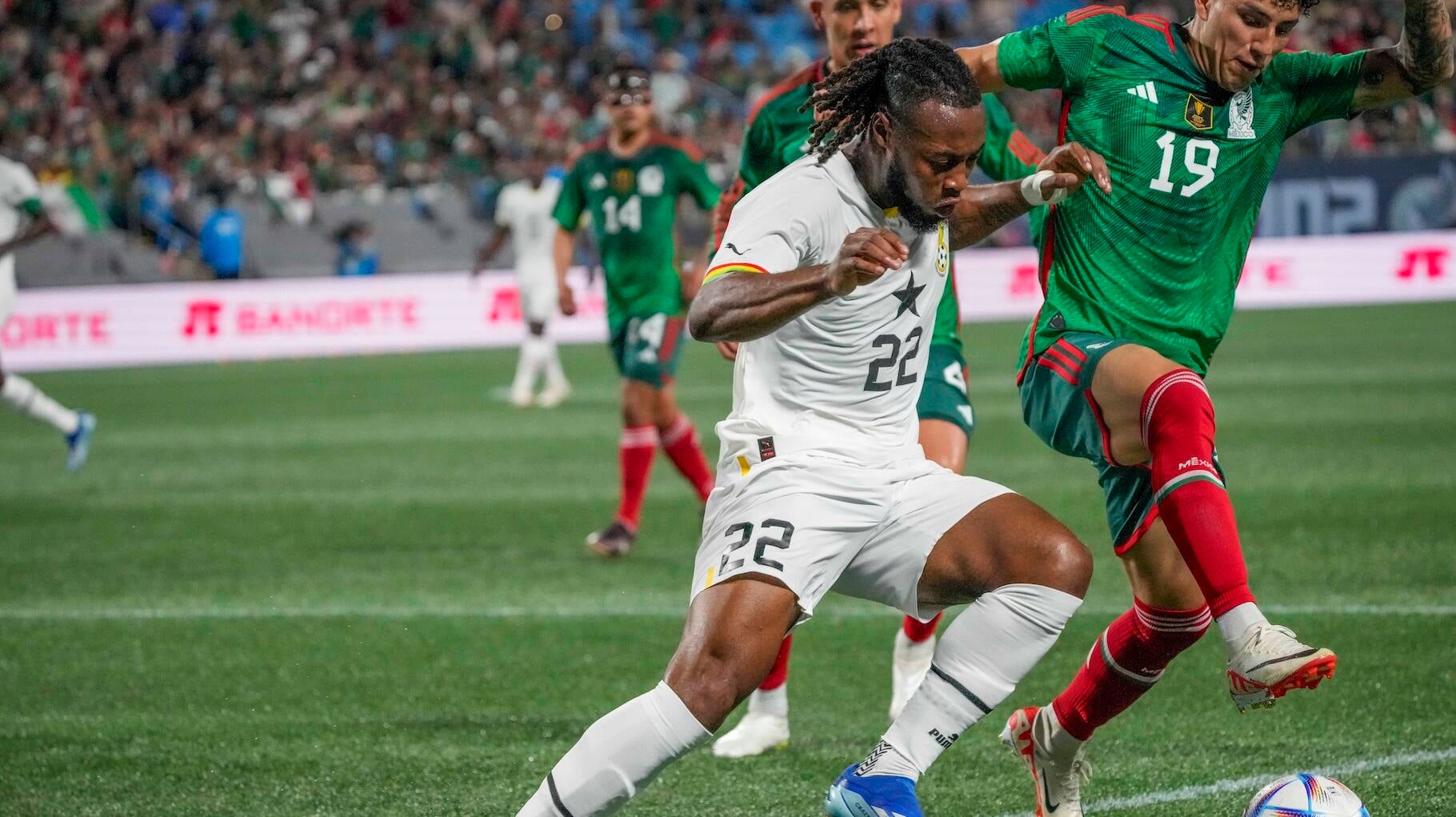
The sportsbook marketing has, by some distance, outrun the fixture. On 17 June 2026, six separate CBS Sports headlines fired in roughly eight hours, all pitching the same product — a DraftKings bonus or the BetMGM code CBSSPORTS — across the same two games: England–Croatia and Panama–Ghana. The promotional layer is now denser than the preview layer. That inversion tells you something about how the U.S. sports media economy handles the run-up to a home World Cup: every fixture is treated, first, as an opportunity to convert reader attention into a deposit, and only secondarily as a football match.
Underneath the promos, Wednesday’s Panama–Ghana meeting in the United States is a useful test case. It is the kind of Group-stage-adjacent tune-up the expanded 48-team World Cup makes more common — a CONCACAF side against an African side, both with points to prove in a tournament they did not have to qualify through the traditional anxiety of an intercontinental playoff. The betting market has noticed. SportsLine handicapper Martin Green, on an 18-8 roll cited in CBS Sports’ 17 June 2026 pick piece, published best bets for the match.
What the books are saying
The promotional headlines are uniform in shape but not in the lines they reference. The BetMGM block of copy, repeated at 14:00, 16:00, 18:00 and 21:00 UTC on 17 June 2026, names the same two fixtures — England vs. Croatia and Panama vs. Ghana — and ties them to a $1,500 first-bet insurance offer tied to the code CBSSPORTS. The DraftKings copy, posted at 16:15 and 18:56 UTC, advertises $200 in bonus bets unlocked by a $5 first wager, again for the same two matches. The repetition is the point. The fixture is the hook, but the offer is the product.
Green’s pick piece, also on CBS Sports at 14:59 UTC on 17 June 2026, is the only item in the cluster that treats Panama–Ghana as a contest to be analysed rather than a vehicle for a promo. His published best bets and a model-driven prediction are the closest thing in the source material to substantive preview coverage. Anyone trying to handicap the match on anything other than vibes will end up there.
What the wire is missing
There is no team-news material in the source cluster — no injury list, no projected XI, no manager quote. That absence is the article. The U.S. sportsbook-media complex, in this slice of the calendar, has decided that the marginal reader who arrives via a Google search for "Panama Ghana odds" is more valuable as a sign-up than as a viewer of tactical preview. The promotional articles do not even pretend to be previews. The single CBS piece that does attempt analysis is a model-pick column. The fixture is otherwise content-shaped air.
The structural pattern is familiar. The bigger the U.S. sportsbook’s customer-acquisition budget, the louder it is in the run-up to tentpole events. The 2026 World Cup is the largest such event the U.S. has hosted in the modern legalised-betting era, and the volume of promo copy attached to it is, accordingly, larger than anything that has come before. The Panama–Ghana game is, in this economy, an above-the-fold slot for a deposit prompt dressed as a fixture card.
The match itself
Panama and Ghana arrive at Wednesday’s meeting as the kind of mid-tier sides whose World Cup trajectories are determined less by talent gap than by draw luck and one or two set-piece moments per tournament. The expanded 48-team field raises the floor and lowers the ceiling at the same time: more sides, more meaningful games in the group stage, more variance. Panama, as a CONCACAF host-region entrant, has the comfort of crowd familiarity. Ghana arrives as a West African side that has historically produced more individual talent than it has been able to convert into deep tournament runs.
What the match is actually worth, in the absence of any preview-grade reporting in the source material, is a question this publication can’t fully answer from the wire available. Green’s column at 14:59 UTC on 17 June 2026 is the only public-facing piece that attempts a verdict, and his track record — the cited 18-8 run — is the only quantitative anchor on offer.
Stakes and what to watch
The U.S.-hosted World Cup is going to run for roughly five weeks this summer, and the promotional pressure on every fixture in it is going to look like this — several bonus-code headlines per match per day, with one or two pick pieces actually doing the analytical work. The reader who wants a tactical preview of a Group-stage tune-up will need to leave the promo cluster and search for it. The reader who only wants the betting offer will find the promo cluster and stop reading.
What remains uncertain, and what the source material does not resolve, is the relative weight of the two — how much of the U.S. World Cup audience is being funnelled into bookmaker apps via this kind of content, and how much is arriving by other paths. The publishers themselves are unlikely to publish that figure. The regulator in any given state, if asked, will refer the question to the operator. The operator will, characteristically, decline.
For Wednesday’s match, the practical question is simpler: is the 18-8 handicapper right about the line he has set, and is the bonus offer attached to a stake size the reader would actually consider risking on a friendly. The source material provides a model prediction and a promotional mechanic. The football, as ever, will be decided on the pitch.
Desk note: Monexus ran this preview against a single-day source cluster dominated by sportsbook promo copy. We have flagged, in the body, the absence of substantive preview reporting rather than papering over it. Where the wire gave us a number, we used it; where it did not, we said so.