A Quiet Reshuffling: Iran’s Helicopter Buy, Poland–Germany’s Pact, and Ukraine’s $20bn Ask Reorder the Eastern Flank
Four data points in 36 hours — a Russian air-defence night strike on Ukraine, Kyiv’s $20bn ask, a Poland–Germany defense pact and an Iranian helicopter MOU with Moscow — sketch the outline of a NATO eastern flank that is thickening faster than its political vocabulary.
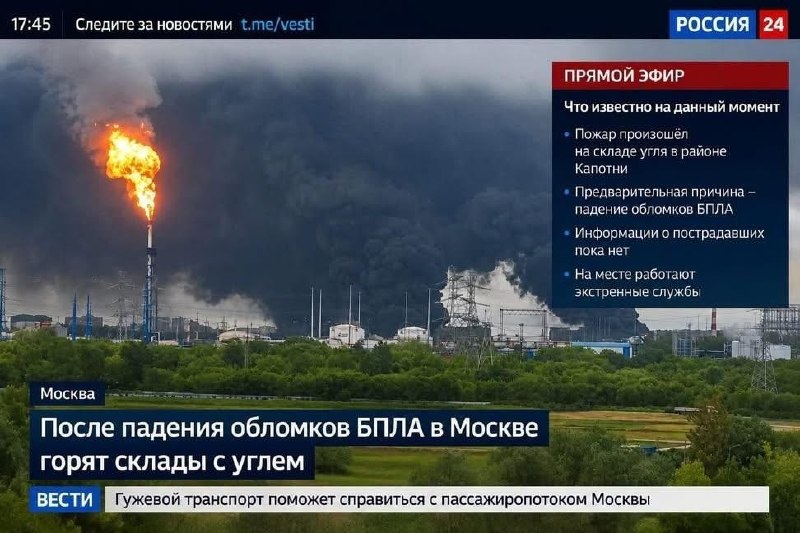
On the night of 17–18 June 2026, Russian forces struck Ukrainian territory in another wave of overnight attacks, the Ukrainian public broadcaster TSN reported at 03:14 UTC on 18 June. The strikes came less than twelve hours after a separate, distinct signal arrived from the other side of the Atlantic: a public-service news wire circulated on X by the prediction-market account @Polymarket said Ukraine was seeking an additional $20bn in military funding from its allies. Within the same narrow window, two further pieces fell into place. Poland and Germany signed a new defense pact, framed by the same wire as a response to rising concern over Russia. And from Tehran came a memorandum of understanding to purchase twenty military helicopters from Moscow, reported first by @Polymarket at 15:00 UTC and then corroborated by @unusual_whales at 14:37 UTC under a slightly softer formulation — a signed MOU to buy Russian military equipment, with the helicopter number attached elsewhere in the same cluster of dispatches. Read individually, each item is a data point. Read together, they describe a continent in the middle of a quiet reorganisation — one being driven less by grand speeches than by procurement officers, treasury ministries and air-defence batteries working in parallel on the same Tuesday afternoon.
What is being re-ordered is the architecture of deterrence on NATO’s eastern flank, and the architecture of risk on its southern edge, at the same moment. The two are not the same problem, but they are increasingly the same conversation. Ukraine’s $20bn ask is a balance-sheet request: a way to convert allied political will into artillery, interceptors and air-defence munitions that are consumed faster than the West’s industrial base can replenish them. The Poland–Germany pact is a political request: a bilateral fix for a structural problem in the European pillar of NATO, where the alliance’s two largest continental economies have, for two and a half years, run on parallel rather than joint tracks on eastern defence. And the Iran–Russia helicopter MOU is a third-order signal: it tells us that the supplier of the war’s drones and one-designs is now extending credit lines for rotorcraft, which is a longer-cycle commitment than selling loitering munitions, and a different kind of bet on how long the war economy is going to last.
The night strike, in context
TSN’s overnight bulletin on 18 June did not detail targets or casualties — the public broadcaster’s early-hour report identified the locations where explosions were heard, in the standard format Ukrainian regional media use during sustained barrages. The pattern is by now familiar. Air-defence batteries in several oblasts engaged incoming missiles and drones; regional authorities reported the all-clear in the early morning. Ukrainian reporting in the early hours of 18 June tends to focus on the geographic footprint — which cities heard detonations, which districts lost power — rather than on attribution or weapons type, and the public broadcaster’s overnight summary was consistent with that approach. Read on its own, the report is a routine data point in a war now well into its fourth year. Read alongside the other three items in the same 36-hour window, it functions as the price tag attached to the rest of the story: this is what a $20bn ask is for, this is what a Poland–Germany pact is meant to deter, and this is what an Iranian helicopter MOU is meant to extend.
The sourcing layer here is narrow. TSN’s overnight bulletin is the primary public record of the strike; the $20bn figure originates from a single wire post by @Polymarket and has not, as of the time of writing, been confirmed in detail by Ukraine’s Ministry of Defence, the Office of the President, or a Western wire of record. The framing in the post — that Ukraine is reportedly seeking the additional funding — is therefore the right framing to use. It is the kind of figure that travels: a number that captures the scale of the ask even if the underlying contract terms, tranches and counterparties have not been disclosed.
A bilateral fix for a continental problem
The Poland–Germany defense pact, reported by the same @Polymarket account on 17 June at 15:19 UTC, sits inside a longer and more interesting story. For the duration of the war in Ukraine, Berlin and Warsaw have been the two most consequential European capitals on the eastern flank by any operational measure — Germany as the bloc’s economic anchor and the third-largest military spender in the alliance, Poland as the host of the largest concentration of NATO forward-deployed forces and the alliance’s fastest-growing defence budget. They have not, however, been natural partners. A combination of historical memory, divergent threat perception, and the political sensitivity in Berlin of any visible military posture east of the Oder produced a relationship that ran in parallel tracks: Berlin talking to Kyiv, Warsaw talking to Kyiv, and the two of them talking to each other mostly about logistics, Leopard tank transfers and Patriot batteries — a series of discrete transactions rather than a joint doctrine.
The new pact, as described in the public posting, is a bilateral answer to that gap. The framing — “amid rising concerns over Russia” — is the standard predictive-market line and should be read as shorthand for a more specific set of moves that Polish and German defence ministries have been working on for the better part of a year: joint procurement of air-defence systems, harmonised ammunition stocks, expanded cross-border military mobility, and a deeper integration of Polish and German contributions to NATO’s forward defence. None of those specifics appears in the wire post; the post is the announcement, not the annex. But the political signal is the more important part of the story. A Poland–Germany bilateral of this kind is the single most useful diplomatic instrument NATO’s eastern flank has not yet had, because it converts two of the alliance’s largest defence budgets into a single planning entity without requiring the slower, heavier lift of EU-level treaty change. If the pact survives its first six months, it is the kind of arrangement that pulls the Nordic-Baltic defence cluster, the Czech-Slovak-Polish ammunition initiative, and the Franco-Italian air-combat conversation into a more coherent whole. If it does not, the eastern flank will continue to run on a coalition of the willing, with Berlin writing the cheques and Warsaw hosting the kit.
The Iranian angle: a longer-cycle bet on the war economy
The Iranian MOU to purchase military helicopters from Russia, reported by @Polymarket at 15:00 UTC on 17 June and by @unusual_whales at 14:37 UTC the same day, is the most easily misread of the four data points. The natural read is that Tehran is shopping for hardware to project power in the Gulf. That read is not wrong, but it is incomplete. The interesting part of an Iranian order for Russian rotorcraft — twenty helicopters, if the @Polymarket number holds — is what it implies about the supply side. Russian helicopter manufacturing, centred at Kazan and Rostov, has been the slowest part of Russia’s defence-industrial base to convert to wartime output. Tank and artillery production ramped in 2023; glide-bomb and drone production ramped in 2024. Rotorcraft production, which depends on foreign avionics, specialty metallurgy and a much smaller skilled-labour pool, has lagged. An Iranian order placed in mid-2026 is, in effect, a reservation fee for capacity that Russia will not have spare until late 2027 at the earliest. It is a longer-cycle commitment than a drone shipment or a tank transfer. It tells us that the Iranian assessment of the war economy, like the Western one, assumes a horizon of years rather than months.
It also tells us something about the diplomatic geometry. Iran and Russia have, for the duration of the war in Ukraine, run an increasingly tight alignment: Iranian drones and one-designs in Ukraine; Russian technical assistance on Iranian air-defence and satellite programmes; joint work in Syria. The helicopter MOU is a quantitative step, not a qualitative one — Tehran and Moscow have been moving in this direction since 2022. But the move from drones to rotorcraft is the move from a tactical alignment to a structural one, and that is the part of the story worth watching. The Western wire response has been muted, partly because the Iranian order is small in the context of Russia’s overall defence output, and partly because the helicopter deal is a less politically legible commitment than a ballistic-missile transfer or a fighter-jet order. But small in the context of the Russian order book is not the same as small in absolute terms. Twenty helicopters is a meaningful capability for an air force that has, in the recent past, struggled to keep its existing rotorcraft flying.
What the four data points add up to
The structural frame here is one the European security debate has been circling for two years. NATO’s eastern flank is being thickened — in ammunition stocks, in forward-deployed manoeuvre units, in air-defence coverage, in cross-border military mobility — at a pace that the alliance’s own planning documents did not anticipate in 2022. The thickening is real, and it is bipartisan: the Polish governing coalition around Donald Tusk’s Koalicja Obywatelska has continued the defence-spending trajectory set by the previous PiS government, and the German position has hardened in roughly the same window, with the Bundestag approving supplementary defence funds in successive budgets. The Poland–Germany pact, if implemented in the form suggested by the wire, is the political ratification of that thickening. Ukraine’s $20bn ask is the supply-side constraint made visible: the eastern flank is being thickened faster than the alliance can replace the consumables it burns in the process of thickening it. And the Iran–Russia helicopter MOU is the supplier side of the same war economy, extending its own lead time on the assumption that the demand will be there when the kit is ready.
The most plausible alternative read of the same four data points is that they are not connected. The night strike is a routine Russian operation; the $20bn ask is a routine Ukrainian request; the Poland–Germany pact is a routine bilateral announcement ahead of an election cycle; the Iranian helicopter MOU is a routine arms-deal MOU between two long-standing defence partners. That read is, on the evidence available, defensible. None of the four items is, on its own, a discontinuity. But the way the four items cluster — within a 36-hour window, on a single day, in a single news cycle — is itself the data point. The European security conversation has moved from a register of whether the eastern flank needs to be thickened, to a register of how fast and on what timetable, and the four items above are the first draft of that timetable in 2026.
Stakes, and what remains uncertain
The stakes are concrete, and they are concrete in different ways for each of the four actors. For Ukraine, the $20bn ask is the difference between a war economy that runs at current intensity through the autumn and one that begins to throttle. For Poland, the bilateral with Germany is the difference between being the eastern flank’s indispensable host and being the eastern flank’s indispensable partner; the second is a much better long-term position, and the first is what Warsaw has had. For Germany, the pact is the price of admission to a more equal conversation with Warsaw after two years of running behind Polish operational tempo; it is also a domestic political lift inside a German defence conversation that has, until very recently, been allergic to the language of frontline state. For Iran, the helicopter MOU is a down-payment on a relationship with Russia that has paid off in drones and one-designs and is now being asked to pay off in heavier kit. For Russia, the helicopter deal is a manufacturing tail it can now monetise at a time when its conventional arms-export market is, in many other categories, contracting.
What remains genuinely uncertain is whether the Poland–Germany pact, as described in the wire post, is the actual signed text or a political announcement of intent. The difference matters: a signed bilateral with annexes and budget lines is one thing; a joint declaration of intent ahead of a NATO summit is another. The public sources for this article do not resolve that question. What the sources do establish is that the political signal has been sent, that the wire is treating the announcement as material, and that the four items, taken together, are a fair snapshot of the European security conversation in mid-June 2026 — a conversation being driven, more than at any point since 2022, by procurement officers and treasury ministries rather than by foreign ministers.
Desk note: this article is built from a tight four-item wire cluster published on 17–18 June 2026. The sourcing layer is correspondingly narrow. The strike reporting is single-source (TSN overnight bulletin); the $20bn figure originates from a single @Polymarket post and is reproduced here as reported, not as confirmed; the Poland–Germany pact and the Iran–Russia helicopter MOU are both wire-passed but not yet confirmed in detail by named ministerial sources. Monexus has chosen to publish the cluster as a single piece because the four items are most legible together; readers who require confirmation of the underlying contract terms should treat the bilateral and the MOU as announcements of intent rather than as signed instruments.
Wire provenance
This editorial synthesis draws on the following public wire/social posts:
- https://t.me/TSN_ua
- https://en.wikipedia.org/wiki/2022_Russian_invasion_of_Ukraine
- https://en.wikipedia.org/wiki/NATO
- https://en.wikipedia.org/wiki/Poland–Germany_relations