Ronaldo's World Cup farewell: the arithmetic that decides the GOAT debate
With the World Cup set to open in North America, Cristiano Ronaldo sits eight goals behind Lionel Messi in the all-time tournament ledger. The gap is the debate.
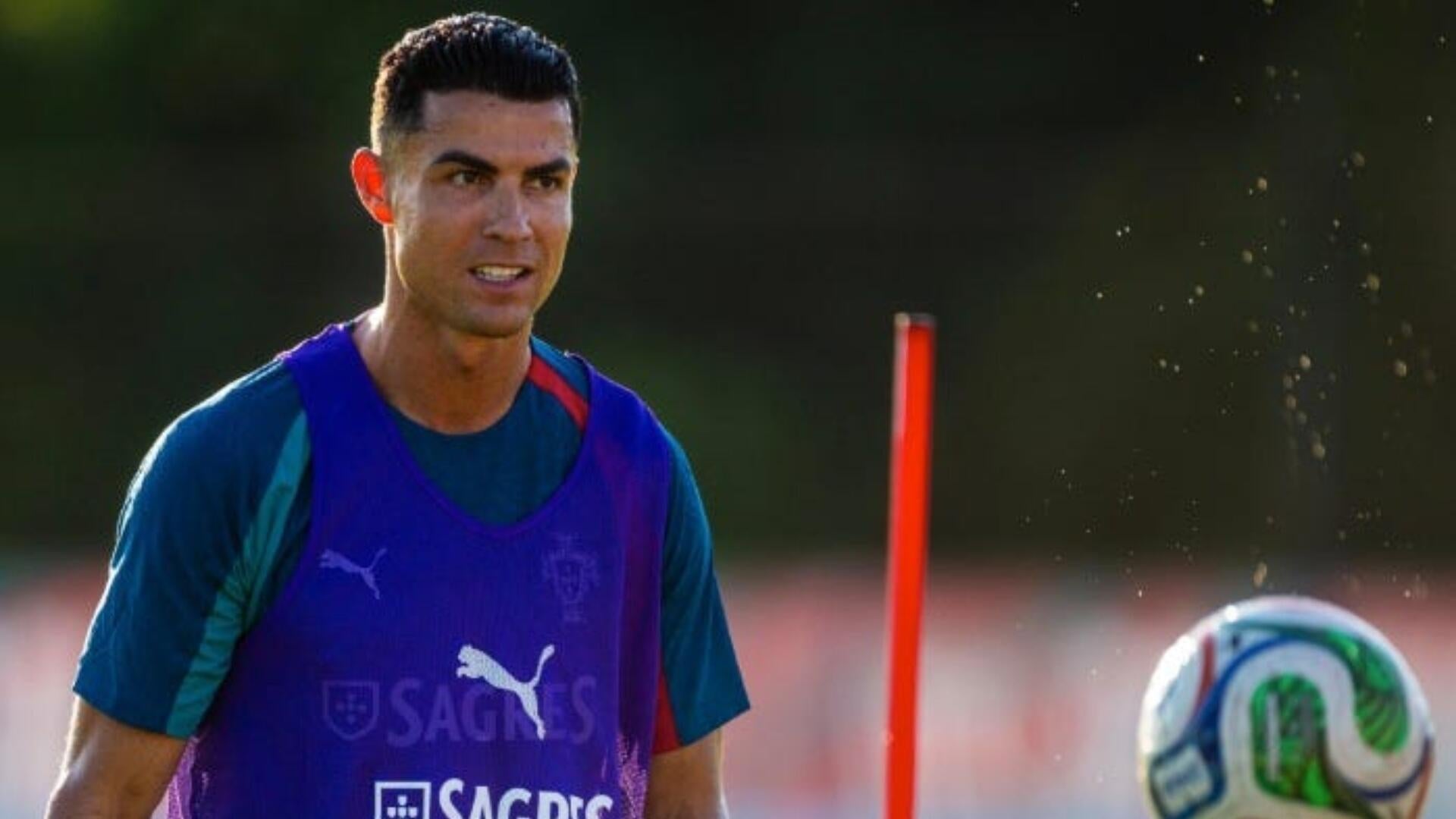
At 14:46 UTC on 17 June 2026, FIFA's Telegram channel posted a leaderboard formatted for a phone screen: Kylian Mbappé two goals, Erling Haaland two, Lionel Messi three, Cristiano Ronaldo marked with a question mark. Twelve minutes earlier, the same operator had framed the GOAT question in raw arithmetic — Messi on sixteen World Cup goals, Ronaldo on eight. The Athletic syndicated both posts to a global football readership within minutes. The kickoff in North America is days away, and the broadcaster is already telling viewers what the tournament is supposed to be about.
The tournament-scoring ledger is the cleanest available proxy for the GOAT debate. It strips out club form, market value, and the noise of a 24-team field, and leaves a single number a striker can move. Ronaldo has eight. Messi has sixteen. The gap is the debate.
A format that rewards the already-loaded
World Cup 2026 is the first edition expanded to 48 teams, played across the United States, Canada and Mexico. FIFA's own broadcast build-up has leaned into the consequence: more matches, more minutes, more opportunities for the established stars to separate. Mbappé, Haaland, Messi and Ronaldo arrive in North America as the four faces the governing body has chosen to monetise. FIFA's channels do not argue that the quartet are the four best players in the world — they argue they are the four worth betting on.
The expansion's effect on the GOAT ledger is structural. A 48-team group stage produces more games for the favourites than any tournament in living memory. A player who starts the competition and reaches the semi-finals will play a minimum of five matches in the United States, with knockout football extending that total. The arithmetic that looked settled after Qatar 2022 — Messi eight ahead, on his way out of European football — now has eight matches of room to move.
The case for Ronaldo, written in tournament-only ink
Strip the club numbers out. Ronaldo's World Cup record rests on three tournaments that mattered: the 2018 hat-trick against Spain in Sochi, the seven goals he scored across 2006 and 2010 that announced him to a global audience, and the five he added in 2014. Eight total. None of them came in a final. He has never scored in a World Cup knockout match beyond the group stage, and he is now 41, with a Saudi Pro League schedule behind him rather than a Champions League run-up.
His defenders will note two things. First, that Portugal's draw at recent tournaments has rarely given him a long ladder — three group-stage exits in four cycles before Qatar's quarter-final run, and a 2022 campaign where he scored three times but started from the left flank rather than through the middle. Second, that the eight-goal figure is itself a record for a European player, and that he sits ahead of the German and French modern-era benchmarks the broadcaster keeps on the lower band of the graphic. Both points are real. Neither closes an eight-goal gap in five matches against a 41-year-old's metabolism.
The case the broadcasters are not making
There is a quieter version of this tournament, and FIFA's channels are not selling it. Mbappé, the reigning finalist, has two World Cup goals from Qatar and a fresh Champions League pedigree. Haaland has two, and no knockout-stage minutes. Neither name belongs on a leaderboard with Messi and Ronaldo in 2026 — neither has the body of work, in this specific competition, to be in the conversation. The graphic's inclusion of both is not analysis. It is a market signal: these are the four players whose face rights move product, and the broadcaster has decided the GOAT debate is a four-horse frame.
The same market logic explains why the question mark sits where a number should. A resolved answer closes the conversation. An open question keeps the leaderboard live across the group stage, keeps the merchandise moving, and keeps the betting handle high. FIFA's Telegram channel does not need Ronaldo to catch Messi. It needs the gap to feel catchable.
What the next month decides
Portugal open their campaign in the United States. If Ronaldo starts and stays fit, a realistic ceiling on his tournament is four or five goals — enough to move the leaderboard, not enough to close it. Messi, playing what he has signalled will be his final World Cup, has the easier schedule on paper: Argentina enter as holders and will not need to chase matches until the knockouts. The structure of the tournament rewards Argentina's depth and punishes a Portugal side that leans on a single finisher who no longer plays at Champions League tempo.
The honest read is that the GOAT question will not be settled in North America. It will be sharpened. Messi will likely extend his lead, Ronaldo will likely narrow it by a goal or two, and the broadcaster will frame the closing margin as the verdict. The ledger is the proxy. The debate is the product. FIFA has decided which one matters more, and the question mark on its own channel is the tell.
The sources do not specify the precise group-stage fixtures or the broadcast schedule beyond what FIFA's own Telegram posts signal. The Athletic's syndication confirms only that the framing has cleared editorial at a major outlet. What the next month decides — on the pitch — the leaderboard cannot capture. The eight-goal gap, however, is settled arithmetic.
Desk note: Monexus framed this piece around the ledger rather than the personalities because the ledger is the only number FIFA itself chose to publish. The argument is about how the broadcaster defines the debate, not about who wins it.
Wire provenance
This editorial synthesis draws on the following public wire/social posts:
- https://t.me/FIFAcom
- https://t.me/TheAthletic
- https://t.me/FIFAcom
- https://t.me/TheAthletic