Southern Lebanon strike exposes the limits of a 'calibrated' war
A single Israeli drone strike on the outskirts of a southern Lebanese town, reported within minutes by Iranian and Lebanese outlets, lays bare a familiar drift: the language of restraint and the arithmetic of escalation.
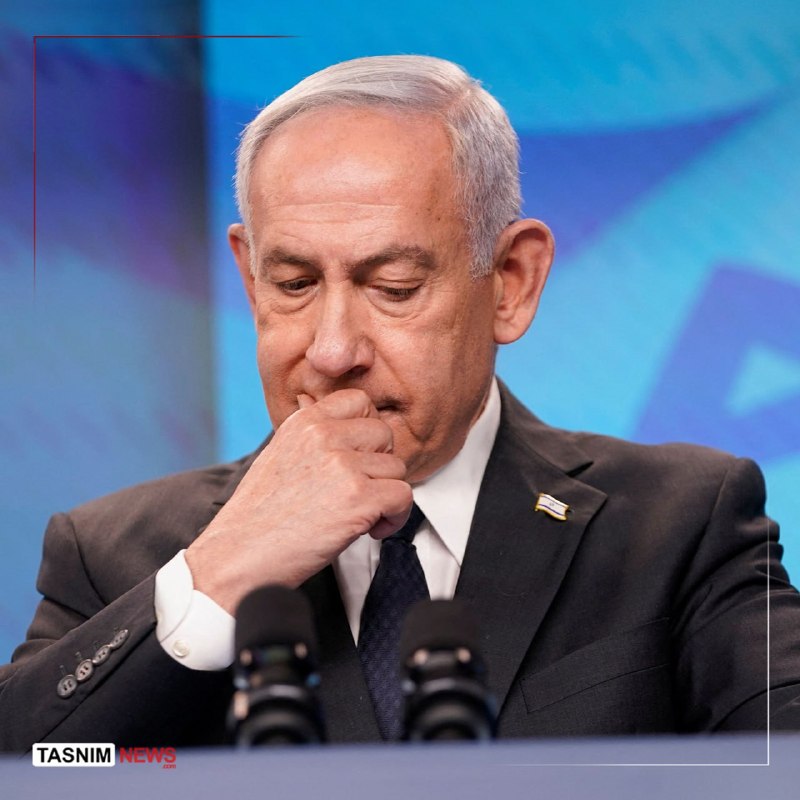
At 06:25 UTC on 18 June 2026, Iranian state-aligned outlets Fars News and Farsna, citing Lebanon's Al-Mayadeen network, reported an Israeli drone strike on the outskirts of the town of Kufrtbanit in the al-Nabatieh district of southern Lebanon. Artillery fire followed, with Al-Mayadeen reporters on the ground describing bombardments in the al-Nabatieh al-Fuqa area. The reports are unverified by any Israeli spokesperson or Western wire service; the IDF had not issued a public comment at the time of publication.
That absence is the story. A single strike, on a single town, in a single district, is being narrated in real time by a single side of the conflict — and the audience for that narration is global, instantaneous, and almost entirely dependent on who has the camera and the bandwidth. This publication finds that the pattern, more than the strike itself, is what warrants attention.
The first draft is always the loudest
Israeli military operations inside Lebanon are not unusual in 2026. The northern border has been a live theatre since the start of the war in Gaza, and the diplomatic back-channels that ostensibly de-escalate the front have, in practice, codified a slow tempo of fire rather than a clean line of contact. What is unusual about the 18 June reports is the speed and uniformity of the coverage from outlets aligned with the Iranian and Lebanese resistance axis. Three near-identical messages, timestamped within two minutes of each other, set the frame before any other source has filed.
The structural lesson is older than social media. The actor with the first verified camera, the first typed bulletin, the first translation into English, sets the day's vocabulary. By the time Western wires move from "incident reported" to "incident denied" to "incident partially confirmed," the chosen nouns — "Zionist regime," "occupied town," "artillery bombardment" — have already done their work in the timeline. No amount of later correction rewrites the first draft.
A language that loads the gun
There is a quiet contest inside the language itself. Iranian state media and its affiliates use "Zionist regime" as a categorical refusal of Israeli statehood; the IDF, in its own briefings, refers to strikes inside Lebanon as "targeted operations against Hezbollah infrastructure." Both formulations are doing political work. The first denies legitimacy; the second narrows the audience to a domestic Israeli one and international diplomats. The town of Kufrtbanit does not appear in either framing — it is a waypoint between two national narratives that have very little use for the civilians who live there.
Al-Mayadeen, a Beirut-based outlet with documented ties to Hezbollah's media ecosystem, occupies a third register: granular local reporting — al-Nabatieh al-Fuqa, the outskirts of a specific town — inside a regional frame. That register is more useful to a foreign desk than the maximally ideological bulletins carried by Fars, but it is also the register most likely to be ignored or quarantined by editors who file all three sources under a single label and move on.
The restraint myth
"Calibrated" is the word Western officials tend to reach for when describing Israeli action in Lebanon. Calibrated pressure on Hezbollah, calibrated response to rocket fire, calibrated signalling to Tehran. The word performs two functions at once. It assures domestic audiences that escalation is under control, and it reassures regional counterparts that the line from strike to wider war is shorter than it looks.
The arithmetic on the ground tells a less reassuring story. Drone and artillery exchanges in southern Lebanon have become frequent enough that, in 2026, the burden of proof is inverted: a quiet day is the news, a strike day is the baseline. The al-Nabatieh reports of 18 June fit that baseline. Kufrtbanit, like Bint Jbeil, like Maroun al-Ras before it, has become a recurring coordinate in a rolling ledger of fire. Treating each entry as a discrete incident — and a discrete opportunity for de-escalation diplomacy — is how a war of attrition hides in plain sight.
What the sources do not say
The thread on this strike contains no Israeli confirmation and no Western wire corroboration. It contains no casualty count, no claim of targeted individuals, no description of the munition, and no reference to a specific Hezbollah asset. The outlets cited — Fars, Farsna, Al-Mayadeen — all share an alignment with the Iranian and Lebanese resistance axis, and the bulletin is essentially the same bulletin with three bylines. A reader building a picture of the 18 June events from these sources alone has one frame, presented as a single voice.
That is the genuine limit of the available reporting. The structural pattern is real; the specific facts of this strike remain, at the time of writing, unverified. Monexus is publishing the framing without the corroboration, and the distinction matters.
Stakes
If the cadence continues, the calibrated language will eventually be exposed by the cadence itself. A northern border that receives drone and artillery fire on a near-weekly basis cannot be sold indefinitely as a frontier under control, no matter how carefully the IDF frames each individual sortie. For Lebanon, the cost is the slow erosion of the south as a habitable region. For Israel, the cost is the steady conversion of a deterrence posture into a commitment the public has not been asked to ratify. For the wider region, the cost is a de-escalation diplomacy that runs on declarations while the actual escalation runs on schedules.
The 18 June bulletins from Tehran and Beirut are useful precisely because they are so openly partial. They show, in unvarnished form, what the absence of independent verification looks like — and they are a reminder that the harder journalistic work is not in transcribing the bulletin, but in waiting for the second one, ideally from a different capital, before settling on a noun.
The Monexus desk is publishing the frame in full view of its source limit. Where Western wires lead with official IDF briefings, and Iranian-aligned outlets lead with "Zionist regime" bulletins, this piece has led with the speed and shape of the coverage itself — and has flagged the corroboration gap on the strike rather than papering over it.
Wire provenance
This editorial synthesis draws on the following public wire/social posts:
- https://t.me/FarsNewsInt
- https://t.me/farsna
- https://en.wikipedia.org/wiki/Nabatieh_District