A drone strike in southern Lebanon, and the silence around it
An Israeli UAV struck a vehicle in Tibnit on the morning of 18 June 2026. The Lebanese reporting arrived in hours; the international wires have yet to file.
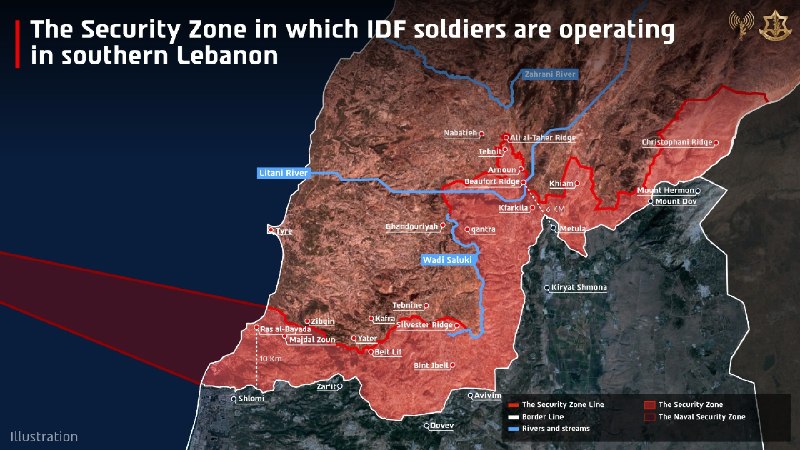
At 06:52 UTC on 18 June 2026, two Lebanese field feeds carried the same bare dispatch: an Israeli UAV had struck a vehicle in the village of Tibnit, in the Nabatieh district of southern Lebanon, within the previous hour. The reports came from outlets with deep local networks — Ali Hashem's English-language channel and his Arabic-language Ali Express feed — and they were filed while the wreckage was still being described, not afterwards. There was no immediate Israeli comment, no Western wire pickup, and no casualty count attached to either message.
The strike is small by the standards of the year-long exchange that has followed the October 2023 turn. It is the kind of event that, on most mornings, drifts into the overnight log and surfaces again only if an Israeli or Lebanese official chooses to speak on the record. What makes this morning worth pausing on is the contrast between the speed of the Lebanese reporting and the silence around it. The event is known; the political meaning is not yet.
A village at the foot of a ridge
Tibnit sits in the Nabatieh governorate, in the rolling terrain south of the Litani — the river that has functioned, since the late 1980s, as the notional boundary of the Lebanese security zone and, after the November 2023 ceasefire framework, as the line of reference for the monitoring arrangement between Israel and Hezbollah. The Ali al-Tahar ridge, named in the second of the two feeds, is one of several high points along that southern band where the line of sight into northern Israel is unobstructed. Vehicles moving on the lower roads around Tibnit have been periodic targets throughout the post-ceasefire period.
The two field reports from 06:52 UTC agree on location, method, and timing — within the hour — and diverge only on transliteration. They do not name the operator of the vehicle, do not specify casualties, and do not describe the strike platform beyond "Israeli UAV." No Lebanese official, and no Israeli spokesperson, had commented in the window between the strike and the filing of this article.
The asymmetric clock of cross-border news
Cross-border incidents in this theatre now travel on two clocks. The first is the Lebanese one: field channels, some affiliated with political factions and some independent, push dispatches inside minutes, sourced from local contacts, with the precision of a neighbourhood and the imprecision of a name. The second is the international one: Western wires, Israeli press, and the IDF Spokesperson's English desk, which move more slowly and require institutional confirmation. On most days the second clock catches up within hours; on some days it does not catch up at all.
This week's strike is, at the moment of writing, in the gap between the two. The Lebanese field reporting is consistent enough across two feeds to treat the event itself as established. The wider framing — who was in the vehicle, why the strike was ordered, what the Israeli side says it was targeting — is not.
What the silence protects, and what it costs
The Israeli security concern behind the strike is legitimate on its face: vehicles in this corridor have, in the past three years, been used to transport operatives and materiel south of the Litani. Strikes against such vehicles are conducted under a legal and operational logic that the IDF has, when asked, laid out in detail. That logic has to be reported without dismissiveness.
The cost of the silence is on the other side. A village family that loses a breadwinner at sunrise does not get a wire explainer by lunchtime. International media, in the absence of a hook — a statement, a photo, a named victim — tends to file such incidents only when they accumulate into a pattern or when one of them produces a political reaction. The pattern here is well-established; the political reaction, this morning, is not. The Lebanese field channels are doing the only reporting that exists, and they are doing it without the institutional backing that would let them name the dead with confidence.
The week this sits inside
Tibnit is one of several villages in the Nabatieh and Bint Jbeil districts that have appeared in Lebanese field reporting over the past fortnight. The strikes themselves have varied in platform — drone, fixed-wing, artillery — and in target type. What has been constant is the gap between the Lebanese reporting and the international one. That gap is not new; it has been a feature of this theatre for years. What is worth noting is that, as the broader ceasefire framework ages, the gap is widening rather than closing.
The honest reading of the morning is this: an Israeli UAV struck a vehicle in Tibnit at roughly 06:00 UTC on 18 June 2026, and the international press cycle has not yet noticed. Whether the strike was operationally justified, and whether the vehicle's occupant was a combatant, are questions that the field reports cannot answer and that the wires have not yet been asked to.
What we don't know
The sources do not name the target. They do not specify casualties — wounded, killed, or unharmed. They do not record any Israeli statement confirming or characterising the strike, nor any Lebanese official reaction. Until one of those facts arrives, the reporting on this event is a frame around an empty centre, and that frame is itself the story.
Desk note: Monexus treats this event as established by the two consistent Lebanese field feeds but does not project motive, target identity, or outcome beyond what those feeds state. Coverage of cross-border strikes routinely leans on the slower institutional clock and treats the Lebanese field clock as rumour; this article reverses that weighting, on the grounds that two feeds filed within minutes of each other are the best evidence currently in circulation.
Wire provenance
This editorial synthesis draws on the following public wire/social posts:
- https://t.me/englishabuali/
- https://t.me/abualiexpress/
- https://t.me/abualiexpress/