Trump at G7 calls it 'unfair' for Iran to lack ballistic missiles as US-Iran MOU lands
Speaking from the G7 in France, the US president defended Iran's right to possess ballistic missiles hours after signing a memorandum of understanding with Tehran — a striking departure from decades of American non-proliferation policy.
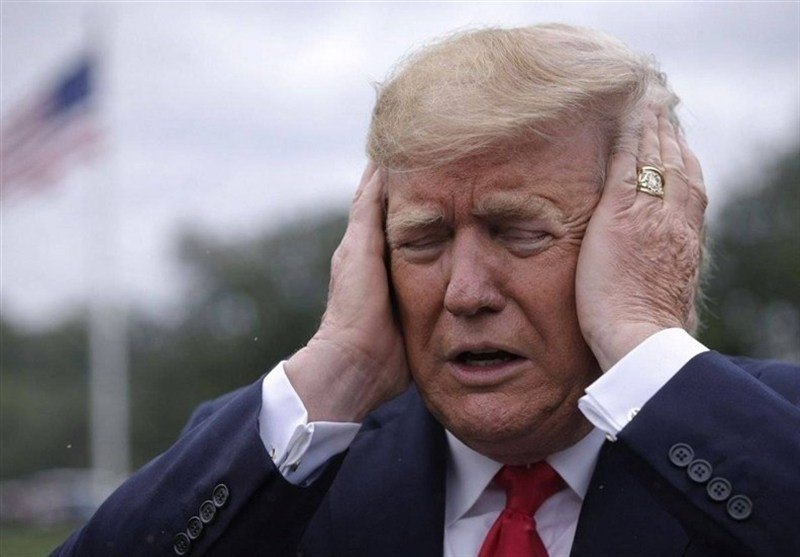
A memorandum of understanding between the United States and Iran was signed on Wednesday 17 June 2026 by President Donald Trump and his Iranian counterpart, a US official told Reuters. Hours later, speaking from the G7 Summit in France, Trump defended Iran's ballistic missile programme in terms no sitting American president has used in recent memory: it would be "unfair," he said, for Tehran to be denied missiles that regional rivals already possess.
The pairing — a signed MOU followed by a public defence of the very weapons category Washington has spent two decades trying to constrain — is the sharpest signal yet that the administration is willing to tolerate, and even champion, an Iranian missile deterrent as the price of a wider accommodation. The move reframes a long-running non-proliferation consensus around a single tactical question: parity with whom, and at what cost to whom else.
What was actually signed
Reuters reported at 23:15 UTC on 17 June 2026 that a US official had confirmed the MOU was signed "on Wednesday by Trump and Iran president." The brevity of the wire item was matched by Al Alam, the Iranian-aligned outlet that broke the news in Arabic with a single line: "Trump: I signed the memorandum of understanding with Iran." Neither the official text nor the scope of the document has been published. There is no public annex detailing what categories of activity the MOU covers — nuclear, missiles, regional militias, sanctions relief, hostage files — or whether the agreement is binding under international law or a political handshake that can be unwound by either side.
That opacity matters. Previous US-Iran understandings, from the 2015 Joint Plan of Action through the 2023 Tehran-brokered Saudi détente, have foundered less on whether they were signed than on what they failed to specify. The default assumption in Washington is that MOUs of this kind are statements of intent, not enforceable contracts. Tehran's assumption tends to be the inverse. Until the text is public, every claim about what Trump and the Iranian president agreed to is speculation.
The G7 remark, in context
The missile defence came on the same day Trump was meeting allied leaders in France. According to Al Jazeera's breaking news wire, Trump said it is "unfair" for Iran to lack ballistic missiles when other regional states already have them. The OSINTdefender Telegram channel, paraphrasing his remarks, noted he "strongly defended the Iranian ballistic missile program, stating that they 'have to have some, because other people have some.'"
Read narrowly, this is a parity argument: Saudi Arabia, Israel and (to the extent the US counts it) Turkey operate missile inventories far larger than Iran's; Iran, by the same logic, is entitled to its own. Read broadly, it is a repudiation of the non-proliferation architecture the United States has underwritten since the Nuclear Non-Proliferation Treaty's extension in 1995. The Missile Technology Control Regime, the Joint Comprehensive Plan of Action's now-expired missile provisions, and a decade of UN Security Council resolutions on Iranian missile activity all rest on the premise that missile proliferation is a problem, not a balance to be respected.
The Israeli reading will be that a US-blessed Iranian missile inventory removes the central deterrence that has kept Iran's conventional retaliation calibrated. The Gulf reading will be that Washington is normalising a missile-armed Iran on terms Tehran has spent four decades demanding. The Russian and Chinese reading — already audible in commentary from both capitals — will be that the same logic applies to North Korea: a US president who defends Iran's missile rights cannot credibly oppose Pyongyang's.
What the MOU might be buying
The Trump administration's pattern in 2025-26 has been to bundle regional concessions — a Houthi ceasefire track, a Syrian stabilisation arrangement, an Iraq de-escalation — into headline agreements that the wire services can call "deals." The Iran MOU fits the template. If the document covers even partial sanctions relief in exchange for caps on enrichment, limits on proxy attacks, or restraint on missile production, the administration can sell it as a rebalance: fewer troops in the Gulf, fewer Gulf-state billions spent on US arms, fewer near-misses in the Strait of Hormuz.
The problem on the other side of the ledger is the missile question. If the MOU permits Iran to keep, build or test ballistic missiles — and the G7 remark strongly suggests it does — then Israel, the Saudis and the Emirates have been handed a fait accompli. None of them have a domestic political base that will accept an Iran with operational ballistic missiles and a US president who publicly defends them. Expect an emergency round of arms requests in Jerusalem, Riyadh and Abu Dhabi in the coming weeks, and expect those requests to be granted.
Counter-narrative
The counter-narrative, and it deserves airtime, is that the old non-proliferation consensus was already broken. Israel never signed the NPT and is estimated to retain a nuclear deterrent; Pakistan and India developed missiles outside any framework; North Korea tested long-range systems throughout the Obama and Biden years without a single effective US sanction added. Within that record, a president asking why Iran alone should be told it cannot have what everyone else has is not aberrant — it is consistent with three decades of selective enforcement. The structural critique of the G7 remark is not that it is radical; it is that it is honest about a regime that has always been more about which countries are allowed to do what than about whether weapons themselves are dangerous.
The counter-counter-narrative, which the Israeli and Gulf governments will press, is that the only thing keeping Iran's missiles from being mated to a deliverable warhead has been the threat of US sanctions and the periodic sabotage campaigns the US and Israel have run against Iran's missile and nuclear infrastructure. A US president who publicly defends the missile programme removes both the threat and the legitimacy of the sabotage. That is the wager inside the MOU: that the diplomatic upside exceeds the proliferation downside. The next twelve months will tell.
Stakes
If the MOU holds and the missile position sticks, the regional arms market will move fast. Gulf missile defence procurement, Israeli Arrow and David's Sling expansion, and a probable acceleration of Turkish long-range strike programmes will follow within the fiscal year. If the MOU collapses — as the 2015 JCPOA did, when a subsequent US administration withdrew — the inheritance will be an Iran that is sanctioned, surveilled and explicitly authorised in its own narrative to keep the missiles Washington tried to take. Both paths look unstable.
What remains genuinely unknown, on the public record assembled here, is the MOU's text, its legal status, and whether the Iranian president who signed it has the same authority to bind Tehran that Trump has to bind Washington. The sources do not specify whether the document has been transmitted to Iran's Majles, who the Iranian signatory is by name beyond the title "Iran president," or whether any third party — China, Russia, Qatar, Oman — was a witness. Until those details surface, the MOU is less a deal than a marker of how far the US posture has moved, and how little of that move is yet anchored in anything that can be enforced.
— Monexus framed this around the parity argument Trump made at the G7, not the MOU's commercial or nuclear substance, because the source wire has not yet published either. The missile remark is the load-bearing fact of the day; everything else is conjecture.
Wire provenance
This editorial synthesis draws on the following public wire/social posts:
- https://t.me/alalamarabic
- https://t.me/osintlive