Trump's 14-point Iran deal lands — and immediately wobbles
A handshake in Washington produced a 14-point deal to end the Iran war and reopen the Strait of Hormuz. Two days in, the text is secret, the regional read is sceptical, and three dead Indian sailors are already in the margins.
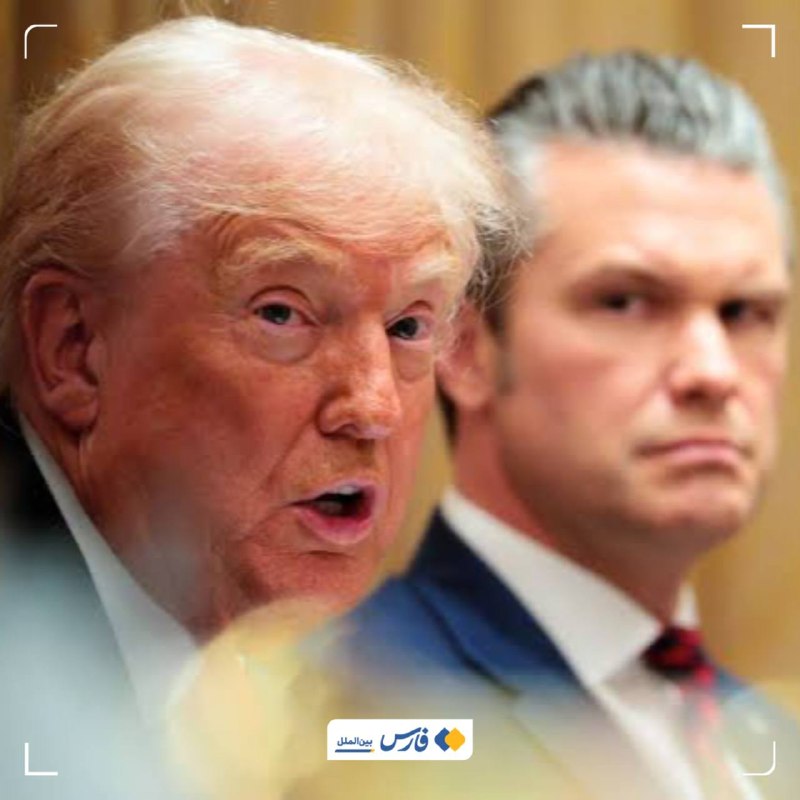
At 03:52 UTC on 18 June 2026, the Indian Express flashed a single line across its wire: Donald Trump and Masoud Pezeshkian had signed a 14-point United States–Iran agreement to stop the war and reopen the Strait of Hormuz. By sunrise, two related facts had already attached themselves to the announcement like ballast. Indian sailors were dead — three of them, killed during the Iran conflict — and the president of the United States had, according to the South China Morning Post's account of his meeting with Narendra Modi, shown no regret for their loss. The same president who declared the war over had, in effect, declined to mourn its most recent victims in front of one of the larger non-Western democracies whose nationals had paid for it.
What the United States has just signed is less a peace than a framework whose own text is treated as state secret. SCMP's analysts quoted in the wire described the deal as "vague" and "wobbly at best," with the details of any lasting arrangement still undisclosed. The Indian Express reporting confirms the headline items — a 14-point structure, an end to hostilities, a Hormuz re-opening — but stops short of summarising what those 14 points actually say. The pattern is familiar: a ceremony, a pen, a video, and a binding document whose contents are, for now, available only to the two governments that signed it.
The two questions now are whether the deal can hold even on its own terms, and what its emergence tells us about how a war between a great power and a regional one is being brought to a close in 2026.
A deal that names itself but does not yet describe itself
The Indian Express's wire leaves little doubt that the document exists in some formal sense. Trump and Pezeshkian signed. The instrument is described as a 14-point agreement. It is intended to stop the war and to reopen the Strait of Hormuz. The South China Morning Post's parallel dispatch is the more cautious of the two: it credits Trump's claim that the agreement "sells" a path to a "lasting peace," but it leans on analysts to say that the substance is so thin that the deal is "wobbly at best" and that the text of any durable arrangement remains "still secret."
That asymmetry — confident ceremony, unconfident text — has been the signature of American conflict-ending diplomacy in the region for two decades. A framework is announced; a deadline is set; the deadline slips; a new framework is announced. The Iranian side has its own reasons to participate in this choreography: the costs of the war, the cost of isolation, the cost of watching Gulf neighbours re-open to global capital under a different arrangement. Pezeshkian's willingness to be filmed signing a document whose contents he cannot publicly defend is itself a concession — and a tell.
For now the public ledger is short: there is a 14-point document, there is a Hormuz clause, and there is no published text. That is the deal.
The Indian sailors Washington will not name
The second piece of the picture arrived 45 minutes earlier on the SCMP wire, and it is the one that complicates the ceremony most. In a meeting with Indian prime minister Narendra Modi, Trump was asked about three Indian sailors killed during the Iran conflict. According to SCMP, he "shows no regret" over their deaths.
The detail is small, but its framing is not. India is not a peripheral actor in this war. Indian seafarers move a significant share of the world's oil and container traffic, including traffic through the Strait of Hormuz. When the waterway closed or threated to close during the war, Indian nationals were among the first to die for it. New Delhi's political class read this as a sovereignty issue — Indian lives lost in a war India did not start. The White House's response, as reported, is to decline the apology.
That choice has a logic. Apologising for the deaths of foreign nationals inside an active US war would imply a degree of US responsibility for the war's spillover that the administration has spent the previous months denying. To express regret to Modi in private, on the other hand, would carry no public cost. The fact that even the private version, as SCMP reports it, was withheld suggests that the administration has decided the political value of an unapologetic posture — at home, with its base, and in Tehran — outweighs the cost of friction with New Delhi.
Modi's position in the room is the more revealing. India is a country that, on paper, prizes strategic autonomy and refuses to be drawn into either US- or Russia- or China-led blocs. The fact that the meeting is being reported through a US-allied Asian wire and that the takeaway is the absence of an apology, rather than the substance of any new Indian commitment, is a quiet piece of evidence about where the relationship actually sits.
What the analysts are quietly saying
The SCMP analyst quotes are the most valuable part of the day's coverage, because they tell the reader what the editorial board would not quite say out loud. The agreement is "vague." It is "wobbly at best." The text of any durable settlement is "still secret." A deal whose own description has to be licensed by analysts to external readers is, in commercial terms, a deal whose terms are not yet fixed.
The structural read is straightforward. US administrations have learned, from Afghanistan to the JCPOA's collapse, that the announcement of an agreement is a load-bearing political event in its own right — a thing that can be photographed, paraded, and used to move markets. The actual text, and the actual implementation, are downstream of that announcement and can be renegotiated for years without invalidating the photograph. Iran has also learned this: signing is cheap, claiming victory is cheap, and the real cost is in the verification regime, which is precisely what a 14-point document whose text is undisclosed cannot deliver.
The 14-point frame, in other words, may be a confidence-building device for two audiences — the Trump base at home, and the Iranian street — and a substantive document for nobody. That does not make it worthless. Confidence is a real input into the price of oil and the behaviour of insurers. But it does mean that the next serious disagreement between Washington and Tehran will be over what the 14 points actually said.
Stakes: Hormuz, the oil futures curve, and the next 90 days
The most concrete near-term stakes are in the water. The Strait of Hormuz handles a large fraction of seaborne oil flows; any disruption moves the futures curve. The Indian Express dispatch makes the re-opening of Hormuz a named element of the deal. If the Hormuz clause holds, even on a provisional basis, the political value of the agreement is real — freight rates, war-risk premia, and the price of refined product across South and East Asia will move quickly to reflect that.
The second-order stakes are about who gets to define what a "good" Iran deal looks like. The US side will want to call this a victory — the end of a war begun on its terms, with the Strait open. The Iranian side will want to call it something else: an end to a war that cost it dearly, achieved by a leadership that refused to capitulate. The 14-point structure is the diplomatic technology that lets both sides read the same page and call it different things. The SCMP analyst quotes are the outside world's gentle warning that this is a feature of the deal, not a bug.
The third stake is reputational, and it cuts against the White House. Three Indian sailors died in this war. The president was asked, in a bilateral, to acknowledge that. According to SCMP, he did not. The reporting does not specify whether the families have been contacted, whether compensation has been offered, or whether Modi raised compensation at all. Those details are not in the wire. The absence of regret, however, is on the record, and it is the kind of detail that ages badly — particularly if the deal itself wobbles.
What the wire is not yet telling us
The most honest summary of 18 June 2026 is also the simplest. There is a deal, there is a signatory list, there is a clause about Hormuz, and there is no published text. There is a meeting with Modi in which three Indian deaths were raised and, per SCMP, no regret was offered. There is a war that has paused, on paper. There are analysts on the record calling the framework wobbly.
What the available wire does not say is also material. It does not name the other 13 points beyond Hormuz. It does not name a verification mechanism, an inspections regime, or a sequencing for sanctions relief. It does not say whether the IRGC, the regular Iranian armed forces, or both, are bound by the signing. It does not say what happens if either side's interpretation of "the deal" diverges from the other's. It does not name the Indian families, the companies that employed the three dead sailors, or whether India has been offered anything beyond the meeting itself.
This publication will be watching for the text. Until it is published, the 14 points are a script, not a contract.
Desk note: Monexus is framing this as a high-ceremony, low-text moment — an announcement that needs to be read for what it does and does not contain, rather than for what it says. The wire consensus (SCMP, Indian Express) is that the deal is real but underspecified; the analytical consensus is that it is wobbly. We have foregrounded the Indian sailor story not as a digression from the deal but as a test of the US side's posture toward the war it is now claiming to end.
Wire provenance
This editorial synthesis draws on the following public wire/social posts:
- https://t.me/SCMPNews
- https://t.me/IndianExpress
- https://x.com/sprinterpress/status/2067481908796063744