Trump’s Iran charm offensive collides with a sanctions-shaped reality
A self-congratulatory Oval Office appearance on 17 June 2026 turned the Iran file into a series of one-liners — and left the substantive questions about enrichment, missiles and frozen funds unanswered.
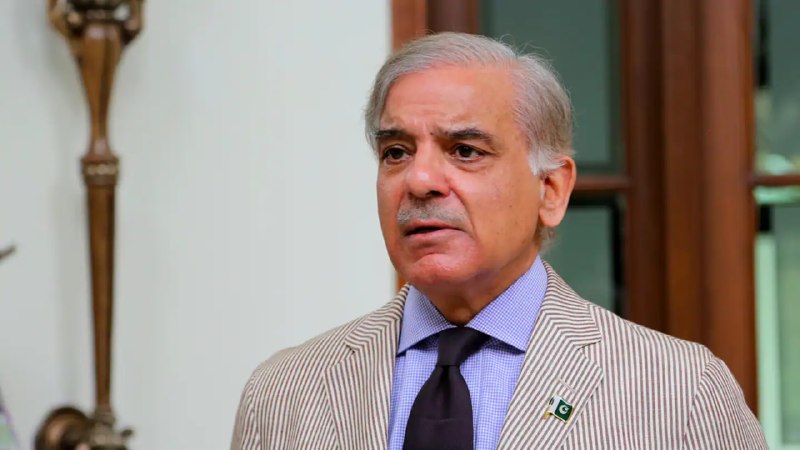
On the afternoon of 17 June 2026, Donald Trump stepped into the White House briefing room and spent roughly an hour talking about Iran without quite saying what the United States and the Islamic Republic had actually agreed to. Asked whether a long-trafficked memorandum of understanding would be signed by Friday, the president replied, with a shrug the room could almost hear: "You never know with deals." Asked why Tehran should be allowed ballistic missiles when neighbours have them, he called the alternative "a little bit unfair." Asked whether reports of a $300 billion Iranian fund backed by US money were accurate, he said no, the United States was not investing. By the time the session ended, the only clear deliverable was a sentence the president had not yet delivered: that sanctions on Iran would be lifted "once they behave."
The pattern is familiar by now. The Trump administration’s second-term Iran file has been conducted in two registers at once — a transactional, personality-driven messaging operation aimed at financial markets, Gulf capitals and the Republican base, and a slow, contested substantive negotiation with a counterpart in Tehran that has spent the last four decades learning how to wait. The Oval Office appearance on 17 June was the messaging register at full volume. The question is what, if anything, it tells us about the negotiation underneath.
What was actually said
The most concrete policy statement of the day was the one that travelled furthest. Trump told reporters that sanctions on Iran would be removed "once they behave" — language that, on the face of it, gives the White House a unilateral trigger for relief without specifying what the trigger measures. He also said the world would "find out pretty soon" whether the MOU "signing actually happens," reinforcing an ambiguity that has defined the file since the spring. The $300 billion fund, a number that has circulated in regional and Gulf press for weeks, was personally disowned by the president. "The U.S. is not investing in it," he said, in remarks captured by Polymarket’s market-moving account at 18:25 UTC.
On the missile question, Trump went further than most of his own cabinet’s past statements. Asked whether it was fair for Iran to have no ballistic missiles while other regional states do, he said it would be "a little unfair." The phrase was reported by the Polymarket news desk at 19:52 UTC and amplified by Unusual Whales at 02:50 UTC the next morning. It is a meaningful shift in the public American position. The 2015 Joint Comprehensive Plan of Action did not address missiles at all; subsequent UN Security Council restrictions on Iranian missile work expired in October 2023. For a sitting US president to argue, in effect, that Iran’s missile programme is entitled to regional parity is a structural change in the bargaining frame, whether or not it survives contact with Congress or with Israel and the Gulf states.
The president also claimed, in an exchange captured at 17:13 UTC, that he had pushed for a deal in order to avoid an "economic catastrophe" on par with the Great Depression — a framing that implicitly sets the cost of failure very high and the cost of agreement very low, a useful posture for a negotiator who wants to be seen as the dealmaker. Asked about the line — "Iran never won a war, but never lost a negotiation," attributed by a reporter to Trump himself — the president smiled and asked who said it. The reporter answered: Donald Trump.
What the Iranian side has said and done
The thread of public Iranian signalling in mid-June is thinner than the American one, and the silence is itself the story. The Pezeshkian government has not publicly confirmed that a signing is imminent; it has not denied it either. The 2-2 draw Iran’s football team secured against New Zealand in their opening match of the Confederations-style fixture window on 18 June 2026, reported at 02:29 UTC by Mint Press News, was a fleeting reminder that Iran’s public-facing profile this month is broader than the nuclear file, but offers no direct read on the negotiation.
The structural problem on the Iranian side is straightforward. Tehran wants sanctions relief in a form that is durable — that is, not a presidential waiver that a successor can revoke. It wants some accounting for the billions of dollars in oil revenue held in restricted accounts in Iraq, South Korea, China and elsewhere. It wants, in private, guarantees that the next US administration will not simply tear up whatever this one signs. None of those are things a White House press conference can deliver. The $300 billion fund story, which Trump denied at 13:24 UTC, appears to have been a trial balloon for a structured-release mechanism that would spread payments over time and tie them to verifiable Iranian compliance. The fact that the president publicly killed it suggests either that the number was wrong, that the structure was politically unworkable, or that the Iranian side refused the terms.
Why the missile comment matters
The "a little unfair" line is the most analytically interesting piece of the day, and not because of the policy substance. It tells us something about how the administration is thinking about the regional balance.
The argument is, in its most charitable form, a recognition that the Middle East missile landscape is already plural. Israel has Jericho III and a reported sea-based deterrent; Saudi Arabia has Chinese DF-21 derivatives in service and is reported to be exploring domestic solid-fuel production; the UAE has Scud variants and is investing in advanced strike capabilities; Turkey has its own programme. Asking Iran to be the only state in the region without ballistic missiles is, on this reading, a negotiating position that has passed its sell-by date. The argument is, in its less charitable form, a signal to Gulf partners that the United States no longer regards the Iranian missile threat as the singular organising problem of regional security — a position that would have been unthinkable in 2018 and that Riyadh and Abu Dhabi will read carefully.
Either way, the shift creates a new fault line. The Israeli position, under successive governments, has been that Iran’s missile programme is unacceptable in any form and that any deal must include a missile component. The Trump statement, if it survives, narrows US-Israeli room for manoeuvre. The Saudi position, which for years has been that any Iranian capability it possesses is fair game for Saudi equivalents, is in effect endorsed. The Iranian position — that its missile programme is non-negotiable — is in effect endorsed too. The loser in this reframing is the sanctions architecture built around missile proliferation, which was the legal spine of US designations on the IRGC Aerospace Force and on Iran’s missile entities for the last two decades.
The negotiation underneath the messaging
Strip away the press conference and the picture that emerges is of a negotiation in which both sides are trying to convert a sequence of goodwill gestures into something enforceable. The American side is offering, in effect, a partial and reversible sanctions unwind. The Iranian side is offering, in effect, a partial and reversible rollback of enrichment and a cap on stockpile. The MOU, if it exists, is almost certainly a framework document that defers the hardest questions — missile ranges, sunset clauses, verification access, the fate of frozen funds — to a later, more detailed agreement.
This is a recognisable pattern. The 2015 JCPOA was itself a framework that left missile questions to a separate UN channel and that assumed the goodwill of subsequent administrations on both sides. The assumption failed. The current negotiation appears to be structured on the same assumption. The president’s comments on 17 June, in particular the line that the world will "find out pretty soon" whether the MOU "signing actually happens," suggest a White House that is itself uncertain about whether the document exists in a signable form.
There is also a domestic political layer. The sanctions-relief claim — that they will be lifted "once they behave" — hands the White House a clean rhetorical position if the deal collapses: the Iranians, not the United States, will be blamed. The Great Depression framing for the cost of failure is doing similar work. The president is, in effect, pre-positioning the narrative for either outcome.
Stakes and what to watch
If a deal is signed, the immediate winners are clear. Iran gains access to some portion of its frozen funds and to a partial sanctions unwind. The United States gains a manageable nuclear file in an election year and a tailwind in Gulf markets. Oil prices ease. The immediate losers are the Iranian opposition-in-exile constituencies and the Israeli defence establishment, both of which lose leverage they have spent two decades building.
If a deal collapses, the pattern reverts to the escalation track that has defined the relationship since 2018: more sanctions, more IRGC designations, more pressure on Iranian oil exports, and the slow drift toward a military option that neither Washington nor Tehran wants but that neither has the diplomatic infrastructure to rule out. The president’s Great Depression line should be read against this: it is a warning to his own base, not a forecast.
The reporting to watch over the next ten days is straightforward. Watch whether the MOU is published or summarised in any official channel. Watch whether the IAEA issues a technical update on Iranian enrichment that materially changes the verification picture. Watch whether the $300 billion fund story re-emerges in a different form, which would suggest that the underlying escrow discussion is alive even if the headline number is dead. Watch whether Iran’s rial stabilises on the open market in a way that is consistent with credible sanctions relief. And watch the Polymarket and prediction-market pricing on the question of a signed agreement by the end of June, which is currently the cleanest available real-time read on how the informed trading public is pricing the probability.
What remains genuinely uncertain, on the evidence available, is the content of any draft text. The administration has signalled an MOU; it has not produced one. The Iranian side has not denied or confirmed the existence of a draft. The $300 billion figure has been denied by the president and never corroborated by Tehran. The missile parity line is a presidential remark, not a policy document. The next seventy-two hours will determine whether any of this hardens into something that can be signed, or whether 17 June 2026 becomes another entry in a long ledger of near-deals that did not close.
This publication framed the 17 June Oval Office appearance as a messaging event first and a negotiating event second — a choice that puts the burden of proof on the White House to publish text rather than on Tehran to accept it.
Wire provenance
This editorial synthesis draws on the following public wire/social posts:
- https://x.com/polymarket/status/...
- https://x.com/polymarket/status/...
- https://x.com/polymarket/status/...
- https://x.com/polymarket/status/...
- https://x.com/polymarket/status/...
- https://x.com/polymarket/status/...
- https://x.com/unusual_whales/status/...
- https://x.com/unusual_whales/status/...
- https://x.com/mintpressnews/status/...