Trump's Iran deal: a memorandum dressed up as peace
A 'memorandum' signed in a week, paired with an offer to help Iran acquire ballistic missiles, is not a non-proliferation deal. It is a frame — and the rest of the world is being asked to applaud the picture.
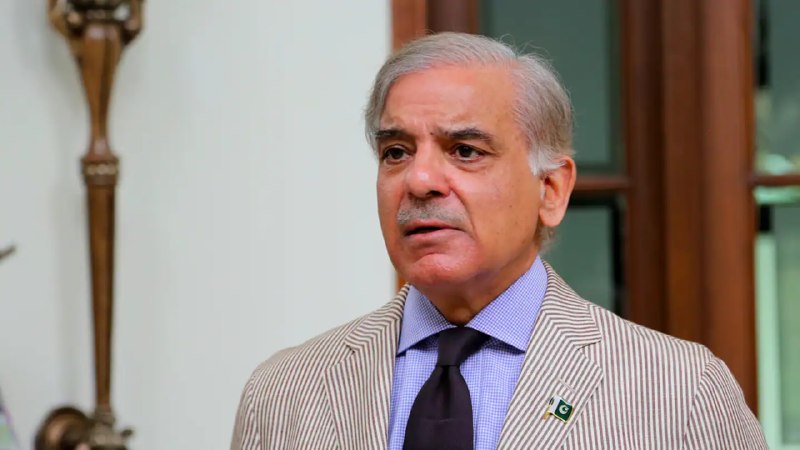
On 17 June 2026 at 22:07 UTC, France 24 reported that US President Donald Trump had signed a deal with Iran. By the end of the evening, the picture on Truth Social was messier, more revealing, and considerably less reassuring than the cable-news chyron. Trump thanked Vladimir Putin and Xi Jinping for "absolute neutrality" on the Iran issue (sprinterpress on X, 17 June 2026, 23:45 UTC), floated the idea that it would be "a little bit unfair" for Iran to lack ballistic missiles while its neighbours have them (reuters on X, 22:45 UTC; polymarket on X, 19:52 UTC), and announced that sanctions on Tehran would be lifted "once they behave" (polymarket on X, 18:25 UTC). The same afternoon he disclosed that the United States is operating "space cameras" to monitor Iran's nuclear sites in real time (polymarket on X, 16:30 UTC) and warned that the agreement is "not final" — if he doesn't like it, "we will go back to dropping bombs" (unusual_whales on X, 14:57 UTC).
This is the deal the Trump administration wants the world to read as a non-proliferation triumph. It is, on the available record, no such thing.
The shape of the document
What the parties actually signed is described as a memorandum of understanding, not a final accord. A US official confirmed the signing to FRANCE 24 at 22:07 UTC on 17 June 2026, and the Iranian-aligned Al Alam channel announced it the same evening with an "urgent" tag (telegram:alalamarabic, 23:32 UTC). Trump himself told reporters the MOU is non-final and conditional on his personal satisfaction (unusual_whales on X, 14:57 UTC). In ordinary diplomatic practice, a memorandum of understanding is a framework document, a placeholder that records convergence on issues short of binding treaty text. The phrase itself is doing load-bearing work: it signals progress without the legal weight of an executive agreement, let alone a Senate-treatied instrument. A framework that can be retracted by tweet is a frame, not a deal.
The missile offer that should not be in the conversation
The most extraordinary line of the day came when Trump argued it would be unfair for Iran to be denied ballistic-missile capability while other regional states retain it (reuters on X, 22:45 UTC; polymarket on X, 19:52 UTC). The claim is striking on two counts. First, ballistic-missile proliferation is the precise category UN Security Council resolution 2231 and a decade of sanctions architecture were designed to constrain — not balance. Second, in a region where Israel's reported Jericho-class systems, Saudi and Emirate Chinese-derived DF-21 inventories, and Iran's own Shahab and Khorramshahr families are routinely discussed as offsetting capabilities, the US president is now floating a parity argument for Tehran. Either the missile file has been quietly carved out of the agreement — which would gut the non-proliferation case — or the comment is rhetorical scaffolding for a concession not yet on paper. Neither reading is comforting.
What Trump is actually selling
Stripped of the peace-deal packaging, three concrete items can be verified from the day's statements. Sanctions relief: Trump announced removal "once they behave" (polymarket on X, 18:25 UTC) — a discretionary trigger, not a scheduled, reciprocal, verifiable calendar. The $300 billion figure that circulated earlier was denied by Trump himself: "the reports of $300 billion for Iran is false" (unusual_whales on X, 15:17 UTC). On the nuclear question, Trump stated plainly that "Iran will never have a nuclear weapon" (unusual_whales on X, 15:17 UTC), a sentence that reads as policy intent rather than a verifiable technical commitment — a goal, not a guarantee. A continuous monitoring regime is now public: "space cameras" pointed at Iranian nuclear sites, according to Trump (polymarket on X, 16:30 UTC). The architecture is therefore a US-verified, US-discretionary, US-snap-backable arrangement with no clearly enumerated sanctions timetable and no binding missile file. That is, in substance, a sanctions-reward mechanism, not an arms-control treaty.
The China and Russia angle
The Putin-and-Xi thank-you is not a courtesy. It is a signal that the diplomatic runway for this deal was cleared in part by Moscow and Beijing declining to obstruct it. Iranian crude continues to flow to Chinese refiners, and Russian diplomatic cover in the UN Security Council has, on past form, given Tehran confidence that secondary sanctions would not produce a unified great-power front. By naming the two capitals publicly, Trump is acknowledging that the deal could not have landed in its current shape without their acquiescence. The corollary — uncomfortable for the deal's champions — is that the same two governments retain the ability to unsettle it. A future round that offends Moscow's geopolitical preferences, or Beijing's commercial interests in Iranian energy, is not guaranteed to clear the same way.
The European and Gulf reading
Wire services in Western Europe and the Gulf will be doing the same arithmetic Tehran is doing: a US president who explicitly reserves the right to "go back to dropping bombs" if the deal displeases him (unusual_whales on X, 14:57 UTC) is offering an agreement whose central feature is his own discretion. For Israel's security establishment, the missile-fairness remark is radioactive. For the Gulf monarchies, the absence of a missile file — if the remark is read as policy intent rather than improvisation — means the regional conventional balance is being reshaped without their consent. For the E3, the read-through is that the United States has effectively retired the JCPOA's architecture and replaced it with a bilateral channel whose terms fit on a Truth Social post.
Stakes
If the deal holds, Iran receives sanctions relief tied to a discretionary US trigger; the United States receives a deniable, unratified framework that can be abandoned at presidential whim; Russia and China collect a quiet strategic dividend for not blocking it; and the non-proliferation regime absorbs another precedent in which verification rests on "space cameras" and good vibes from the Oval Office. The losers, on the current text, are the Gulf states, the Israeli security consensus, the European capitals that built the original JCPOA, and — most of all — the idea that non-proliferation is a rules-based system rather than a series of bilateral understandings between presidents who can change their minds by morning.
What remains uncertain
The day's public record does not specify which sanctions instruments are released first, the sequencing of Iranian compliance steps, or whether the missile file is on, off, or merely parked. The unusual_whales and polymarket accounts are X-content aggregators, not primary documents; the X-sourced quotes are consistent with each other and with the FRANCE 24 confirmation, but the full text of the MOU is not in the public thread. "Memorandum of understanding" is a label, not yet a contract. Until the document is published, the right posture is the one the deal's own signatory is signalling: conditional, provisional, and reversible on his say-so.
This publication framed the agreement as a US-discretionary sanctions-reward framework rather than a non-proliferation treaty, because that is what the public record of 17 June 2026 supports. The wire chyron will likely keep calling it a "deal"; the MOU will tell us, eventually, what it actually is.
Wire provenance
This editorial synthesis draws on the following public wire/social posts:
- https://x.com/sprinterpress/status/...
- https://t.me/s/alalamarabic
- https://x.com/polymarket/status/...
- https://x.com/polymarket/status/...
- https://x.com/polymarket/status/...
- https://x.com/unusual_whales/status/...
- https://x.com/unusual_whales/status/...