Trump signs Iran memorandum at G7 dinner, framing it as a looser deal than the one he scrapped
Footage released overnight shows the US president signing what he calls a memorandum of understanding with Tehran at the G7 dinner table — a document critics say grants Iran more money and less oversight than the 2015 arrangement Trump abandoned in 2018.
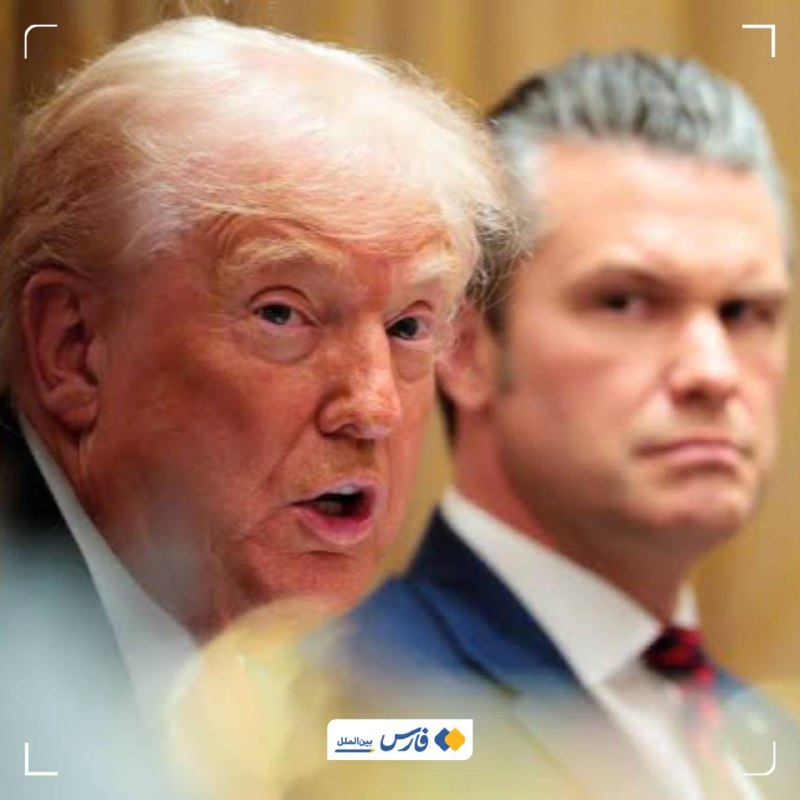
At roughly 00:14 UTC on 18 June 2026, Iran's Mehr News agency published video of a man identified as US President Donald Trump signing the Persian-language version of an Iran-United States memorandum of understanding. The clip appeared within an hour of a separate filing from the World Fighters Witness Telegram channel showing the same signing on the G7 dinner table, and roughly fifty minutes before a third item from Mehr, timestamped 00:16 UTC, in which Trump is reported as stating that a memorandum of understanding with Iran has been signed. None of the three releases — all carried via Telegram in the early hours of 18 June — publish the document's text.
The framing now circulating inside the Iranian state-aligned feed is that this is a better arrangement than the one Trump tore up in 2018, not a worse one. The ProjectLincoln-mirrored account run as WarMonitorRT put the contrast in plain terms: Iran, it says, gets more money, fewer restrictions, less oversight, and more regional autonomy than it did under the Joint Comprehensive Plan of Action. Whether that framing survives contact with the actual document — when the text eventually surfaces — is the open question hanging over the next 48 hours.
What we have, and what we don't
Three Telegram channels carried the visuals: Mehr News (twice, in successive posts at 00:14 and 00:16 UTC) and World Fighters Witness (at 00:05 UTC). All three identify the document as a memorandum of understanding between the United States and Iran, signed on the margins of a G7 dinner. None reproduce the text. None name the Iranian signatory on camera. None name which G7 venue is hosting the dinner — the body is meeting this week but the host city is not specified in the available footage or captions. The Persian-language version of the document exists; an English text is not in the public record as of the time of writing.
The Iranian side has therefore set the visual terms of the announcement — Persian-language signing, Iranian-state-aligned wire footage, immediate broadcast on Mehr — before any Western readout has emerged. That sequencing matters: when the State Department or a wire service publishes its own version of events, it will be responding to an Iranian-coordinated narrative, not framing one.
The 2018 baseline
Trump withdrew the United States from the Joint Comprehensive Plan of Action in May 2018, reimposing sanctions on Iran and triggering a multi-year escalation that included the killing of Quds Force commander Qassem Soleimani in January 2020 and Iran's subsequent enrichment advances. Any new memorandum is being measured, by friend and foe alike, against that baseline. The argument now circulating in the Iranian-aligned feed — that the new arrangement gives Tehran more financial relief, fewer constraints, weaker inspection, and a freer hand in its neighbourhood than the JCPOA ever did — is a direct comparison to that 2018 break.
Two things can be true at once. The argument from critics inside the United States is that a looser deal is precisely the point of returning to the table: any agreement Washington can sell domestically has to look like a departure from the framework Trump originally rejected, not a restoration of it. The argument from Tehran is the mirror image: it is not interested in accepting the 2015 terms as a ceiling, because the intervening years have shifted its leverage. Both arguments will be tested against the actual document, when it appears.
What the visuals actually show
The Mehr footage is brief and tightly framed on the signing hand and the page. The Persian-language version of the memorandum is the version being filmed — a deliberate choice, given that G7 signing ceremonies typically default to English. The World Fighters Witness clip, captured from a different angle, confirms the G7 dinner-table setting. Neither clip shows Trump speaking to the press about the document's content; his quoted statement in the second Mehr post — that the memorandum has been signed — is the only attributed remark available, and it is paraphrased in Iranian state media rather than transcribed from an on-camera soundbite.
The absence of text is the story. Until the document is released in English and Persian simultaneously, every claim about what it contains — from Iranian state-aligned channels or from Western critics — is speculative. The ProjectLincoln-aligned account's specific assertions about "more money, fewer restrictions, less oversight, more regional autonomy" are claims, not confirmed terms.
The sequencing problem
There is a structural reason this story is moving faster than the documentation. The signing happened at the back end of a G7 dinner — a venue designed for atmospherics, not for detail. Iran had every incentive to publish the visuals first, on Persian-language terms, before Western wires had time to construct their own read. Mehr's first filing hit at 00:14 UTC; Trump's paraphrased confirmation, also via Mehr, followed two minutes later. The World Fighters Witness clip had already been up for nine minutes by that point.
That is not a conspiracy. It is what Iranian state media does well, and it is what Western wires, with their editorial-review and translation cycles, do slowly. The result is that the first 24 hours of this story will be framed by whichever side publishes fastest — and on this evidence, that side is Tehran.
What changes if the document reads as advertised
If the memorandum does in fact loosen financial restrictions and reduce inspection access relative to the JCPOA — and if it leaves Iran a freer hand in Iraq, Syria, Lebanon, and Yemen — then three things follow. First, the argument that the United States has abandoned non-proliferation as a live policy priority becomes harder to refute; second, Iran's regional allies gain operational room at a moment when Hezbollah is rebuilding and Iraqi Shia militias are still embedded in the state; third, Gulf states and Israel are left to recalibrate around an arrangement they were not party to and may not have been consulted on. The political pressure inside Washington will then be from a different direction than it was in 2015 — less the right flank demanding a tougher line, more a bipartisan centre questioning why the baseline moved at all.
If, on the other hand, the document turns out to be a face-saving interim — a partial sanctions pause in exchange for a partial enrichment freeze, with the hard questions deferred — then the framing now circulating in Iranian-aligned channels will read, in retrospect, as overreach. Tehran's information advantage in the first 24 hours will have been spent on a story that did not hold.
Desk note: Monexus is leading with the Iranian state-aligned feed here because that is the only feed carrying direct footage and a confirmed signing; the document text, the English-language version, and Western official readouts are not yet in the public record. The piece will be updated as those land.
Wire provenance
This editorial synthesis draws on the following public wire/social posts:
- https://t.me/mehrnews/
- https://t.me/mehrnews/
- https://t.me/wfwitness/
- https://t.me/osintlive/
- https://en.wikipedia.org/wiki/Joint_Comprehensive_Plan_of_Action