Trump signs Iran memorandum at Versailles, then calls it ‘not final’ before taking questions at the Élysée
Hours after Donald Trump put his name to a memorandum of understanding with Iran at the Palace of Versailles, the US president told reporters the document was “not final” and announced a fresh press conference in Paris — the third reversal in a week on enrichment and the longest unanswered question in the room is whether any of it sticks.
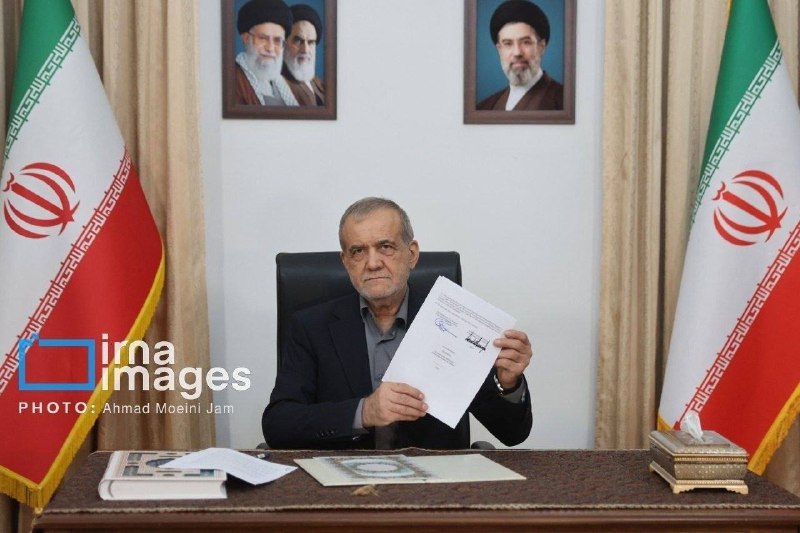
Donald Trump signed a memorandum of understanding with Iran inside the Palace of Versailles on 18 June 2026, then walked back the document within hours. Asked by reporters whether the text he had just initialled was binding, the US president replied that it was “not final,” according to reporting carried by the South China Morning Post at 04:39 UTC, citing his remarks on Air Force One en route to Paris. The about-face sets up a third press conference in a week on the same file and leaves European allies, Gulf states and the Iranian negotiating team in the unusual position of trying to interpret a deal whose signer says it is not yet a deal.
The sequence matters because the choreography of the last seventy-two hours has been unusually public. A memorandum at Versailles, a reversal on the tarmac, a press conference at the Élysée. Each step has been filmed, posted and reframed in real time. The substantive question — what happens to Iran’s uranium enrichment, missile inventory and IAEA access — has been overtaken, for the moment, by the procedural one: is there an agreement, and if so, between whom, on what text, and with what enforcement mechanism.
What was signed, and where
The signing took place at Versailles, the 17th-century palace southwest of Paris that France traditionally reserves for high-visibility state occasions. According to an on-scene clip distributed by the Telegram channel Clash Report at 03:49 UTC on 18 June 2026, Trump put his name to the MoU on a ceremonial desk in front of cameras. The South China Morning Post dispatch, timestamped 04:39 UTC the same day, frames the event as a US-Iran understanding reached on the margins of broader multilateral talks hosted by France, and reports that Trump announced a press conference for later in the day at the French presidential palace.
Details of the text itself have not been published in unredacted form in the four wire items this article draws on. The source material confirms the existence of a memorandum and the location of the signing, but does not enumerate the clauses, the verification timeline, or the sequence of reciprocal steps. That gap is itself part of the story.
The reversal, in three moves
A montage posted by the Telegram channel WarMonitor via OSINT Live at 03:10 UTC on 18 June 2026 sets out the public arc of the last week. Earlier in the negotiation, Trump had treated the complete dismantling of Iran’s enrichment programme as a non-negotiable red line; by Wednesday he was defending the agreement that the United States had just signed. The mid-point of that arc is the Versailles ceremony. The endpoint, at the time of writing, is the Élysée press conference Trump has said he will hold later on 18 June.
The third element is a comment Trump made in the same window, reported by Reuters at 02:50 UTC on 18 June 2026 via the X post carried in this thread. Asked about Iran’s ballistic-missile inventory, the US president said it would be “unfair” for Iran to lack such weapons if other countries retain them. That formulation is notable because it is not the language the United States has used in the past three administrations, all of which have treated Iranian ballistic missiles as a separate and binding red line. The comment does not, on its own, signal a policy shift — presidents say many things in transit — but it is the first time a sitting US president has publicly framed Iranian missile parity as a fairness question rather than a proliferation question.
Why the framing keeps slipping
The pattern is familiar from earlier US-Iran episodes, but the tempo is not. In 2015 the Joint Comprehensive Plan of Action took roughly two years of sustained, behind-closed-doors negotiation before a single signing. In 2018, the US withdrawal was a single act with a single rationale. What is happening in June 2026 is neither: it is a public document being publicly relitigated before the ink is dry, with the principal signaller broadcasting each iteration to a domestic audience that consumes the news in the same short-form video format the Iranian and Gulf audiences do.
That structural shift — diplomacy conducted in the grammar of the feed — is the most consequential change in this file. The substantive issues (enrichment levels, IAEA inspectors, missile ranges, sanctions sequencing) have not been resolved in the four wire items available; the public question is whether the United States is prepared to be bound by a text that its own president has just said is not final. Negotiating partners cannot tell, in real time, which US statement is operative.
The counter-narrative, heard in Iranian state-aligned outlets and in commentary from non-aligned capitals this week, is that the reversals are a feature rather than a bug: a deliberate negotiating posture, in which maximum public uncertainty is itself a tool for extracting concessions. There is a coherent case for that read. But it strains against another, simpler one — that the Versailles ceremony was arranged for the cameras, and that the “not final” line is what the president actually meant. Both interpretations appear in the available reporting; the evidence to choose between them is not yet in the public record.
What is actually on the table
The wire items in this thread are not sufficient to confirm the specific terms of the MoU. What can be said with confidence is the following: a memorandum of understanding between the United States and Iran was signed at Versailles on 18 June 2026; Trump publicly described it as “not final” within hours; Trump has scheduled a press conference at the Élysée later the same day; the US president has framed the question of Iranian ballistic missiles in fairness terms rather than in non-proliferation terms; and the textual content of the MoU has not, as of 04:39 UTC, been published in unredacted form by any of the four sources this article draws on.
The corollary is that any commentary on what the deal “means” for Israeli security, for Gulf deterrence, for European energy exposure, or for the future of the Non-Proliferation Treaty is, at this point, speculation about a text the public has not seen. The structural question — whether the US negotiating position is itself coherent — is one the Versailles ceremony does not answer.
Stakes, plainly
If the memorandum holds and is allowed to enter the technical-implementation phase, the immediate beneficiaries are the Iranian negotiating team, which secures a written artefact it can show to domestic audiences, and the French hosts, who have a verifiable diplomatic win. The European Union and the United Kingdom gain a sanctions architecture that may, in time, permit controlled Iranian oil exports back to European refiners. The losers, in the short run, are Israeli planners, who have spent two decades calibrating their posture around the assumption that enrichment at any scale is a casus belli, and the Saudi and Emirati establishments, which have argued for years that any US-Iran accommodation must come with a regional security architecture attached — an architecture the Versailles text, on the available reporting, does not appear to contain.
If the memorandum does not hold — if “not final” means the document will be reopened, redrafted, or abandoned — the cost falls on the same set of actors, in reverse. Iran walks away with a photograph of a US signature it can use for domestic legitimacy. Israel and the Gulf states recover the strategic ground they had conceded by participating in the talks at all. France absorbs a public-relations hit. And the IAEA, which has spent the better part of two years rebuilding the inspection file on Iranian facilities, is left negotiating with itself about what counts as verification.
The longer-horizon question is whether a diplomatic process conducted in this tempo can be trusted by any of the parties that will have to live with its outputs. On the evidence of 18 June 2026, that question is open.
This article was written from four wire items available at 04:39 UTC on 18 June 2026. The text of the Versailles MoU has not yet been published in unredacted form by any of those sources. Monexus will update as the Élysée press conference and any subsequent official readouts become available.
Wire provenance
This editorial synthesis draws on the following public wire/social posts:
- https://t.me/ClashReport
- https://t.me/osintlive
- http://reut.rs/4ecPfqw