Trump signs Iran MoU at Versailles — but uranium enrichment is conspicuously absent from the text
A memorandum signed at the Palace of Versailles on 17 June 2026 ends a war whose scope remains unclear and leaves Tehran's enrichment programme untouched on paper, prompting immediate questions about what the document actually contains.
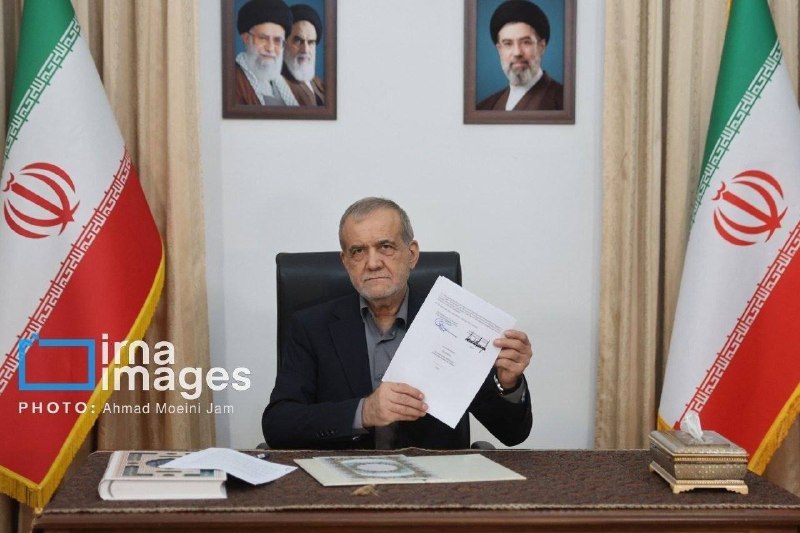
President Donald Trump signed a memorandum of understanding with Iran at the Palace of Versailles on the evening of 17 June 2026, French President Emmanuel Macron announced shortly after midnight UTC on 18 June. The signing was reported by Al Alam, Open Source Intel and the Middle East Spectator, with Macron personally confirming that Trump had put his name to the document. Initial accounts call the agreement an MoU ending the Iran war — language that, in its very elision, leaves open the questions of what was actually fought, what is actually ending, and what the parties have committed to on paper.
The most conspicuous absence in early reporting is uranium enrichment. According to multiple Telegram channels that have read or had described to them the text of the memorandum, Iran has not undertaken any commitment to refrain from enriching uranium. The omission, those channels note, is striking given that enrichment has been the central contested capability of the entire dispute. The thread context is brief — fragments circulated on 18 June between 00:39 and 02:41 UTC, with no published copy of the MoU cited — but the point is repeated across independent channels, suggesting it is the single most widely-shared analytical observation in the first hours after the ceremony.
What was signed, and where
The MoU was signed at Versailles, in France, under the auspices of President Macron. Al Alam reported Macron's announcement directly; Open Source Intel posted a short confirmation noting that Trump had signed the document ending the Iran war at the palace, and linked a video of the moment on X. The Middle East Spectator's channel observed the same ceremony but used the occasion to press on substance: that Trump's own comments implied Iran would still be allowed to enrich, and that the MoU appears to be silent on the matter. The choice of Versailles is itself a signal — a French venue for a US–Iran document, with the host head of state performing the role of witness rather than co-signatory, at least in the accounts available so far.
The decision to call the document a memorandum of understanding rather than a treaty is consequential. MoUs are politically binding instruments that typically do not require legislative ratification, and the looser form gives both sides room to disagree about what they have agreed to. For Tehran, the lower-commitment register allows the government to claim a diplomatic win without delivering statutory concessions. For Washington, it allows the administration to declare an end to hostilities without submitting the text to Congress. The format therefore suits a deal whose terms both sides may prefer to keep elastic.
The enrichment question
For more than two decades, the dispute over Iran's nuclear programme has been anchored on a single technical question: whether, and at what purity, Iran is permitted to enrich uranium. The Joint Comprehensive Plan of Action attempted to answer that question with a calibrated ceiling and a verification regime. The framework collapsed in 2018 when the United States withdrew and reimposed sanctions, after which Iran progressively exceeded the agreed limits. Any new instrument that does not address enrichment, directly or by reference, is essentially a framework without a load-bearing wall.
The Telegram accounts converged on the same reading on the morning of 18 June. The Middle East Spectator's note, repeated twice in the thread context, frames the absence as "very telling," and observes that Trump's own remarks suggested Iran would be allowed to continue enrichment. If the text is silent and the President's public statements imply continuation, the operative answer is therefore status quo ante — Iran enriches, the United States protests selectively, and the parties treat the silence of the document as a quiet licence. Critics will call that a capitulation; defenders will call it a face-saving formulation that averts a return to open war. Both readings are coherent, and the first 24 hours of reaction have not produced the kind of authoritative text release that would let outsiders adjudicate between them.
What the MoU does, and does not, settle
A war, by definition, has a beginning. On 18 June 2026, an MoU declares an end. But to end a war, both sides must agree on what was happening. The reports circulating on Telegram describe a document that ends a war, but they do not describe a document that defines the underlying dispute. There is no published inventory of reciprocal obligations, no schedule of sanctions relief, no verification protocol, and no agreed accounting of damage, prisoners or reconstruction. What is on the table, in the early framing, is a ceasefire in all but name, dressed in the language of a memorandum.
The most plausible alternative reading is that the MoU is not a settlement at all but a procedural device: a way to stop the kinetic phase without resolving the political one. Under that reading, both Washington and Tehran have an interest in postponing the hard questions — the Trump administration because a long suspension reads as a win, the Iranian government because the same suspension reads as survival. The cost of postponement falls on third parties: Gulf states nervous about a permissibly-enriching Iran, Israeli planners who had built contingency around a more restrictive outcome, and a European Union that has spent fifteen years constructing a non-proliferation architecture now quietly set aside.
Stakes and what remains contested
The first night of the agreement's existence is also the first test of its credibility. The next hours will tell whether the full text is published, whether the IAEA is given a role, and whether the language on enrichment is as blank as the early reports suggest. If the document is released and the enrichment question is genuinely unaddressed, the deal will be read as a pause in hostilities, not a settlement of the nuclear file. If the document contains a buried clause that resolves enrichment by reference to a future negotiation, the deal will be read as a framework for a longer process. If the document contains a hard commitment, the early Telegram analysis is wrong, and the same analysts will correct the record.
Monexus finds that the most important fact on 18 June 2026 is the asymmetry between the volume of reporting on the ceremony and the volume of reporting on the text. A memorandum has been signed. The content of the memorandum, on the central question, is currently a matter of inference. Until the document is in public hands, every commentary — including this one — is commentary on silence, and the silence is the message.
Desk note: Wire coverage led with the signing ceremony at Versailles. Monexus has led with the question the early reporting says the MoU does not answer, on the view that procedural reporting without substantive content is not yet news.
Wire provenance
This editorial synthesis draws on the following public wire/social posts:
- https://t.me/Middle_East_Spectator
- https://t.me/Middle_East_Spectator
- https://t.me/AMK_Mapping
- https://t.me/alalamarabic
- https://t.me/osintlive