Trump tells oil story to defend Iran pause, then moves on to Modi
On 18 June 2026, the US president publicly rationalised a halt in the Iran bombing campaign in terms of oil supply and shipping — and then met India's prime minister without apologising for the Indian seafarers killed in that same war.
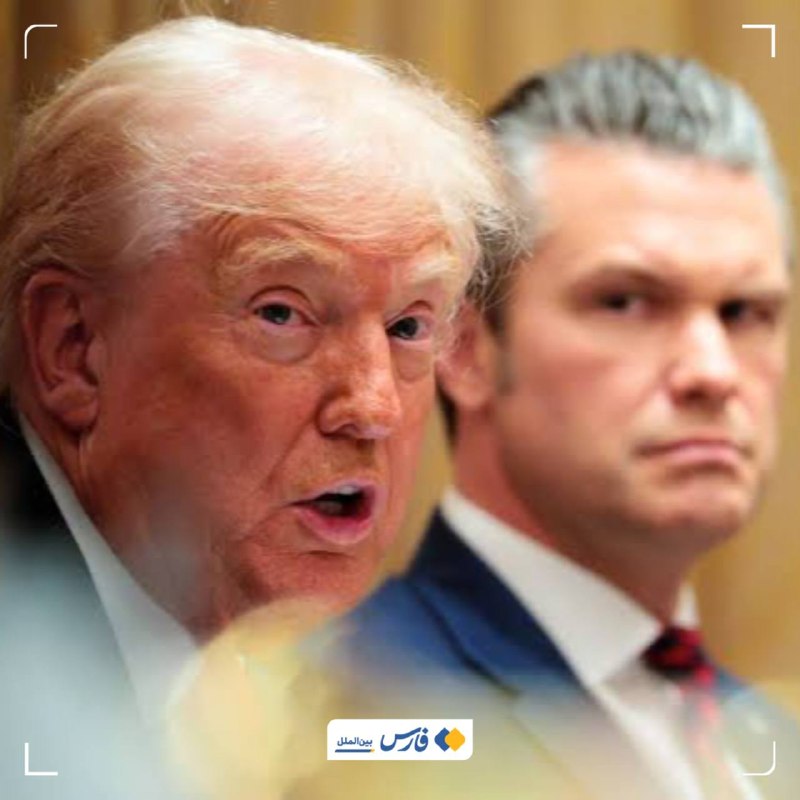
At 05:37 UTC on 18 June 2026, the @sprinterpress account on X circulated video of the moment US President Donald Trump signed an agreement with Iran. Twelve minutes later, the same account posted a longer clip in which Trump explained, in his own words, why the United States had stopped bombing: if Washington had kept going, he said, ships would no longer be able to navigate; US oil reserves would have run out in about four weeks; the world's reserves, in his telling, would truly have run out. By 05:49 UTC, Iran's Tasnim news agency had carried the quotes in Persian. The morning's three signals — the signing, the explanation, the official Iranian relay — together describe a war that has paused on terms its principal participant is defending in the language of barrels and tonnage rather than diplomacy or deterrence.
The pitch is unusual in form and revealing in substance. US presidents do not normally justify the suspension of military action in front of television cameras by sketching out a four-week reserve runway. The choice of frame is itself a tell: the argument Trump is making is to an audience that buys fuel, votes in petrol-sensitive districts, and reads shipping pages — not to arms-control lawyers or regional analysts. It is also, on its face, an admission that the strike campaign produced an energy shock severe enough to threaten the United States' own buffer stocks within a month. That is the structural claim, whether or not the precise four-week figure is taken at face value.
What Trump actually said
In the longer clip circulated at 05:41 UTC, Trump is heard stating: "If we had continued bombing Iran, ships would no longer be able to navigate. Our oil reserves would also run out in about four weeks. The world's reserves would truly run out." The post on X by @sprinterpress carried the same exchange in text form alongside the video. Tasnim, an Iranian state-affiliated outlet with a track record of carrying official Iranian government positions verbatim, relayed the statement in Persian in its 05:49 UTC bulletin, the only difference being the translation of tense — Tasnim rendered it as a counterfactual conditional, the X post as a past-tense description. Both versions agree on the substance: continued bombing, in Trump's telling, would have broken the oil market.
There is no independent corroboration in the public record of the specific four-week figure, and the US Strategic Petroleum Reserve has not published a public week-of-cover estimate tied to a hypothetical Iran bombing scenario that this publication has been able to verify. The framing is therefore best read as the president's own characterisation of the choice he is defending, not as a benchmark produced by the Department of Energy or the International Energy Agency. That distinction matters: the political claim is that he stopped a war that was about to break the oil market, and the analytical claim — what the reserve runway actually was — is one Trump is choosing not to defer to experts on.
The signing, the optics, and what got left out
The earlier 05:37 UTC X post shows the physical act of signature. Iran's Tasnim — read in this context as a state-relay channel rather than as a neutral news source — carrying the explanation alongside the signing footage is itself a piece of choreography: Tehran's preferred wire summarising Washington's preferred explanation of why the war stopped. Western wire reporting on the agreement's actual text, its verification mechanism, and its enforcement provisions has not been located in the source material reviewed for this article, which is a gap worth flagging rather than papering over.
A second omission is conspicuous. At 04:48 UTC, the South China Morning Post published a report headlined "Trump shows no regret over Iran war deaths of 3 Indian sailors in Modi meeting." The piece concerns a face-to-face between Trump and Indian Prime Minister Narendra Modi in which, per SCMP's reporting, Trump did not express regret for the deaths of three Indian sailors killed during the Iran war. The meeting is therefore the same diplomatic moment the agreement is supposed to anchor: the president who paused the war to spare global oil stocks did not, on SCMP's account, acknowledge the foreign maritime workers who died in it.
The counter-read, and the structural frame
The dominant framing — Trump as a deal-maker who pulled back from the brink — holds up in its narrow sense: there is a signed document, there is a public explanation, and the oil argument is one the White House clearly wants on the record. The plausible alternative reading is less flattering and at least as consistent with the evidence. A president who advertises a four-week domestic reserve runway is, in effect, conceding that the war he launched produced a near-term energy threat to the United States itself. The stop looks less like a choice and more like the moment a campaign collided with a constraint. Read that way, the four-week figure is not a justification of restraint; it is an inadvertent measure of the cost of the campaign he has now paused.
Set against that, the Modi meeting on the same day carries its own weight. India is the largest buyer of Iranian crude outside the Chinese sphere, and its seafarers crew a meaningful share of the very tanker fleet Trump cited. The Indian government, per SCMP's reporting, raised the deaths of three of its nationals; the US side, per the same account, did not meet that with a regret. A war that justified itself in the name of freedom of navigation ended, by Trump's own account, when navigation itself was about to become untenable — and left at least one major Asian customer with bereaved families and no apology.
The pattern fits a broader one in the present US posture in the Gulf: military action calibrated to oil-market optics, diplomatic closure tilted toward bilateral deal-making, and the human cost — civilian, in this case foreign and maritime — folded into a narrative of inevitability rather than addressed head-on. None of that requires a grand theory of hegemony to read. It is the day's own logic, written in its own documents and its own dead.
What remains uncertain
The agreement's text is the single most important unknown. The four-week reserve figure is presidential self-description, not an official US energy statistic. The circumstances of the three Indian sailors' deaths — when, where, by which action, in which phase of the war — are referenced in SCMP's headline but not detailed in the material this article reviewed. And the strategic question — whether the pause is a one-off reset or the beginning of a longer arrangement — depends on compliance and verification architecture that the public record available here does not describe. Those gaps are not editorial hedging; they are the limits of what the sources permit this publication to say. The rest is the story the president himself is choosing to tell, in his own words, in front of his own cameras.
— Monexus framed the pause as a presidential act, and read Trump's own oil-reserve argument as the document of record; SCMP's Modi-meeting report was used to stress-test that frame against the human cost the address left unaddressed.
Wire provenance
This editorial synthesis draws on the following public wire/social posts:
- https://t.me/sprinterpress/status/2067481908796063744
- https://t.me/sprinterpress/status/2067482587216347137
- https://t.me/tasnimplus