Versailles, Verbal: What Trump's Iran Memorandum Actually Says — And Doesn't
A memorandum signed electronically at the Palace of Versailles leaves Iran's enrichment, missile program, and sanctions relief deliberately undefined — and the President keeps every exit ramp open.
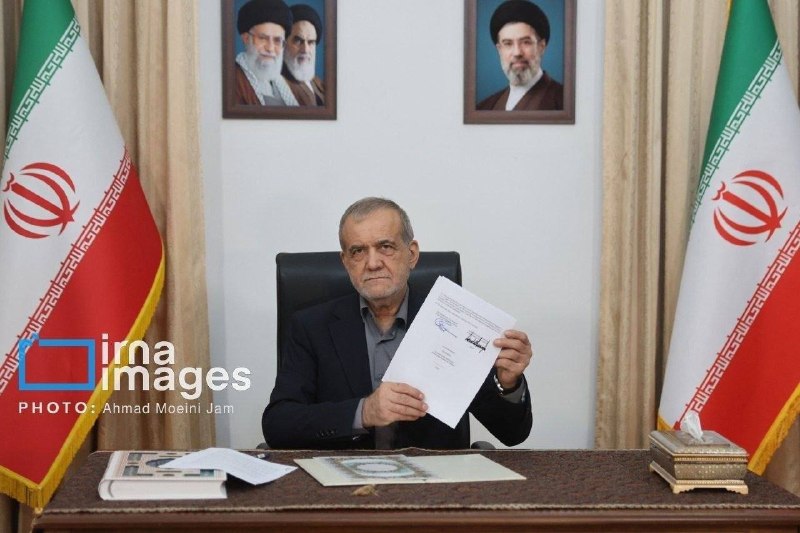
There is a familiar choreography to a Donald Trump foreign-policy reversal: a maximum demand is set, the demand is discarded, the new position is described in the most generous possible terms, and the President reserves the right to walk away at any moment. On 18 June 2026, that choreography played out on the Iran file at the Palace of Versailles, where the White House confirmed that Trump signed a memorandum of understanding with Tehran — electronically, on the road, between other meetings. The signature was the news. The substance was the absence of substance.
The thread worth pulling is what the memorandum does not contain. By the President's own account, the document is not a final agreement. It is a framework that leaves intact the threat of renewed bombing, the conditional promise of sanctions relief, and an entirely open question about the most consequential item on the table: Iran's enrichment and ballistic-missile programs.
The red line that wasn't
For most of the past year, the administration's stated position was that the complete dismantling of Iran's uranium enrichment was a non-negotiable precondition for any deal. That posture hardened after the June 2025 strikes and held through several rounds of failed talks. The Versailles moment marks a clean break from it. A montage circulating on WarMonitorA, summarised on Wednesday morning by OSINTLive, captures the arc: from "no enrichment, period" to defending an agreement that, on the President's own telling, leaves the question of Iran's program unresolved.
Trump's subsequent remarks make the pivot explicit. "If other countries in the region have ballistic missiles, it is a little unfair Iran doesn't," he said, a sentence that conflates two distinct proliferation concerns — regional conventional balance and a nuclear-capable missile force — into a single grievance. The framing reframes enrichment not as a red line but as a fairness question, which is a categorically different negotiating architecture. It is the kind of language that signals to Tehran that the ceiling of American demands has dropped, even as the floor of the deal — verifiable limits — remains undefined.
The economic pretext, openly stated
On the morning of 18 June, the President offered the rationale for the reversal in unusually candid terms. The deal, he said, was necessary to avoid "economic catastrophe." That phrasing matters. It places the administration's decision inside a domestic-economic frame rather than a non-proliferation one, and it concedes — without quite meaning to — that the previous maximum-demand posture was, at least in part, a bargaining position that ran into a cost-benefit wall.
The cost-benefit frame also clarifies the sequencing of concessions. The memorandum, as described by the President, does not include the reported $300 billion in frozen or releasable Iranian funds. Trump dismissed the figure as false. What it does include, again on his own telling, is a path by which sanctions are removed "once they behave" — a conditional clause with no defined trigger, no verification metric, and no enforcement timeline. It is, in form, a sanctions relief promise that the United States can switch on and off at will. That is not a flaw, from the administration's point of view. It is the design.
The verification gap
The most revealing line in the President's Wednesday remarks was not about money or missiles. It was about eyes. The United States, he said, has "space cameras" constantly monitoring Iran's nuclear sites. The remark was almost certainly intended to reassure domestic audiences that no deal signed at Versailles could foreclose an intelligence-based decision to strike.
It is also a tacit admission that the verification architecture of the agreement rests on capabilities the administration does not plan to put in the memorandum. If the deal's enforceability depends on overhead imagery, signals intelligence, and the credible threat of renewed bombing, then the document itself is doing very little. It is a political instrument, not a technical one. A future administration — or a future Trump — can walk away from it on the basis of any image those cameras capture, on any given Tuesday, with no contractual exposure.
That is also why the President has kept the bombing option explicitly live. The memorandum, he said, is "not final." If he does not like it, "we will go back to dropping bombs." For Tehran, the document is a ceasefire, not a settlement. For Washington, it is an option, not an obligation. For European and Gulf partners who would be expected to underwrite any normalisation, it is, so far, an invitation to wait.
What this really is
Stripped of the Versailles staging, the memorandum is best read as a temporary de-escalation instrument — a pressure-release valve designed to lower oil prices, reopen the channel for back-channel negotiations, and give both governments a defensible line to take at home. It does not solve the enrichment question. It does not solve the missile question. It does not solve the verification question. It defers them, on terms that preserve maximum American discretion.
The plausible counter-reading is that the administration is buying time for a more comprehensive agreement it has not yet been able to negotiate, and that the deliberately loose language is a feature of an interim step rather than a final position. That is the more charitable interpretation. The less charitable one — and the one the President's own rhetoric keeps inviting — is that this is a deal-shaped object whose primary function is to give the White House the option of claiming a deal.
What is not yet in evidence, and what the public sources so far do not specify, is the Israeli, Saudi, or Emirati reaction. Regional partners with their own enrichment, missile, and conventional-balance concerns have not been heard from in the documents circulated on Wednesday. Any durable settlement will require their acquiescence, at minimum. Until that is on the record, the Versailles memorandum is best understood as a one-page pause in a longer contest — one whose terms are still being written.
This publication treats the Versailles signing as a diplomatic event, not a policy outcome. The memorandum's text, its verification protocols, and the response of regional partners remain the load-bearing facts that subsequent reporting will need to confirm.
Wire provenance
This editorial synthesis draws on the following public wire/social posts:
- https://t.me/s/ClashReport
- https://t.me/s/osintlive
- https://x.com/unusual_whales/status/...
- https://x.com/unusual_whales/status/...
- https://x.com/polymarket/status/...
- https://x.com/polymarket/status/...
- https://x.com/polymarket/status/...
- https://x.com/polymarket/status/...
- https://x.com/unusual_whales/status/...
- https://x.com/unusual_whales/status/...