The Israel Question Inside the Iran Deal: How a White House–Jerusalem Rift Becomes the Story
Reporting from the Wall Street Journal and the White House podium this week points to a deepening friction between Donald Trump and Benjamin Netanyahu — and Iran is the seam.
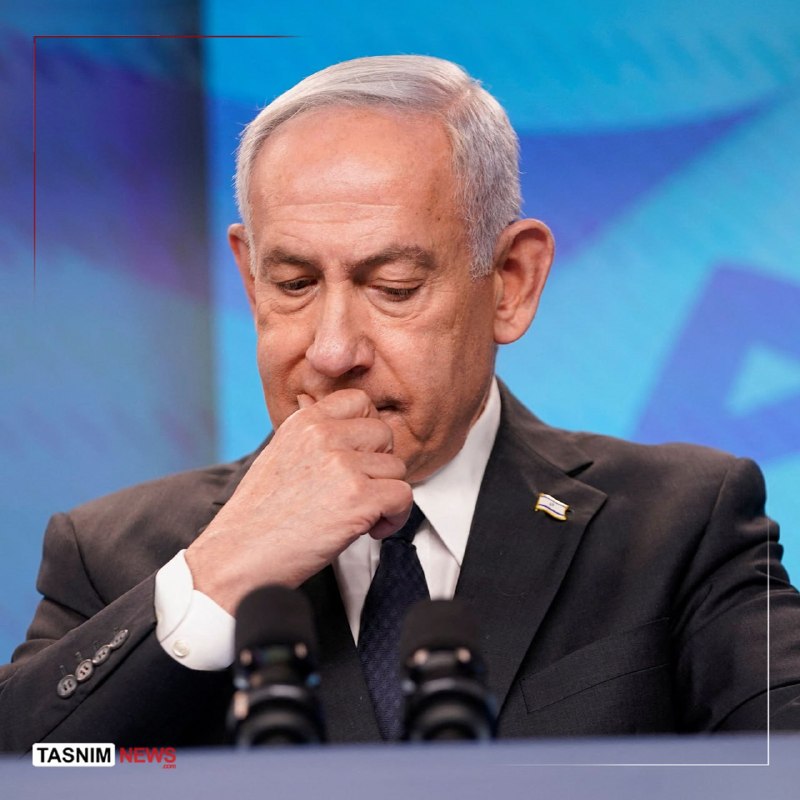
On 18 June 2026, two strands of reporting converged on the same uncomfortable conclusion: the United States and Israel are no longer reading from the same script on Iran. The Wall Street Journal reported that President Donald Trump now routinely asks members of his administration whether Prime Minister Benjamin Netanyahu is being accurate after their calls — a question a senior administration official said the president did not regularly put to staff in earlier rounds of the relationship. By the same afternoon, Trump was on the White House podium defending a diplomatic track with Tehran that his own diplomatic interlocutor in Jerusalem publicly distrusts, and telling reporters it was "a little unfair" that Iran should be denied ballistic missiles while other countries retain them.
The dispute is being framed, for now, as a personality story — two leaders with two instincts. It is also the substantive story of how a Middle East policy gets made in 2026: through a series of bilateral phone calls, punctuated by leak-driven press accounts, and weighted heavily toward whatever the louder voice in the room wants that week.
What the wires are actually reporting
The Wall Street Journal's account, summarised in the Telegram channel ClashReport at 04:01 UTC on 18 June, describes a White House that has begun treating Israeli intelligence readouts the way a sceptical editor treats a press release: ask twice, then verify. The trigger, per the same cluster of reports, is the gap between Trump's public posture on Iran — engagement, sanctions relief in exchange for a verified freeze on weaponisation, the line about avoiding "economic catastrophe" — and Netanyahu's preference for sustained military pressure. That gap is not new. What appears new is the procedural language: a sitting US president now second-guessing the accuracy of an allied head of government in real time, in front of his own staff.
A second beat, surfaced at 03:14 UTC on the same day via Unusual Whales' X account, frames the deal in domestic-economic terms: Trump told reporters he had worked on the Iran arrangement specifically to "avoid economic catastrophe." A third beat at 02:50 UTC carries the ballistic-missile remark. Read together they sketch a White House argument: that the alternative to a deal is not the continuation of managed tension but something worse — an energy shock, a kinetic escalation, or both. That argument is being made publicly, which is itself a signal that the administration has decided to take the political hit for engaging rather than absorb it in silence.
The counter-narrative from Jerusalem
Netanyahu's position, as reported through the same wire cluster, is that diplomatic concessions to Tehran buy time the regime intends to use, not relinquish. The Israeli security establishment has spent two decades arguing that Iran's nuclear programme and its missile programme cannot be cleanly separated, and that any framework which freezes one without constraining the other is a framework with a built-in expiry date. That position is rooted in Israeli strategic doctrine, not in Washington's electoral calendar, and it carries real weight: Iranian proxies have, at various points over the last several years, fired on Israeli territory, and the hostage file from October 2023 remains unresolved.
The structural critique running beneath the Israeli line is that deals with the Islamic Republic have a known failure rate — that the diplomatic record from 2013 through 2026 is a record of partial compliance, creative interpretation, and quiet breakout work. From that vantage point, a Trump-engineered deal that leaves Iran's missile programme intact, even as it constrains enrichment, looks like a concession whose cost is paid in Israeli cities rather than in Washington hearing rooms.
Why the friction matters now
A US president publicly second-guessing an Israeli prime minister's accuracy is, in the normal course of the alliance, the kind of story that gets smoothed over within forty-eight hours. The reason this one will not be is that the two leaders are no longer aligned on the underlying question. The Israeli security concern — that a deal which legitimises Iran's missile force while constraining its nuclear one is a deal Israel will be asked to live with from a disadvantage — is a serious objection. The US argument — that the alternative is a kinetic escalation that markets, Gulf partners, and a war-weary American public will not tolerate — is also a serious objection. Two serious objections, both held by governments with legitimate mandates and legitimate intelligence, is the textbook definition of an ally problem rather than a personality problem.
The structural pattern is familiar: when an incumbent hegemon faces a regional power it cannot easily coerce, it reaches for a deal that buys time. The deal works only if the regional power treats the bought time as political cover for restraint. When it does not, the deal collapses and the hegemon is left arguing that the collapse was the other party's fault. Both Washington and Jerusalem know this pattern. The disagreement now is about whose risk profile gets to define the timeline.
Stakes, and what the reporting does not yet show
If the trajectory continues, the most likely short-term outcome is a deal that the United States signs and Israel publicly declines to endorse. That outcome is survivable for the alliance but expensive: it widens the operating room for Iran's missile programme, narrows Israeli confidence in US security guarantees, and gives Tehran the diplomatic recognition it has spent a decade seeking. The least-discussed outcome — a deal that collapses inside twelve months because of an Iranian test or a proxy attack — would land much harder, and would arrive in a Middle East where Israel's patience for diplomatic ambiguity is, by every public indicator, low.
What the public reporting on 18 June does not yet show is the substance of the deal itself: what is on the table beyond the broad outlines, who is enforcing what, and what the verification architecture looks like. The reporting also does not show whether the friction between Trump and Netanyahu is being mediated through third parties — Gulf states, Egypt, the EU troika — or whether it is being left to fester in the open. The sources are thin on that mediation question, and on what the Israeli security cabinet has formally decided to do if a deal is announced.
What can be said with the sourcing available is this: the diplomatic track on Iran now has a credibility problem inside the Israeli government, and the US president is the one making the case for it. That is a structural inversion of the usual arrangement, and it is the development worth watching over the next two weeks.
This article was written by the Monexus staff. We lead with the diplomatic friction because the wires lead with it; we have given the Israeli security objection the same structural weight as the US diplomatic argument, because the alliance question cannot be answered otherwise.
Wire provenance
This editorial synthesis draws on the following public wire/social posts:
- https://t.me/ClashReport
- https://t.me/ClashReport