Ukrainian drones reach Moscow's oil refining belt for the second time in a week
Mayor Sergei Sobyanin says air defences shot down roughly 180 Ukrainian drones over Moscow in the early hours of 18 June, with a refinery in the Kapotnya district struck again and damage reported near the Sadovod market.
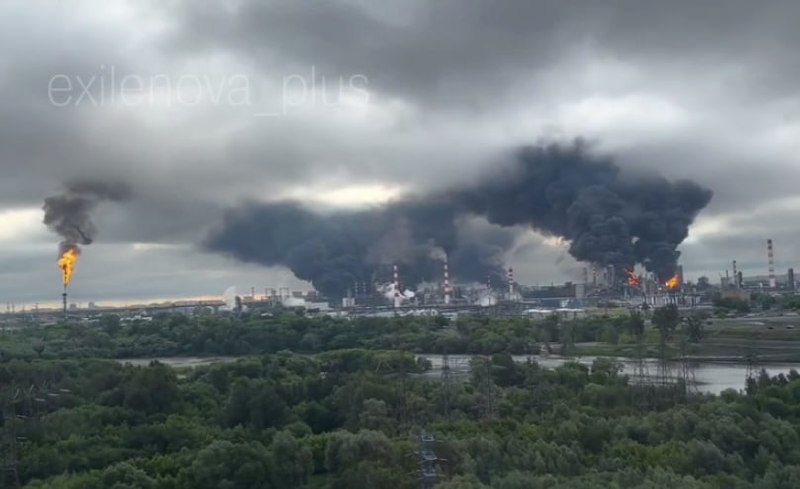
Flames rose over the Kapotnya district on the southeastern edge of Moscow in the early hours of 18 June 2026 after what Mayor Sergei Sobyanin described as a large-scale Ukrainian drone attack, the second time in a week that the Russian capital's oil refining belt has been hit. Sobyanin said air-defence forces had shot down roughly 180 drones flying towards the city, with the count climbing through the morning: 137 drones downed by 04:50 UTC, more than 50 reported on approach, and the total later revised upward to about 180. Residential buildings and the Sadovod shopping complex on the city's southern rim sustained minor damage, according to the mayor's updates carried by Russian state and international channels.
The strike sits inside a deliberate Ukrainian campaign to put Russian energy infrastructure inside sustained pressure, and the pattern is the news. Moscow is no longer treated as a sanctuary by Kyiv's long-range drone operators. What changes after a night like this is the baseline expectation of the Russian public, not just the refinery balance sheet.
A night of escalating numbers
Sobyanin's running tally told most of the story. Euronews, citing the mayor's Telegram channel, put the count at 180 drones intercepted by 05:17 UTC, the highest single-night figure publicly acknowledged by Moscow authorities in the present campaign. The earlier 04:50 UTC update gave 137, and the 04:52 UTC report referenced "more than 50" drones downed on approach, with the Kapotnya refinery explicitly named as a hit site.
The Kapotnya plant, operated by Gazprom Neft's Moscow refinery complex, sits inside one of the most densely populated industrial corridors in the Russian capital. The earlier strike this week, also reported by Sobyanin and amplified by Russian and Telegram-based war channels, marked the first time Kyiv's drones had reached the Moscow refinery belt with confirmed damage. A second strike in five days signals an operational tempo, not a one-off.
The Russian framing
The Russian reporting line — visible in channels such as Readovka and Intelslava — emphasises civilian risk: damaged apartment blocks, a shopping centre, and the city's air-defence burden. That framing is internally consistent with how the Russian state has spoken about Ukrainian strikes since the long-range campaign began, and the underlying facts (damage to non-military buildings; intercept figures updated throughout the night) are not in serious dispute among the cited sources.
Where the framing diverges is in what is left out. Russian state-adjacent channels do not engage with the targeting logic behind a Moscow oil refinery, nor with the cumulative effect of repeated strikes on Russian downstream capacity. Both are the obvious questions for any analyst reading the same data.
The structural shift
For most of the war, the Russian energy sector outside the combat zone was effectively off-limits to Ukrainian strike planners. That assumption no longer holds. Drone production at scale, longer-range airframes, and refined intelligence on Russian refining bottlenecks have together pushed the ceiling of what is strikeable steadily east and north. A Moscow refinery is not a tactical battlefield target; it is a strategic one, sitting at the end of a logistics chain that feeds Russian fuel markets and, indirectly, the war effort.
The deeper pattern is the slow erosion of the rear. Russian domestic audiences are being trained, night by night, to associate the country's refining capacity with the costs of a war many of them do not follow closely. The political economy of that, over months rather than days, is the story beneath the smoke.
Stakes and uncertainty
What the public record does not yet show is the operational scale of damage at Kapotnya, the throughput impact on Gazprom Neft's Moscow complex, or whether any casualties resulted from the residential and commercial damage reported near Sadovod. The intercept figures themselves are Moscow's own and cannot be independently verified from the cited sources; Russian-aligned channels and Western reporting have historically diverged on the share of drones that actually reach their targets versus those downed or diverted.
The trajectory, however, is plain. If Kyiv can sustain this tempo, the working assumption that the Russian heartland is insulated from the war's material costs ceases to be a working assumption at all. That is the shift the next several weeks of reporting will test.
This publication treated the Russian mayoral briefing as the authoritative running count of intercepts, and flagged Readovka and Intelslava reporting as Russian-state-adjacent channels used here for damage geography rather than as stand-alone factual bases.
Wire provenance
This editorial synthesis draws on the following public wire/social posts:
- https://t.me/euronews/
- https://t.me/intelslava/
- https://t.me/readovkanews/