The 25% Trade Deal: Reading the Slow Drift Between Washington and New Delhi
Predictive markets put the odds of a US-India trade deal in 2026 at 25%, even as the political temperature in Washington warms. The two readings are not in tension — they describe the same negotiation from opposite ends.
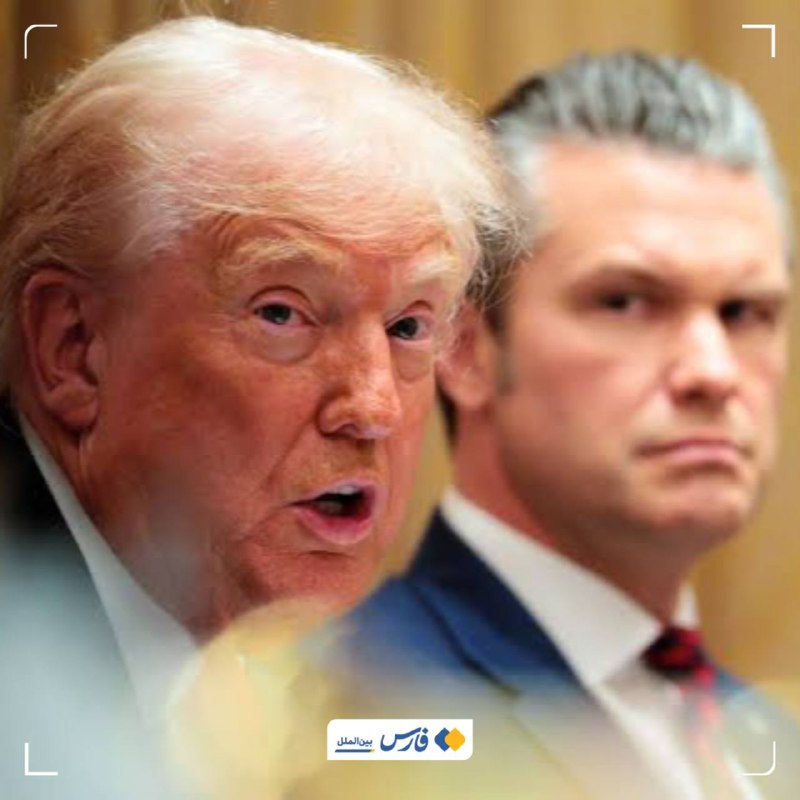
On 17 June 2026 at 15:37 UTC, the prediction market Polymarket put the implied probability of a United States–India trade agreement being signed before the end of the year at 25%. Twelve hours later, on 18 June at 02:38 UTC, the BBC's World feed reported that Donald Trump had used a televised appearance to announce he would visit India, declaring that a once-frosty relationship with Narendra Modi was thawing. The two data points are not in conflict. They describe the same negotiation from opposite ends: a market that prices institutional friction, and a head of state performing personal chemistry for a domestic audience.
The gap between those readings is the story. Trade negotiations between Washington and New Delhi have been moving on two tracks at once — a public, personal one defined by leader-to-leader theatrics, and a private, technical one in which trade lawyers, agricultural lobbies and tariff schedules do most of the actual work. Polymarket's 25% number is a price on the technical track. The BBC's reporting on a presidential visit is a price on the performative one. Neither reading is wrong. Both are incomplete.
What's actually on the table
The bones of the dispute are well-known and long-running. Indian agricultural tariffs, dairy market access, restrictions on US medical-device pricing, and the digital-services framework that governs how US technology firms operate inside India remain unresolved. The Trump administration's tariff regime, layered on top of those disputes, has widened the negotiating surface area without — by public evidence — narrowing any of the underlying disagreements.
Polymarket's 25% figure, recorded at 15:37 UTC on 17 June, sits inside a contract covering which countries Trump will conclude new trade deals with before 2027. That framing matters: the contract is denominated in the probability of a deal, not the probability of a breakthrough. Bilateral ministerial statements, side letters, and partial frameworks — the kind of paperwork that has historically been repackaged as "progress" — would still leave the contract unresolved. The market is pricing a substantive agreement, not a press conference.
The Modi–Trump personal channel
The performative track is harder to discount than it looks. Trump's reported description of Modi as "the most beautiful looking man," reported by Polymarket's account on 17 June at 15:36 UTC and consistent with a pattern of personal remarks directed at the Indian prime minister, is the kind of line that domestic US audiences will read as informal flattery, while Indian viewers read it as a signalling of restored warmth. Both readings are reasonable. What is more significant is the announced visit: a presidential trip to New Delhi in the months ahead would lock in a calendar around which negotiators on both sides would have to produce something — even if that something is a framework rather than a final text.
This is the most plausible path to a deal before the end of 2026: not a clean, comprehensive settlement, but a staged announcement timed to coincide with the visit, broad enough to declare victory on and narrow enough to be agreed by officials. The 25% market price does not require a fully executed agreement. It does require a deal that Polymarket's contract administrators, on their published resolution criteria, recognise as one.
Why the friction runs deeper than personality
Two structural obstacles make a clean deal unusually hard to deliver. The first is institutional. India is a federal republic whose state governments hold meaningful authority over agricultural marketing and land policy — a reality that a Scroll.in piece from 18 June at 03:36 UTC frames as part of a longer pattern of aggressive centralisation under the Modi government, including constraints on the autonomy of state-level fiscal and administrative decision-making. Any US demand on Indian agricultural tariffs will run into a domestic political economy in which farmers are a mobilised constituency and where the central government has increasingly narrowed the room for subnational negotiation.
The second is strategic. India is a member of the BRICS grouping and the Shanghai Cooperation Organisation, has continued to purchase Russian oil under the post-2022 sanctions architecture, and maintains working economic and defence relationships with the European Union. A US deal that demanded alignment on any of those fronts would be a non-starter in New Delhi. A US deal that pretended those relationships did not exist would be unsustainable once signed. The most likely form of an agreement is one that excludes these questions entirely — and the narrower the substantive scope, the easier it is to sign and the less consequential it is in practice.
Stakes and forward view
The market's 25% number is a useful discipline. It says, in effect, that even the partial, staged, photo-opportunity deal is no better than a one-in-four proposition over the remaining six months of 2026. That is high enough to be worth hedging against, and low enough to mean that the working assumption should be continued friction rather than breakthrough.
For Indian exporters in textiles, pharmaceuticals and engineering goods, the practical implication is continued uncertainty in the US market — a cost that is real even if it does not make headlines. For US technology and medical-device firms, the implication is that the operating environment in India is unlikely to be reset in 2026 by a single piece of paper. For the broader pattern of US trade posture, an India deal would represent the first major non-European counterparty willing to sign on the Trump-era terms; failure to deliver one would signal that the terms are harder than they look.
What remains genuinely uncertain is whether the presidential visit, if it happens on the timeline now being telegraphed, produces a framework that Polymarket's resolution rules would treat as a deal. The BBC's 02:38 UTC report on 18 June recorded Trump's announcement without specifying a date. Until the calendar firms up, the market's 25% is the more honest number than the rhetoric.
This article draws on prediction-market data, wire reporting and analysis published on 17–18 June 2026; Monexus has reported the Polymarket contract and BBC's account of the announced visit without adding unverified details on the underlying trade substance.