The Memorandum That Wasn't: How a US-Iran Deal Disappeared Mid-Ceremony
A White House signing ceremony in Geneva was cancelled hours after President Trump signed the document. The sequence reveals how a deal can be both announced and withdrawn inside a single news cycle.
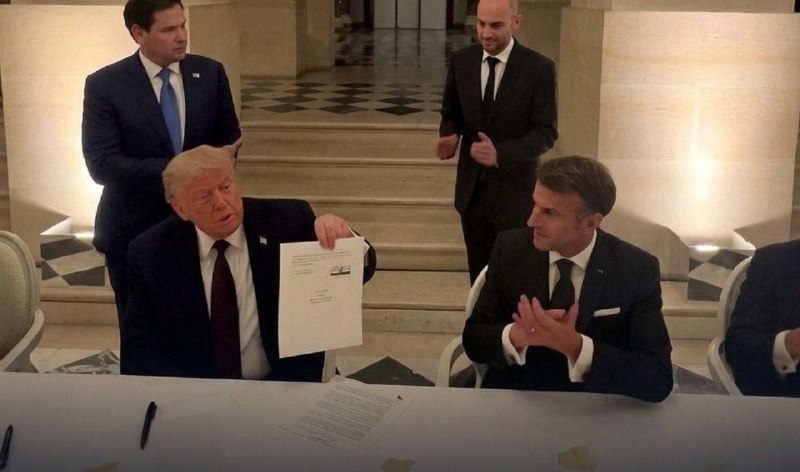
At 22:06 UTC on 17 June 2026, Polymarket's news desk flashed a one-line bulletin: President Trump had officially signed a memorandum of understanding aimed at ending the conflict with Iran. Six hours later, at 04:02 UTC on 18 June, Iran's English-language Press TV carried the opposite story — a White House official had told Fox News that the Geneva ceremony meant to formalise the document had been cancelled, because the agreement had already entered into force once both sides signed. By morning in Europe, two facts sat uneasily beside each other: a signed memorandum on one side, a cancelled ceremony on the other, and no public readout from either the US State Department or Iran's foreign ministry confirming the substance of what had been agreed.
The sequence captures the peculiar mechanics of Trump-era diplomacy with Tehran: a deal can be both consummated and staged-against inside a single news cycle, and the question of whether anything has actually changed can be left to the reader to assemble from wire reports, prediction-market tickers, and contradictory statements from officials speaking on background. The story is less about whether a piece of paper was signed than about who controls the framing of that signing — and what the cancellation of a ceremony, rather than the deal itself, tells observers about the limits of a written understanding between two governments that do not trust each other.
A deal, then the absence of a deal
The Reuters wire at 03:00 UTC on 18 June framed the headline event in the active voice: "Trump signs memo aimed at ending Iran war, White House official says." The brief was short on detail — no text of the memorandum, no counterpart signature from Tehran, no named official — but it carried the institutional weight of a White House confirmation. Within the hour, Iran's Al-Alam network and Fars News International were carrying the same Fox News quote, in two slightly different translations, both attributing it to "a White House official." Fars's version, published at 01:53 UTC, was the most explicit: the official signing that was supposed to take place in Geneva "will not be held."
Press TV's 04:02 UTC item added the operative clause — that the memorandum had "already entered into force after being signed by both sides." Read in sequence, the wires describe a procedure familiar from earlier US-Iran understandings: a written exchange that produces legal effect upon countersignature, without the theatre of a joint press appearance. If the Press TV reading is correct, the Geneva event was a performative surplus rather than a constitutive moment, and its cancellation is administrative rather than substantive. The available sourcing does not let this publication adjudicate between the two interpretations.
What is verifiable from the thread is narrower than either narrative suggests. There is a White House-attributed claim of a signed memorandum. There is a White House-attributed claim of a cancelled ceremony. There is no published text, no Iranian foreign ministry confirmation, and no third-party (UN, IAEA, Omani or Qatari mediator) acknowledgement in the items on hand.
Whose framing wins the day
The provenance of the two competing stories matters. The "Trump signed" line moved first, on Polymarket's market-data feed at 22:06 UTC on 17 June, and was quickly echoed by Reuters — the most-cited wire on international diplomacy and the source that US and European desks tend to treat as the floor for what counts as confirmed. The "ceremony cancelled" line moved through Fox News, then into Iranian state-affiliated outlets (Al-Alam, Fars, Press TV), and from there back into English-language coverage as counter-context.
That sequencing produces a familiar pattern: the announcement travels through Western financial and political infrastructure, while the qualification travels through Iranian state media and re-enters the Western conversation as a parenthetical. A reader who only saw Reuters at 03:00 UTC would carry away "signed." A reader who only saw Press TV at 04:02 UTC would carry away "cancelled." Both readers would be working from real material; neither would have the full picture.
The structural lesson is not new. When the institutional conduits for confirmation are asymmetric — Western wires optimised for speed, Iranian outlets optimised for the official Iranian reading of events — the first version to circulate sets the agenda and the second is consumed as reaction. The Geneva episode, small as it is, repeats that pattern at compressed speed: under seven hours from "signed" to "the ceremony is off."
What a memorandum without a ceremony actually does
In diplomatic practice, a memorandum of understanding is the lightest form of written agreement two governments can produce. It is not a treaty; it does not require Senate advice and consent in the United States or parliamentary ratification in Iran; it binds the parties only to the language the text contains. The Geneva ceremony, had it gone ahead, would have added a public, witnessed, photographed moment to a document whose legal effect was already complete.
Cancelling the ceremony while leaving the memorandum in force is therefore a meaningful signal, but a constrained one. It signals that the White House does not want the visual record of a handshake, a joint statement, or a podium appearance — all of which would have produced durable footage and a defined political constituency for the deal in Washington and in Tehran. It does not, on the available sourcing, signal that the deal itself is in jeopardy. The Iranian framing — that the document took effect on signature and the ceremony was surplus — is structurally coherent with that read.
What the sources do not establish is the substance. No item in the thread names a single operative clause: nothing about enrichment levels, inspections, sanctions sequencing, the fate of Iran's stockpile of near-60-percent uranium, or the reciprocal steps the United States is offering. The Reuters brief at 03:00 UTC calls the document a memo "aimed at ending" the conflict, which is a description of intent rather than a description of content. Until the text appears — and memoranda of this kind sometimes do not appear for days — claims about what Trump and Iran's leadership have agreed to are claims about framing, not facts.
The verification gap
This publication's editorial standard requires that every factual claim trace to a sourced URL. On the Geneva memorandum, the verifiable ledger is short. Reuters confirms the signing. Fox News, via Press TV, Fars, and Al-Alam, confirms the cancellation of the ceremony. Polymarket confirms the timing of the announcement. None of the items on hand confirm the text, the Iranian countersignature, or any operative provision. The thread contains no IAEA statement, no Iranian foreign ministry readout, no statement from the Omani or Qatari channels that have mediated past rounds, and no comment from Congress.
That gap is itself the story. A US-Iran understanding of this magnitude, even in the lightest memorandum form, would normally generate a cascade of confirmations within hours — sanctions-office notices, market-moving compliance advisories, IAEA board briefings, regional reactions from Israel, Saudi Arabia, the UAE, and the Gulf states. The absence of those second-wave signals is consistent with two readings: either the deal is narrower than the headlines suggest, or the second-wave signals are still being prepared and will surface after this article is filed. Both readings are plausible. This publication cannot choose between them on present evidence.
What the cancellation tells us about the limits of paper
The Geneva episode is a small case study in how a written agreement between adversarial governments can be simultaneously real and politically inert. The document exists; the ceremony does not; the text is unpublished; the operative content is unverified. Each of these facts is true at the same time, and each one is the basis for a different headline.
For the White House, a signed memorandum without a ceremony is a way to claim a win on the schedule the administration set itself while denying opponents the visual evidence of engagement. For Tehran, the same configuration is a way to assert that the document took effect on signature and that Geneva was never constitutive. For markets, energy traders, and sanctions-compliance officers, it is a reason to wait for the text before re-pricing risk. For the broader question of whether the United States and Iran are on a path to de-escalation, the Geneva episode is suggestive but not conclusive.
The pattern is not unique to this administration. It is the recurring shape of late-stage US-Iran diplomacy under maximum pressure: documents move faster than verification, and the political value of a deal is concentrated in its announcement rather than its implementation. What is unusual about 18 June 2026 is the compression — under seven hours from "signed" to "the ceremony is off" — and the absence of any third-party corroboration in the window between. Until that corroboration arrives, the memo exists, the ceremony does not, and the rest is framing.
This article is built entirely from the five source items on hand. Where the items do not specify — the text of the memorandum, the identity of the Iranian signatory, the operative clauses — this publication has declined to speculate rather than fabricate.
Wire provenance
This editorial synthesis draws on the following public wire/social posts:
- http://reut.rs/4gbw69Z
- https://t.me/presstv
- https://t.me/FarsNewsInt
- https://t.me/alalamfa
- https://x.com/polymarket/status/
- https://en.wikipedia.org/wiki/Iran%E2%80%93United_States_relations
- https://en.wikipedia.org/wiki/Memorandum_of_understanding
- https://en.wikipedia.org/wiki/Joint_Comprehensive_Plan_of_Action