White House pulls Geneva ceremony for Iran memorandum hours after Trump signs in Versailles
A scheduled signing ceremony in Geneva was scrapped overnight after the White House released footage of Trump putting pen to paper in Versailles, leaving the deal's status uncertain and Tehran scrambling for clarification.
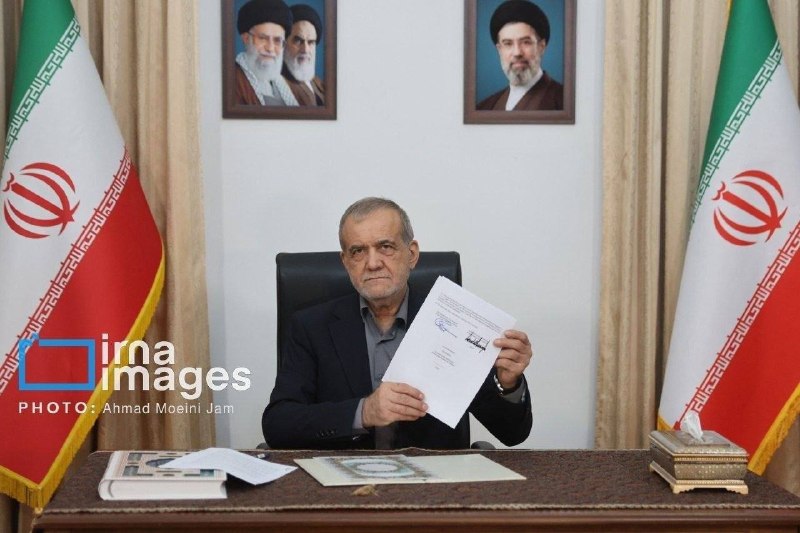
The choreography of a US-Iran diplomatic breakthrough unravelled in public view between roughly 00:15 and 02:34 UTC on 18 June 2026. Inside three hours, the White House released footage of President Donald Trump signing a memorandum of understanding at Versailles, then pulled the planned signing ceremony in Geneva that Iranian officials had been told to expect, and left Tehran's negotiating team without a clear answer about whether they had a deal or a photo-op.
The sequence matters because each step was supposed to follow the next. A framework, a formal signing, a joint statement, then a managed rollout. Instead the deal now exists in two registers at once — the paperwork is on the table in France, and the ceremony meant to certify it in Switzerland has been quietly removed from the schedule. Iranian state-aligned outlets spent the early morning cycling between relief and confusion, two channels reporting the cancellation within forty minutes of each other.
What actually happened, in order
According to a post on the DDGeopolitics channel at 00:15 UTC on 18 June, the White House published video of Trump signing the memorandum at Versailles, the gilded seat of French royal government west of Paris. The footage was framed as proof of completion — the ink, the room, the signature. Nothing about the post suggested a follow-on event.
Forty minutes later, Iran's Fars News International, citing Fox News, quoted a White House official saying the official signing ceremony in Geneva would not go ahead as scheduled. The official's language, as relayed by Fars, treated the Geneva event as a separate, optional staging step rather than the legally significant act. Then, at 02:34 UTC, the Lebanese outlet Al-Alam flagged the same cancellation from the same White House statement, this time describing the Geneva event as a "signing ceremony of the memorandum of understanding with Iran."
What is verifiable from the wire is narrow but unambiguous: a memorandum was signed in France; a ceremony planned for Switzerland was cancelled; both facts were confirmed by White House attribution through US media. What is not verifiable from the available reporting is the legal status of the document signed in Versailles, the identity of any Iranian signatory in the released footage, or whether Iranian negotiators were present in the room when the pen went down.
Why Tehran's reaction reads as a scramble
The two Iranian-aligned posts converge on the cancellation fact and diverge on its implication. Fars, the more establishment of the two, leads with the procedural language — the official signing that was supposed to take place — a phrasing that preserves the original Versailles signing as the operative document and treats Geneva as ceremonial. Al-Alam, broadcasting from Beirut and aligned with the wider Iranian-led resistance axis, frames the cancellation as the substantive story, naming Geneva in the headline. Neither outlet disputes that a US president signed something; both are working out, in real time, what that something commits.
The Iranian negotiating team's silence is itself a signal. Tehran has form on public disagreement through its Foreign Ministry briefings and through state-aligned outlets that mirror its talking points. A confused early-morning silence, followed by terse, contradictory social-media posts, is more consistent with a foreign ministry caught off-guard than with a coordinated spin campaign. The Versailles video may have been intended to project momentum; the immediate effect, for Iran's English-language audience, is to raise the question of who exactly Washington signed with.
What this looks like inside the broader Iran file
US-Iran deal-making in 2026 is being conducted against a hard ceiling of congressional, Israeli, and Gulf-state scepticism, and a hard floor of Iranian insistence on sanctions relief sequencing. Every successful framework to date — the 2015 Joint Comprehensive Plan of Action being the obvious prior case — has hinged on whether the document signed in front of cameras is the document signed across the table. The distinction matters because the former is a media artefact and the latter is the binding instrument.
What the available reporting actually documents is the artefact. A White House-released video of one signatory. A cancellation notice for a ceremony that was meant to produce a second, parallel artefact in Geneva. No corroboration yet from Treasury, the Office of Foreign Assets Control, or any Iranian cabinet-level readout. In a deal class where the technical annexes carry as much weight as the cover page, that asymmetry is the story.
What to watch next
Three signals will clarify whether the Versailles document is the deal or merely the prelude. First, an Iranian Foreign Ministry statement in Farsi — anything less than a flat confirmation that an Iranian official signed in France would keep the document in limbo. Second, a Treasury or White House readout naming the Iranian counterparty and the sanctions architecture tied to the memorandum. Third, a return to the original Geneva calendar under a different framework — a press conference rather than a signing, or a quiet bilateral in a third capital. Any of the three would resolve the ambiguity; the absence of all three through the European trading day would harden it.
Until then, the deal is what its paperwork says it is, and its paperwork, as of 02:34 UTC on 18 June 2026, exists only on one side of the table.
— Monexus framing note: where Western wires led on the Versailles footage as proof of progress, Iranian-state outlets framed the Geneva cancellation as the substantive event. The reporting above treats both reads as primary and asks which one survives the next Iranian cabinet statement.
Wire provenance
This editorial synthesis draws on the following public wire/social posts:
- https://t.me/DDGeopolitics
- https://t.me/FarsNewsInt
- https://t.me/alalamfa