A piece of paper, signed: what the US-Iran MoU does and does not settle
A memorandum signed electronically on 17 June stops well short of a deal on missiles and drones, and the Iranian side has already telegraphed that any Israeli move on Beirut is a separate question.
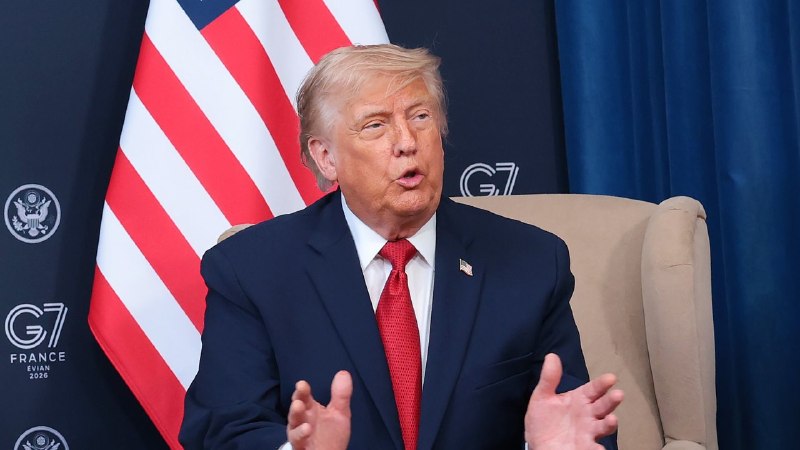
Donald Trump announced on 18 June 2026 that he had signed a memorandum of understanding with Iran, the kind of announcement that, in any other week, would dominate the foreign-policy news cycle. The document, Iran's Foreign Ministry confirmed late on 17 June, was finalised and signed electronically by both sides, with spokesperson Esmaeil Baghaei telling reporters in Tehran that the agreement had been concluded. The headline, taken alone, suggests a turning point: a piece of paper between two governments that have spent four decades treating each other as adversaries.
The document's content suggests something considerably narrower. In the same briefing on 17 June, Baghaei was explicit that Iran's defensive capabilities "will not be discussed in any process or with anyone." That single sentence draws the perimeter of the deal before anyone can claim it covers what most Western capitals actually want Iran to give up: its missile and drone programme, the architecture that gives Tehran leverage from the Levant to the Strait of Hormuz. What is left, on the Iranian telling, is a confidence-building instrument rather than a strategic bargain.
What was actually signed
The mechanics are modest. A memorandum of understanding, by definition, is not a treaty. It is a statement of intent, a framework for further talks, or a procedural step towards something binding later. Iranian state-linked reporting describes the text as electronically signed by both sides and finalised; the US side, in the form of the presidential statement on 18 June, claims the document as an achievement of the second-term Trump administration. The two framings are not the same, and the gap between them is the story.
The deal, on the Iranian account, leaves the country's defensive capabilities off the table entirely. That is a meaningful constraint. A US-Iran arrangement that does not touch the missile and drone stockpile is one that leaves Tehran's ability to arm and sustain partners in Lebanon, Iraq, Yemen and beyond structurally unchanged. The architecture of deterrence that Western governments have spent the past two years trying to roll back survives the MoU intact.
The Lebanon variable, stated openly
The second piece of the same statement, delivered by Baghaei on 17 June, is in some ways the more revealing one. If, he said, "the Zionist regime's aggressions in Lebanon continue, it will be considered a violation of US commitments." The phrasing does two things at once. It binds the Lebanese theatre to the new US-Iran channel by treating Israeli action there as a test of Washington's word. And it puts on the public record, in advance, the Iranian interpretation under which the MoU could collapse.
The Lebanese front has, in the preceding weeks, seen Israeli strikes and a renewed diplomatic push from Washington to keep the ceasefire architecture from fraying. By tying Israeli behaviour in Lebanon explicitly to the credibility of the MoU, Tehran is signalling that it will not allow the agreement to function as a green light for Israeli escalation in Beirut's airspace. It is, in effect, a reservation of the right to walk away, announced before the ink is dry.
The nuclear question, still unaddressed
What the memorandum does not say is at least as important as what it does. The Iranian position that defensive capabilities are non-negotiable is, in practice, the position that the missile file stays open. Whether the document touches enrichment, IAEA access, or the stockpile of uranium enriched to near-weapons grade, is not established by the public statements. Iran's insistence on the immunity of its defensive programme, combined with the absence of any public Iranian acknowledgement of nuclear concessions, suggests that whatever was signed in the electronic exchange on 17 June is best understood as a process commitment rather than a substantive nuclear settlement.
The structural reality is that a process commitment is not nothing. It buys time. It opens a channel. It imposes a cost on the US side, which now has to manage Israeli expectations about what can be done in Lebanon while a MoU is in force. It imposes a parallel cost on the Iranian side, which now has to deliver some modicum of restraint from its partners if it wants the channel to hold. But the underlying contest, over the capability envelope that gives the Islamic Republic regional weight, is unresolved.
Stakes and what to watch
The MoU's first stress test is already on the calendar. Any Israeli strike on Lebanon, whether against Hezbollah infrastructure in the south of the country or against the group's presence in the capital, will be read in Tehran as the variable Baghaei named. If Tehran's reaction is calibrated, the channel survives and the slow work of negotiation continues. If Tehran retaliates, or signals that the channel is broken, the MoU will be revealed for what it always was: a procedural step with a short shelf life.
Western capitals looking for a strategic deal, on missiles, on enrichment, on the regional architecture that runs through Beirut, Baghdad and Sanaa, will find in this memorandum something thinner than they hoped. Tehran, for its part, has secured a document that, on its own terms, protects the core of what it considers sovereign while buying diplomatic oxygen. The honest read is that this is the shape of the next phase: a narrow, brittle, conditional arrangement, in which Lebanon is the first fault line, and the larger questions remain, as they have been, for another round of talks that has not yet been scheduled.
Monexus framed this as a process document with named limits, rather than the strategic settlement the headline implies. The Israeli security concerns reflected in the Lebanon file are treated as a first-order variable; the Iranian position on defensive capabilities is reported as stated, not editorialised.
Wire provenance
This editorial synthesis draws on the following public wire/social posts:
- https://t.me/s/The_Jerusalem_Post
- https://x.com/sprinterpress/status/