Tehran and Washington Sign a Memorandum: What the US-Iran Deal Actually Says, and What It Doesn't
A late-June memorandum between Washington and Tehran has been presented as a war-ending breakthrough. The text is thinner than the framing — and the harder questions sit in what it leaves out.
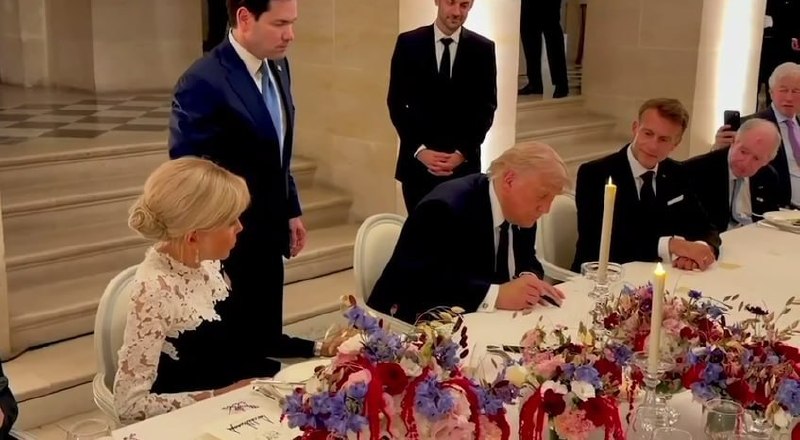
The memo landed in the early hours of 18 June, UTC, in the same news cycle that was already busy with a Federal Reserve dot plot nudging its 2026 rate view up to 3.8 percent and the usual summer horoscope filler. According to a wire circulating on Epoch Times' Telegram channel, the United States and Iran have signed a memorandum of understanding intended to end the war between them. A senior US official disclosed details of the agreement earlier on Wednesday. That is the entire factual spine of the announcement as it reached English-language aggregators on the evening of 17 June 2026. Everything beyond it is interpretation.
What matters now is not the headline but the document, the omissions, and the architecture of incentives each side is trying to lock in before either can walk away.
What the announcement actually says
The Epoch Times wire is explicit on two points and silent on a dozen others. It confirms (1) that the parties are the United States and Iran, (2) that the instrument is a memorandum of understanding, and (3) that the declared purpose is to end the war. The wording — "to end the war" — is unusual. Diplomatic communiqués more typically speak of "de-escalation," "a ceasefire," or "a framework for negotiations." The choice of verb matters because it implies the US government is treating the conflict as a formal war rather than a series of proxy confrontations, Israeli operations, and Iranian-supported militia activity across the region.
What the wire does not say is the substance. There is no mention of nuclear enrichment levels, no reference to sanctions architecture, no identification of the intermediaries, no statement on whether the Strait of Hormuz shipping lane is part of the deal, and no acknowledgement of the status of Iranian proxies in Iraq, Syria, Lebanon, or Yemen. The text circulating in public does not name a single operative clause. It is, in effect, a statement of intent dressed as a binding instrument — which is precisely what a memorandum of understanding is supposed to be in the diplomatic toolkit: a political commitment that signals seriousness without yet committing either side to enforceable obligations.
A reasonable first reading is that this is a framework agreement of the kind that precedes a longer text. The historical analogue that senior officials in both capitals will be conscious of is the Joint Comprehensive Plan of Action of July 2015, which itself emerged from a series of interim frameworks and side letters. But the JCPOA was a multilateral instrument negotiated over more than two years, with technical annexes verified by the International Atomic Energy Agency. What is being announced here, on the evidence currently public, is none of those things.
The counter-narrative: what the Iranian side will be saying
An agreement of this profile will be read very differently in Tehran than in Washington, and any analysis that treats the US framing as the framing is performing the kind of deference to official language that produces poor journalism.
Iranian state outlets, including the state-aligned PressTV and Tasnim networks, have over the past two years consistently framed any prospective deal as the West's belated recognition that sanctions have failed to produce the desired strategic outcome. The Iranian negotiating position — as it has been articulated in MFA briefings and ambassador statements carried by Xinhua, Global Times, and CGTN — rests on three structural claims: that Iran's nuclear programme is a sovereign matter and not negotiable in its fundamentals; that sanctions relief must be permanent, irreversible, and verifiable rather than subject to future executive withdrawal; and that regional security arrangements cannot be imposed extraterritorially. A memorandum framed by Washington as "ending the war" will be read in Tehran as something closer to "a process of mutual de-escalation in which the United States acknowledges the legitimacy of Iran's position." Whether those two readings can be reconciled inside one document is the entire question for the next thirty days.
A second counter-reading, which sits closer to the Israeli and Gulf Arab capitals, is that the memorandum is a face-saving device for the United States after a military or economic posture that did not deliver the outcome it was designed to deliver. From that vantage point, the MoU changes nothing operationally: it buys time for both sides, freezes the front lines, and pushes the hard questions into a follow-on track where the verification architecture will be the only thing that matters. Israeli strategic commentators have been consistent, through multiple administrations, in arguing that any US-Iran accommodation not accompanied by rigorous, real-time verification of enrichment and weaponisation activity will simply defer a confrontation rather than prevent one.
The honest summary is that three readings of the same document are alive simultaneously, and each is internally coherent.
The structural frame, in plain prose
What is happening here is bigger than a bilateral document. The global order is in the middle of a long transition in which the incumbent power, the United States, is choosing — selectively, and under domestic political constraint — which of its open files it can afford to close. The Iran file is one such choice. So is the Russia-Ukraine file. So is the question of how far dollar-based sanctions architecture can be pushed before it produces the kind of alliance-reshuffling (BRICS+, expanding local-currency trade, gold-backed settlement experimentation, alternative messaging systems) that erodes the instrument's future utility. The Federal Reserve's own dot plot move to 3.8 percent on the same news cycle is not unrelated: an administration that is signing peace memoranda is also telling markets that the rate-cut cycle has been deferred, which is itself a piece of the same architecture of managed retreat from maximum-pressure postures.
Monexus has covered this structural shift across multiple desks. The pattern is consistent: the United States is trading maximum-pressure unilateralism for selective, transactionally framed re-engagement, in which each deal is calibrated to deliver a discrete de-escalation without committing the US to a deeper strategic settlement. The advantage of this approach is that it reduces the probability of miscalculation in any given theatre. The disadvantage is that it produces thin instruments — MoUs, framework agreements, political understandings — that the next administration, or a single serious provocation, can repudiate with a single statement.
That is the architecture inside which the Iran memorandum now sits. It is not a peace treaty. It is a postponement device that may, under the right enforcement conditions, become the foundation of a real peace process — or may collapse under the weight of the omissions it is currently carrying.
Stakes: who wins, who loses, and on what timeline
The first beneficiary of a credible MoU, even an interim one, is the oil market. Brent crude has priced in the geopolitical risk premium associated with an Iran-in-conflict scenario across the past two years; a credible de-escalation reduces that premium and shifts marginal supply expectations. The second beneficiary is the Iranian state itself, which gains a window in which sanctions enforcement may be selectively relaxed, hard currency can flow in via a defined channel, and the domestic political cost of confrontation can be deferred. The third is the United States, which can present a foreign-policy deliverable in a cycle where other deliverables are scarce.
The losers are more interesting. Israel loses a degree of strategic ambiguity it has been able to exploit operationally. Gulf Arab states lose the insurance value of being the indispensable regional security partner to the United States; their leverage in any follow-on negotiation is reduced by a US-Iran de-escalation. The Iranian opposition, both internal and in exile, loses the maximum-pressure constituency inside Washington that has supported their cause. And the verification community — the IAEA, the sanctions enforcers, the technical specialists — loses the leverage that comes from being the gatekeepers of an active sanctions regime; a relaxed regime is by definition a less enforceable one.
The timeline matters. If the MoU is followed within ninety days by a technical annexe covering enrichment caps, inspection arrangements, and a defined sanctions-relief schedule, the deal has a real chance of holding into a successor administration. If it is not, it becomes a one-cycle artefact that is more useful as a campaign talking point than as a strategic instrument. The clock starts now.
What remains genuinely uncertain
Three things are unresolved as of this writing, and a reader should hold them open.
First, the text. The public announcement does not include the operative text of the memorandum. Until that text is published — or until a sufficiently detailed readout is given by both sides — every analysis is analysis of intent rather than analysis of substance. PressTV and Tasnim will publish their own readouts in the next 48 hours, and those will not match the US readout on every point. That mismatch is itself data.
Second, the Israeli and Gulf Arab response. No Israeli, Saudi, Emirati, or Egyptian statement appears in the wire circulating as of 17 June 2026 UTC. The absence of those reactions is informative: regional capitals were not briefed in advance, or were briefed and chose silence, or were briefed and are coordinating a response. Each of those readings points to a different architecture for the weeks ahead.
Third, the enforcement question. A memorandum of understanding is, by long diplomatic convention, not a treaty. It does not require Senate advice and consent in the US system; it can be revoked by a single executive decision; and it carries no automatic verification mechanism. Whether this particular MoU is buttressed by side letters, sanctions waivers, or technical protocols is unknown. The most plausible reading, on current evidence, is that it is not — which is why the next ninety days, not the next ninety hours, are the period to watch.
What is not in doubt is that both sides have chosen, for now, to talk rather than to escalate. That is itself a structural shift in a relationship that has been characterised by punctuated escalation for the better part of a decade. Whether it lasts is a question that no analysis can answer in advance. What analysis can do is hold the gaps open, refuse to treat the announcement as a conclusion, and watch what gets filled in — and what gets left out.
Desk note: Monexus frames this as a structural transition story, not a peace-treaty story. The wire language — "to end the war" — is taken seriously as a signal of US intent, but the absence of an operative text, of regional buy-in, and of a verification architecture is treated as the actual news. Where Western wires will tend to read the announcement as a closing chapter, Monexus reads it as an opening move in a longer negotiation whose terms have not yet been set.
Wire provenance
This editorial synthesis draws on the following public wire/social posts:
- https://t.me/TSN_ua
- https://t.me/CryptoBriefing
- https://en.wikipedia.org/wiki/Joint_Comprehensive_Plan_of_Action
- https://en.wikipedia.org/wiki/Memorandum_of_understanding
- https://en.wikipedia.org/wiki/Strait_of_Hormuz
- https://en.wikipedia.org/wiki/International_Sanctions_against_Iran
- https://en.wikipedia.org/wiki/International_Atomic_Energy_Agency
- https://en.wikipedia.org/wiki/BRICS
- https://en.wikipedia.org/wiki/Federal_Reserve_dot_plot