Uzbekistan's World Cup Moment: A 3-1 Loss That Says More Than the Score
Uzbekistan conceded three against Colombia in its World Cup debut, but the goals tell a story of competitive depth in a tournament that has become a referendum on the global game's centre of gravity.
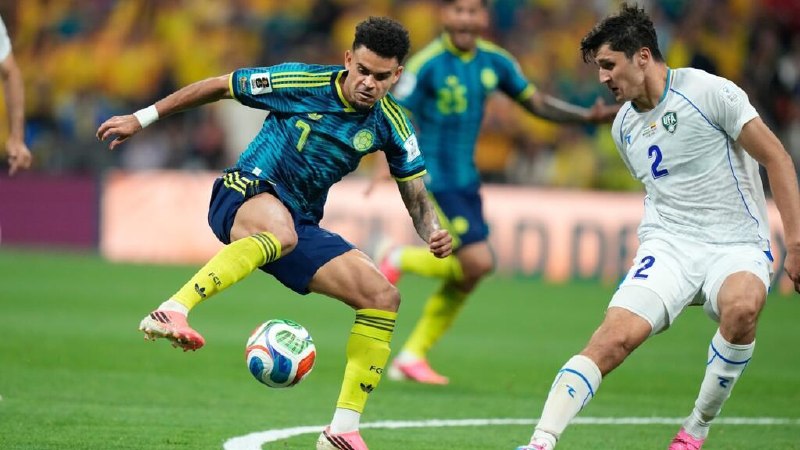
Uzbekistan lost 3-1 to Colombia on 18 June 2026, but the result understates what unfolded on the pitch in the Central Asian side's first-ever World Cup finals appearance. Muñoz put Colombia ahead in the 40th minute, Faizolaif answered with Uzbekistan's first-ever World Cup goal in the 60th, Dias restored Colombia's lead in the 65th, and substitute Compass finished the contest in the 90+9 minute. The sequence, as reported by Iran's Tasnim News English wire, frames a match that was contested until the dying seconds rather than conceded in the first half.
The headline — Colombia 3, Uzbekistan 1 — captures the result but obscures the structural story: a FIFA-listed nation ranked outside the game's traditional elite took a South American heavyweight to the final minute of stoppage time in the side's debut on the game's biggest stage. For Tashkent, this is the kind of night that does not appear in the goals column but reshapes a federation's strategic horizon.
The first goal is the story that matters
Faizolaif's equaliser in the 60th minute is the line that deserves more ink than the other three combined. Tasnim framed it explicitly as the first goal in the history of Uzbek football at a World Cup finals — a milestone that does not care about the eventual scoreline. For a federation that earned its place through a multi-year qualifying campaign, scoring at the tournament is the difference between a cameo and a credential. A 3-1 loss in which you score is a credible debut. A 3-1 loss in which you do not is a footnote.
The 5-3-2 shape Uzbekistan reportedly set out in is worth reading on its own terms. The configuration is conservative by design — two banks of five, a single reference forward — and is the kind of structure a debutant chooses when the priority is not to embarrass the federation back home. That Uzbekistan emerged from it with a goal and with the match still alive into the 10th added minute suggests the tactical discipline held, even as the individual quality gaps surfaced late.
What Colombia's late goal reveals
Compass's finish in the 90+9 minute is the kind of goal that flatters a favourite and exposes a debutant's depth problem. Colombia had already done the work — Muñoz's opener, Dias's response to the equaliser, and an hour of possession in a tournament where possession tends to be a luxury. The third goal arrived against a defence whose legs had gone, against a side whose bench had been emptied. That is the lesson debutants learn at this tournament: the first XI can hold parity for 80 minutes; the squad gets tested in minute 85 onward.
This is also where the structural frame of the 2026 World Cup becomes legible. With 48 teams in the field, the gap between a seeded South American side and a Central Asian qualifier is no longer a chasm — it is a margin. Colombia was clearly the better side across 90 minutes. The final score, however, was settled by the kind of late-game depth that federations with deeper professional leagues accumulate over decades. Uzbekistan's 3-1 is not a referendum on the team's preparation; it is a measurement of how far the federation still has to travel before the closing minutes stop tilting against them.
The framing problem in the Western wire
Most English-language coverage of Uzbekistan's World Cup run will lead with the loss and treat the goal as a curiosity. That framing is not wrong — Uzbekistan did lose — but it is incomplete in a way that says more about the wire economy than about the match. A debutant's first World Cup goal is the kind of detail that gets trimmed when a desk is filing to a global audience that does not have Uzbekistan in its mental map. The Tasnim wire, filed from a regional perspective, treated the goal as the lead because that is the story the federation will remember.
This is not a complaint about bias; it is a description of how attention is allocated. A Central Asian nation scoring its first World Cup goal, against a South American side, in a 3-1 loss, in a 48-team tournament, is the kind of event that gets one paragraph in a global round-up. The same event, filed from Tashkent or Istanbul or Tehran, is the lead. Monexus treats both framings as legitimate and gives the structural read its due.
What remains uncertain
The sources available do not specify the venue, the attendance, or the group-stage context — whether this is Uzbekistan's first or second group fixture, whether the goal stands as the side's only mark of the tournament, or whether a deeper run remains mathematically possible. Tasnim's running text captures the goals in sequence but does not situate the match within the wider group table. Readers looking for the standings and the path forward will need to wait for subsequent reporting. What the available record does establish is straightforward: a debutant scored, competed, and conceded late — and the order of those three facts is itself the story.
— Monexus framed this fixture from the debutant's goal inward, on the principle that a tournament expansion's first measure of success is not the result line but the moments the new entrant contributes to the record.
Wire provenance
This editorial synthesis draws on the following public wire/social posts:
- https://t.me/tasnimnews_en/
- https://t.me/tasnimnews_en/
- https://t.me/tasnimnews_en/
- https://t.me/tasnimnews_en/
- https://t.me/tasnimnews_en/