The Versailles Memorandum: A U.S.–Iran Deal the World Did Not See Negotiated
At 00:09 UTC on 18 June 2026, a memorandum of understanding ending the U.S.–Iran war was signed at the Palace of Versailles, with France's president as host. The substance has yet to be disclosed.
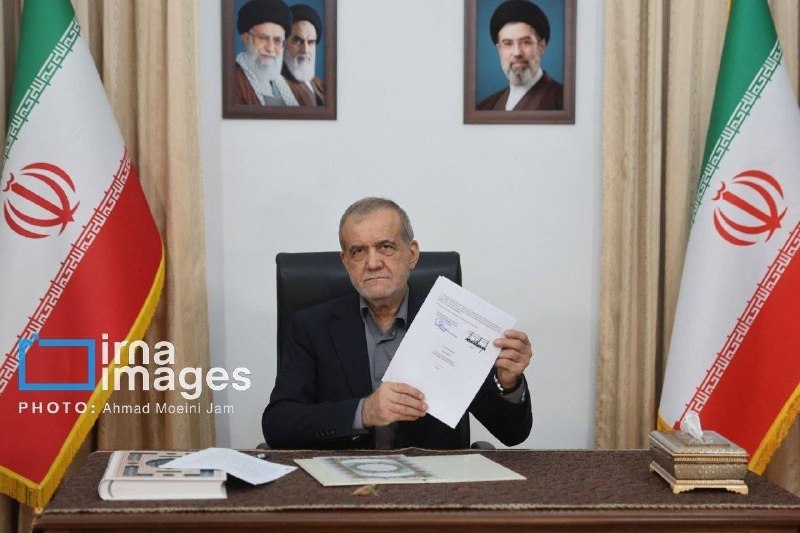
At 00:09 UTC on 18 June 2026, the open-source intelligence account OSINTdefender reported that Iran had confirmed the signing of a memorandum of understanding with the United States, and that the White House had released footage of U.S. President Donald J. Trump signing the document during a dinner with his French counterpart at the Palace of Versailles. The Iranian confirmation and the U.S. release landed within minutes of each other, on the closing evening of the G7 summit and a few hours before Emmanuel Macron publicly claimed credit for the ceremony. By 00:39 UTC, the same account had framed the document as ending the Iran war. By 00:42 UTC, Al-Alam Arabic was reporting Macron's announcement that Trump had signed the agreement at Versailles. By 01:09 UTC, the channel carrying Macron's own words was circulating them worldwide.
The Versailles memorandum is, on the evidence available at publication, the most consequential diplomatic document of 2026 — and the least documented. Two heads of government and the Supreme National Security Council of a country at war with the United States have all, in the space of roughly an hour, affirmed that a binding instrument has been signed. None of the three principals has, on the open record used to compile this article, disclosed what is in it.
What we know, and what we do not
The knowns are narrow. A memorandum of understanding was signed at the Palace of Versailles, on the margins of the G7 leaders' dinner that also marks the 250th anniversary of the Franco-American relationship. The signatories, on the U.S. side, are President Trump; on the Iranian side, the document was endorsed by Tehran per the confirmation relayed by OSINTdefender at 00:09 UTC. French President Macron framed the ceremony as an American-Iranian agreement he had helped midwife. The White House released video evidence of the signing. The location — Versailles, not the Élysée, not Geneva, not Vienna — is itself a statement: France as host, the U.S. as principal, Iran as guest.
The unknowns are larger. No text of the MoU has been published. No scope, no verification regime, no sanctions architecture, no timeline for normalisation of relations is on the public record. The reporting available to Monexus at publication does not name the Iranian signatory, does not enumerate the obligations assumed by either side, and does not address the fate of Iranian nuclear, missile, and proxy-warfare files that have sat at the centre of the bilateral confrontation. Iranian state media and U.S. state media have not, on the basis of the four Telegram-channel items in this article's source ledger, issued parallel readouts. The "ending the Iran war" framing originates with the open-source intelligence account that first aggregated the Iranian confirmation, and the U.S. and Iranian governments have not, in the source material reviewed, echoed that exact language.
The Versailles framing problem
The ceremony is being packaged, in real time, as a Macron diplomatic triumph. The French readout stresses that Trump "signed tonight at Versailles the agreement between Iran and the United States" and that the agreement "paves the way for lasting peace." That is a presidential statement, made by a head of state who was neither a signatory nor, on the surface evidence, a party to the underlying negotiation. It is also a framing that gives Paris a permanent seat at the table of any post-deal architecture — the host who delivered the room, the neutral ground, the symbolic 250th-anniversary backdrop.
The structural concern is straightforward. When a deal of this magnitude is announced through a host's readout rather than through a joint communiqué issued by the two principals, the public record of what was actually agreed becomes hostage to whoever speaks loudest first. Macron has, in the source material reviewed, spoken first. The risk for Tehran and for Washington alike is that the durable interpretation of the document drifts toward the host's preferred narrative — French diplomatic centrality, American-Iranian convergence managed from Europe — rather than toward the precise obligations the two governments have assumed to each other.
A precedent worth weighing
Diplomatic memoirs from the Cold War are full of agreements whose meaning was settled not at the negotiating table but at the press podium. The pattern repeats whenever the document is announced before it is published: the host captures the framing, the parties capture the credit, and the text itself recedes. The MoU signed at Versailles fits that pattern almost exactly. The public has been given a date, a place, a host, and a claim that peace has been "paved the way" for — but not the text, not the schedule, not the verification, and not the dispute-resolution mechanism.
That opacity is not, on its own, evidence of a bad deal. Ceasefires and framework agreements are routinely concluded with deliberate ambiguity, precisely so that signatories can return home and present the document in the language each domestic audience will accept. But opacity without a published text leaves the international community — markets, Gulf states, Israel, the IAEA, the European Union — unable to price the new equilibrium. And an unpriceable equilibrium is one in which the next crisis is built in.
What remains uncertain
Three things are genuinely contested in the open record, and Monexus is not in a position to resolve them. First, whether the document is best described as ending the war (the OSINTdefender framing) or as a memorandum of understanding that may or may not end the war (the more literal reading of "MoU"). Second, who signed on the Iranian side, and under what domestic-legal authority. Third, whether France is a guarantor, a witness, a host, or simply a stage — a distinction with consequences for whether Paris can credibly claim a future mediation role if the agreement frays.
The four source items in this article's ledger are all from Telegram channels reporting in real time on a fast-moving event; none of them carries a full text, a wire-service byline, or a Joint Comprehensive Plan of Action–style annex. Until the MoU is published, the prudent working assumption is that the document is real, that it binds the two signatories to a process rather than to a settlement, and that the ceremony at Versailles is, for now, the most that is on the public record.
This publication will update this article as the MoU text, the Iranian signatory identification, and the first joint U.S.–Iranian readout become available.
Wire provenance
This editorial synthesis draws on the following public wire/social posts:
- https://twitter.com/Osint613/status/2067399465669898334/video/1
- https://t.me/osintlive
- https://t.me/osintlive
- https://t.me/alalamarabic
- https://t.me/BellumActaNews