Boo breaks, warm crowds: how the World Cup's pause button is reshaping play
Mid-half hydration breaks, introduced to manage heat, are now shaping tactical adjustments and drawing boos from stands — a small rule with outsized influence on football's biggest stage.
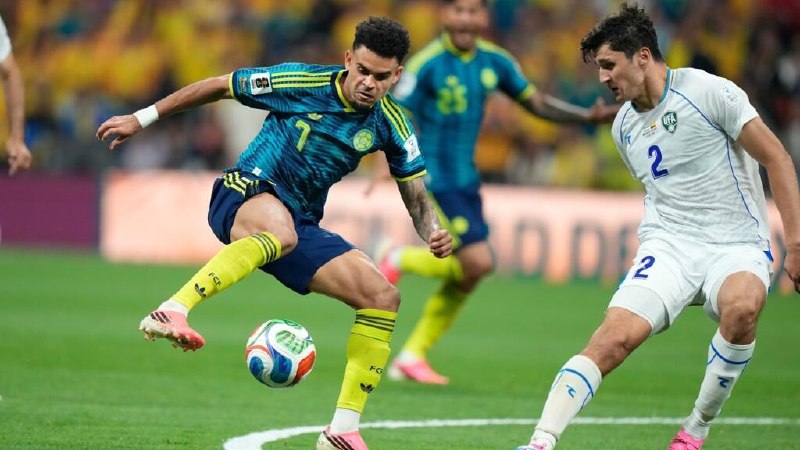
At matches across the United States, Canada and Mexico this June, football's smallest new rule is doing the loudest work. Mid-half hydration breaks — minute-long pauses introduced by FIFA to manage heat and player welfare — are being booed in the stands, used strategically by coaches, and re-routed by players who have learned to turn dead time into transitional time. The World Cup, designed to showcase continuity, is being punctuated by a stop-start rhythm nobody quite asked for.
The story of these breaks is not principally about cooling. It is about who controls the flow of a match when flow is interrupted — and what fans, players and federations do with the seconds that interruption creates.
What the rule does, and why now
Hydration pauses were trialled at the 2022 World Cup in Qatar and have been formalised in the 2026 tournament schedule as a heat-management concession. FIFA's medical guidance has consistently pointed to heat stress as a documented risk in matches played in summer conditions; the breaks allow players to drink, cool down, and re-tie boots without affecting the official match clock. On paper, they are neutral. In practice, they have inserted a new decision point into the middle of each half.
The rule has spread fastest in venues where temperatures have warranted it. Stadium conditions across host cities in June have pushed the breaks from optional to routine, and BBC Sport's reporting from 18 June 2026 documents the widespread — and mixed — reception they now draw.
Fans push back
The most visible reaction is acoustic. BBC Sport reports that supporters have been booing the breaks, viewing them as unwelcome interruptions to the rhythm of a live match. The booing has been loudest at venues where the stop-start feel is most pronounced — early round games where stadium temperature has been highest and the breaks therefore longest.
The critique is not really about water. It is about attention: a stadium primed for ninety minutes of contiguous action is being asked to repeatedly re-set its emotional state. For travelling supporters and home crowds alike, the breaks have turned each half into two separate performances, with the audience reset every time.
Coaches recalibrate
Coaches have been quicker to adapt. Mid-half breaks, brief as they are, now function as tactical micro-rooms: a chance to deliver instructions, adjust shape, and re-set pressing triggers. Several bench staff have used the pause to shift formation in response to what the first twenty minutes revealed, and to substitute with a tempo the old continuous-flow model did not allow. Treat the break as a thirty-second team meeting that also happens to be televised.
The implication is procedural. A stoppage that was sold as welfare is now functioning, on the touchline, as a tactical lever — one that a better-prepared bench can exploit and a less-prepared one can be punished by.
The Colombian away end
The cultural counterweight to the booing is visible in Bogotá. As Reuters reported on 18 June 2026, fans gathered in the Colombian capital to watch their national team play, with public screenings and supporter zones turning the city into a dispersed away end. The breaks have played differently there. In a setting where supporters are watching together but cannot influence what happens on the pitch, a pause is welcome — it is more time to sing, more time to watch a replay, more time to spend with the match. The fan experience in Bogotá suggests that the break's reception is partly a function of where you are watching, and whether the stadium around you feels like yours.
Stakes and what comes next
For FIFA, the break is now a governance test as much as a medical one. If the booing grows louder and the tactical effects become more pronounced, expect a quiet push from broadcasters to compress or relocate the pauses, and from medical staff to defend them on welfare grounds. The tension between broadcast continuity and player welfare is not new — it has surfaced around concussion substitutions and cooling breaks in other competitions — but the World Cup is the first venue where it is being decided in front of a global audience in real time.
The honest uncertainty: the sources do not specify which fixtures have drawn the loudest boos, nor whether FIFA has signalled any intention to revisit the rule mid-tournament. What is documented is that the breaks are shaping both performance and reception in ways the original guidance did not anticipate, and that the shape of a World Cup half has changed because of them.
Monexus framed this as a governance and fan-experience story rather than a heat-management one — the medical premise is taken as read, and the question is what the rule does to the match it interrupts.