Trump signs Iran memorandum: what we know, what we don't, and why the silence on terms matters
A White House memorandum with Tehran has been signed — but neither side has published the text. The information vacuum is itself the story.
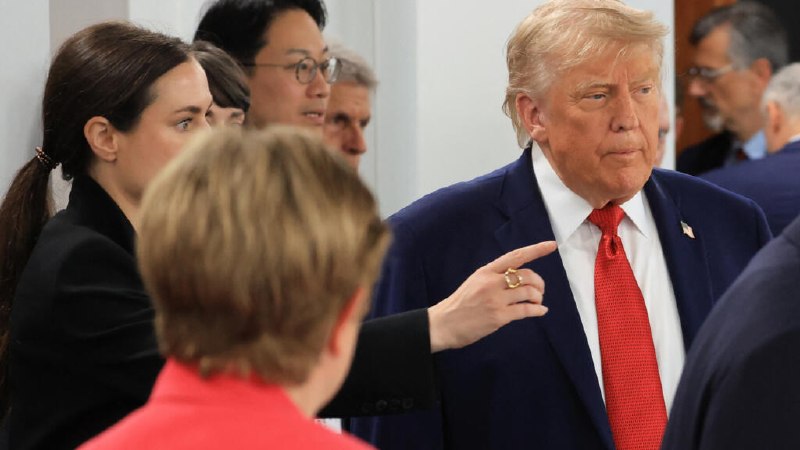
On the evening of 17 June 2026, a Reuters report confirmed what two other channels had begun to circulate hours earlier: a White House official says President Donald Trump has signed a memorandum of understanding with Iran, framed by the administration as a step toward ending the war. Axios, cited by the Washington Free Beacon relay on the same day, reported the document had been electronically signed and was "in effect." By 22:50 UTC, the wire had the headline; by 23:41 UTC, pro-Trump Telegram accounts were running a March 2026 photograph of the president under a banner celebrating the deal.
The diplomatic event itself is straightforward enough to summarise. The United States and the Islamic Republic of Iran have executed an MOU. Both sides, by the early hours of 18 June, claimed credit. The harder question — and the one that will determine whether this becomes a regional reset or another pause between rounds — is what, precisely, was signed. The White House, according to The Epoch Times' summary of the wire, had not published the terms of the deal as of 22:36 UTC on 17 June. No Iranian government channel, in the materials available to Monexus as of writing, has published the terms either. The MOU is, for now, an instrument whose existence is public and whose contents are not.
A wire, then a flood
The sequence matters. Reuters moved first at the institutional level, citing a White House official. Spectator Index, a breaking-news aggregator, picked up the Reuters wire and amplified it across X. Within roughly 43 minutes, the Epoch Times' geopolitical desk had a story that foregrounded the gap as much as the announcement: terms not published. Within another half hour, the Washington Free Beacon's Telegram channel was running an Axios-sourced line that the MOU had been electronically signed and was in effect. The visual propaganda layer — the celebratory photograph of Trump at the White House attributed to 6 March 2026 — followed in the same window, on the DDGeopolitics channel.
That ordering is the politics. Western-allied wire reporting carried the announcement; Western-critical aggregators carried the caveat that the text was missing; partisan and Iran-watcher channels carried the claim of immediate legal effect. Each layer said something true. None of them, taken alone, gave a reader the full picture. The MOU is, at this hour, a fact, a frame, and a contest over what the fact means — in that order.
What the MOU is, and is not
A memorandum of understanding is, in international practice, a softer instrument than a treaty. It is typically politically binding but not legally binding in the domestic-law sense unless the parties so designate, and it is not automatically subject to Senate advice and consent under the US Constitution. The Trump administration's first-term pattern with the Abraham Accords, the Minsk-style interim arrangements in other theatres, and the 2020 US–Taliban agreement in Doha, all relied on instruments in the MOU family precisely to bypass the formal-treaty path. The advantage is speed and executive flexibility. The disadvantage is that an MOU can be withdrawn from, reinterpreted, or quietly allowed to lapse without the constitutional and political machinery a treaty would engage.
Whether this particular document sits closer to the binding or the political end of that spectrum is — by construction, at this hour — not publicly answerable. The text has not been released. Iranian state media in the English-language feed have not, in the source material available to Monexus, provided a confirmation line. Western wire reporting has confirmed the signing and the framing ("ending the war") but not the operative paragraphs.
Why the silence on terms is itself the story
Governments publish the text of a deal for one of two reasons. Either they want the document to bind them publicly, in which case opacity is a strategic mistake. Or they want the document to bind the other side, while preserving their own room to manoeuvre, in which case opacity is the point. The administration's track record in Trump's second term has leaned towards the second model. The 2025 arrangement on TikTok's US operations, the tariff-package modifications of autumn 2025, and the immigration-basket understandings with regional partners have all been announced in headline form while leaving the operative annexes to leak selectively, often through Axios exclusives attributed to named correspondents such as Barak Ravid.
In the Iran case, the political incentives line up the same way. The administration can claim credit for ending a war. It can reassure markets and Gulf partners that the US is de-escalating on its own terms. It can also leave itself the ability to assert, in any future dispute over compliance, that the MOU said something narrower than the Iranian read of it. Iran, for its part, has every reason to keep the text out of the global press for the first 48 to 72 hours while the text is digested inside the Islamic Republic's own factional politics. The conservative press in Tehran will read the document one way; the reformist press will read it another. A premature leak freezes one of those readings.
The combined effect is a 48-to-72-hour window in which the deal is real but the deal's meaning is not. That window is when diplomatic slippage most often occurs.
The counter-narrative: a pause, not a peace
Two plausible alternative readings are worth holding alongside the official line.
The first is that the MOU is a pause mechanism. Iran's missile and proxy build-up since the 2024 exchanges left both sides with an inventory of escalation neither wanted to use. A face-saving instrument that freezes the inventory — a halt on enrichment above a threshold, a cap on proxy resupply, a US pause on certain sanctions designations — in exchange for a US freeze on certain kinetic options and a release of frozen funds, is consistent with what an MOU does. Under that reading, the absence of a published text is a tell: a peace treaty is published; a pause is held close.
The second is that the MOU is a Trump-administration political instrument, designed for the US domestic news cycle rather than for the regional balance of power. The 2026 mid-term calendar, the donor pressure on a foreign-policy "win," and the long shadow of the 2024 campaign-trail promise to wind down Middle East entanglements, all push the White House towards announcement-ready diplomacy. Under that reading, the MOU may bind less than its celebration suggests, and the next round of friction — over inspections, over sanctions, over the Strait of Hormuz — will resume within weeks.
A third reading, less charitable to the Iranian side, is that Tehran has extracted a public concession of equivalence — a US president signing alongside an Iranian counterpart — without conceding the nuclear and ballistic elements that the Western intelligence consensus still regards as the core of the dispute. Under that reading, the MOU is real, durable, and substantively hollow, in roughly that order. The next administration's headache is being written tonight.
What is not yet in the public record
Three things, in particular, are missing from the public record as of 23:41 UTC on 17 June 2026. First, the text. Second, the Iranian government's own confirmation in its own words, as distinct from third-party reports that the MOU has been signed. Third, any indication of which sanctions measures, if any, have been formally suspended or un-suspended in connection with the deal, and which have not. Each of these will arrive in the next 24 to 72 hours if the MOU is a real instrument. If they do not, the window between announcement and erosion will close faster than usual, and the parties will discover, as they have before, that a deal nobody can quote is a deal nobody can defend.
The reading Monexus finds most consistent with the available evidence is the middle one. The MOU is a real document with real consequences, signed by real principals on both sides. It is also, by the deliberate choice of the signatories, a document whose meaning is being negotiated in public at the same time as its text is being kept private. That is not, in itself, a verdict on whether the war is ending. It is a verdict on how much of the announcement is for the camera.
This piece was framed against the immediate wire sequence — Reuters first, then aggregators, then partisan amplifiers — rather than the celebratory version of any single channel. The MOU is treated as a documented event whose operative content awaits publication.
Wire provenance
This editorial synthesis draws on the following public wire/social posts:
- http://reut.rs/43GPBzK
- https://t.me/DDGeopolitics
- https://t.me/osintlive
- https://t.me/wfwitness
- https://en.wikipedia.org/wiki/Memorandum_of_understanding
- https://en.wikipedia.org/wiki/2020_United_States%E2%80%93Taliban_agreement
- https://en.wikipedia.org/wiki/Abraham_Accords