A Memo, Not a Deal: Reading the White House's Iran Announcement
A memorandum of understanding with Iran is the right verb, not the right noun. The White House has signed something; the terms of that something remain opaque, and the gap between signature and substance is now where the story sits.
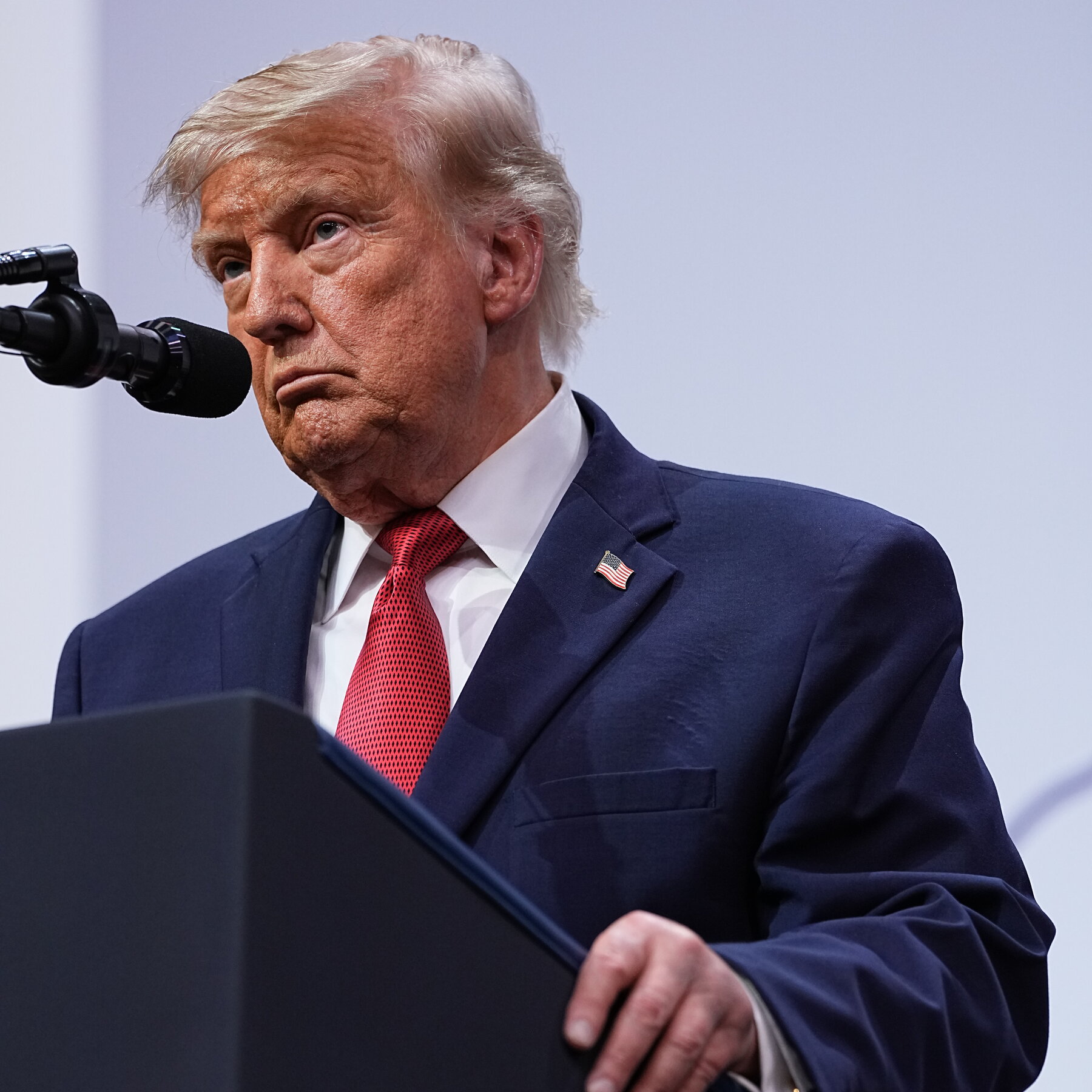
The White House confirmed late on 2026-06-17 that President Donald Trump has signed a memorandum of understanding with Iran, according to a Reuters report cited by Spectator Index on X at 22:07 UTC [1]. A separate White House official, speaking to Reuters at 22:50 UTC the same day, framed the document as aimed at ending the war with Iran [2]. Polymarket's news desk logged the announcement at 22:06 UTC [5]. The headline moved fast. The text has not.
A memo of understanding is, by design, the gentlest instrument in the diplomatic toolkit. It signals convergent intent. It does not bind. It rarely contains the verification architecture, the enforcement triggers, or the sequencing of reciprocal steps that turn a press conference into a peace. That the administration has chosen this format, and that no Western-allied or Iranian outlet has so far published the terms, is the single most important fact about the announcement [3].
What was actually signed
Reuters' reporting describes the document as a memorandum of understanding, not a treaty, not an executive agreement deposited with the State Department, and not a joint communiqué. The White House has characterised it as a step toward ending the conflict. The Epoch Times, in a Telegram relay of wire coverage at 22:36 UTC, noted that neither the White House nor other U.S. officials have published the deal's terms [3]. That absence is the story. A framework whose contents are unknown to the public, to allied governments, and to the U.S. Congress is a framework that can be read as victory, surrender, or simple pause depending on which official speaks next.
The format itself is suggestive. Memoranda of understanding are how governments put a marker down without committing to a legally binding schedule. They are how an administration buys time, claims credit, and keeps the other side at the table. They are also how an administration can be pressured, weeks later, by its own supporters to declare the document a triumph that the text cannot in fact support.
The counter-read from Tehran's neighbourhood
Regional outlets that have tracked the war's diplomacy closely will read the announcement with different priors than the Western wire. From Beirut, Baghdad, and Doha, the question is not whether the document exists but what it costs. Any arrangement that leaves the architecture of the conflict intact, the proxy networks unfrozen, the sanctions topology unchanged, will be sold in Washington as de-escalation and felt in the Levant as rearrangement. Iranian state media, when it engages, will frame the memo as recognition of parity: a document signed at the highest level with the world's sole superpower, on terms that Tehran can defend at home. The Western wire's preferred frame, that the United States extracted concessions, is the inverse of the framing Iranian outlets will prefer. Both cannot be true. The text, when it surfaces, will adjudicate.
The hard structural fact: there is no trust account between the two governments large enough to fund an unsigned arrangement. The 2015 Joint Comprehensive Plan of Action was a 150-page document with an annex, an inspection protocol, and a UN Security Council resolution. A memo, by contrast, is two pages and a handshake. The distance between the two formats is the distance between a verifiable arrangement and a press cycle.
The political economy of the announcement
The timing, late on a Wednesday evening in Washington, is consistent with a White House strategy of flooding the zone with a positive headline that allies, adversaries, and markets must then absorb without the leverage of a published text. Spectator Index and Polymarket, both fast-moving aggregators, picked up the wire within minutes [1][5]. The story will be read in three places overnight: in Tel Aviv, where the security cabinet will want the terms before the morning papers; in Tehran, where the foreign ministry will prepare its own readout; and on trading floors, where the oil complex will price the gap between signature and substance until the document is in hand.
There is also a domestic reading. A president under pressure on cost-of-living, immigration, and the unfinished business of the war can use a memo to shift the news cycle for 48 to 72 hours. That window is the shelf life of an unsigned framework. The hard work, if any is intended, begins when the terms are released and the verification debate starts in earnest.
Stakes and what remains unresolved
What we do not yet know, and what the sources do not specify, is the document's scope, its duration, its dispute-resolution mechanism, and its relationship to existing UN resolutions on the Iranian nuclear file. We do not know whether the memo references the Strait of Hormuz, the nuclear programme, the detained Americans, or the regional proxy order. We do not know whether Iran has signed in parallel, or whether the document is a unilateral U.S. statement of intent presented as a bilateral instrument. The wire so far names only Trump as signatory [1][2]. Until Tehran confirms a corresponding signature, the memo is, at most, an American position paper with presidential ink on it.
The honest read is that an unsigned framework is not a peace, and a memorandum is not a deal. It is a stop, perhaps a useful one, in a war whose end has been declared more often than it has been achieved. The text, when it comes, will tell us whether the announcement was a turning point or a pause. Until then, the prudent posture is to treat the document as exactly what its format implies: convergent intent, paper-thin commitment, and a long, contested road between the signature and the silence of the guns.
— Monexus framed this announcement as a memo, not a deal. The wire lead treated it as breakthrough; the more defensible read is that the gap between signature and substance is now the story.
Wire provenance
This editorial synthesis draws on the following public wire/social posts:
- https://t.me/SpectatorIndex
- http://reut.rs/43GPBzK
- https://t.me/DDGeopolitics
- https://x.com/Polymarket/status/