Fed holds rates steady as Warsh takes the wheel, markets weigh Trump’s Iran comments
The Federal Reserve held its benchmark range at 3.5%–3.75% on 17 June 2026, Kevin Warsh’s first meeting as chair, while President Trump’s mixed signals on a possible Iran deal added a second layer of uncertainty to a market already recalibrating to a new central-bank voice.
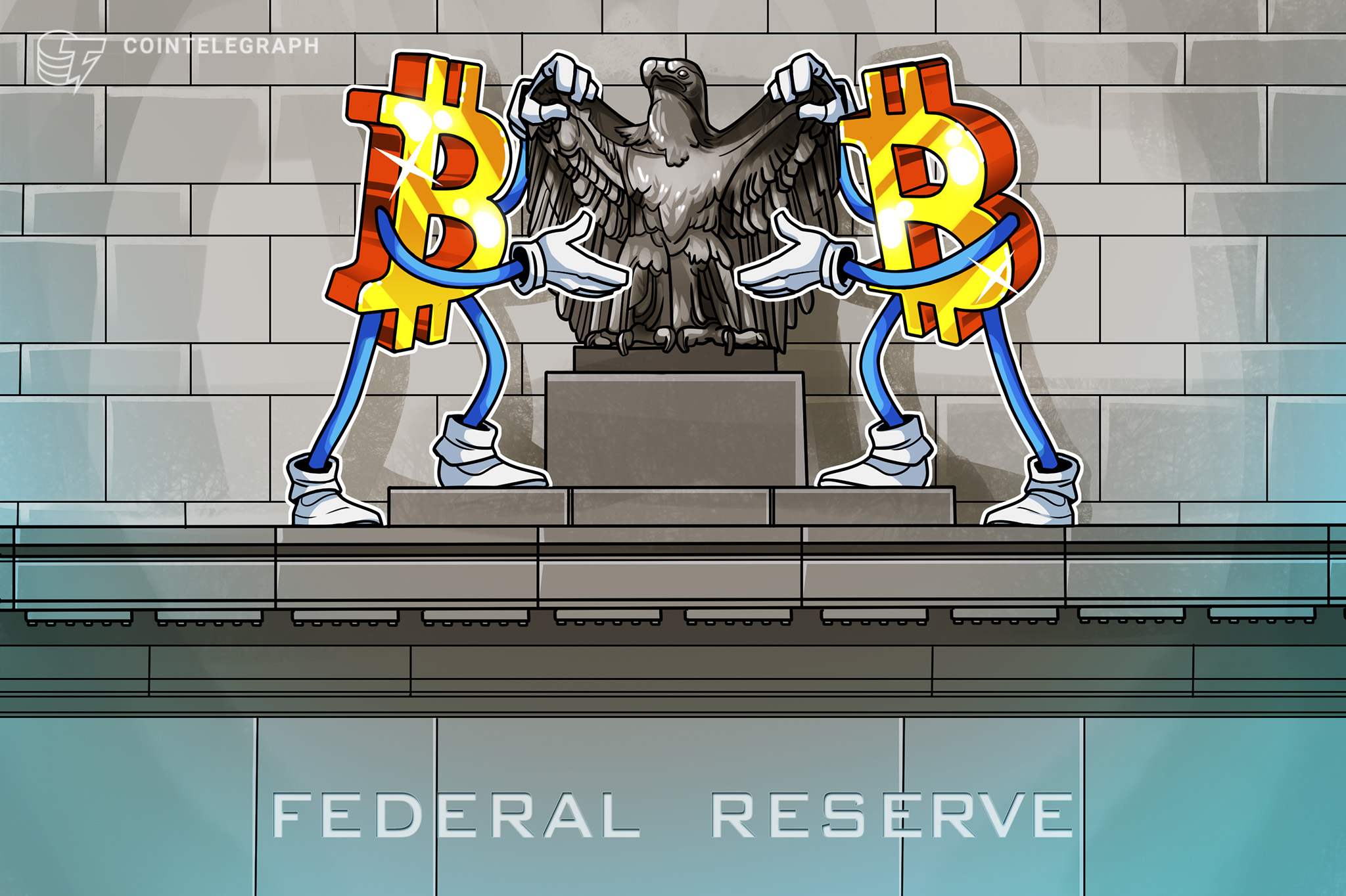
The Federal Reserve held its benchmark policy rate steady at 3.5%–3.75% on the afternoon of 17 June 2026, completing Kevin Warsh’s first meeting as chair without a move in either direction. The decision, the fourth hold of the calendar year, came hours after President Donald Trump offered contradictory signals on the prospect of a US–Iran deal, leaving traders to parse two overlapping uncertainties at once: who now sets the tone inside the Federal Open Market Committee, and whether the geopolitical backdrop is about to loosen or snap tighter.
Warsh’s debut matters less for the rate decision itself — a hold was the consensus call — than for what it signals about the institution’s next year. Markets had spent months pricing a chair who would inherit a divided committee, persistent services inflation, and a labour market that has refused to crack the way the soft-landing narrative once promised. Trump’s Iran comments, delivered in a 17 June window that overlapped with the post-meeting press cycle, added an oil and risk-premium variable the Fed cannot directly price but cannot ignore either.
A hold that was not a surprise
By the time the statement crossed the wires at 18:00 UTC, the move was already in the curve. Prediction markets had it priced as a near-certainty; Polymarket’s news desk flagged the hold as a “JUST IN” event in its 18:33 UTC bulletin, characterising it as the fourth pause of 2026 and the first under Warsh. The rate-setting range — 3.5% to 3.75% — leaves the federal funds target where it has sat since the Fed’s late-2025 recalibration, and the accompanying language tracked the committee’s prior caution on inflation persistence.
The BBC’s 18:41 UTC write-up of the decision noted the unusual shape of the backdrop: Warsh was running his first FOMC against a White House that has been openly impatient with the cost of capital, and against an oil market that was repricing in real time on every Iran headline. The 25-basis-point corridor is, on its own, restrictive; the question is how long the committee is willing to sit there while the administration leans for cuts.
Two voices in the same hour
The complication is the second story of the day. Trump’s comments on the Iran file, delivered in the same window, alternated between describing progress toward a deal and warning that the United States could escalate if talks failed. Crypto markets wobbled in the hour that followed, with Cointelegraph’s markets desk characterising the session as the crypto complex “treading thin ice” — a phrase that captures the sensitivity of a still-leveraged market to a renewed risk-off pulse.
For the Fed, the operational question is narrower than the political one. The committee does not set the oil price. But oil expectations feed into the inflation expectations that the committee does set, and a credible Iran file that pulls crude lower is — at the margin — an argument for earlier easing. A deal that collapses, with the implied risk of a Strait of Hormuz disruption, is the opposite. Warsh is now the public face of an institution that has to speak in probabilities while the geopolitical distribution is being rewritten in real time.
What Warsh inherits
Warsh arrives at the chair from a career that has included a previous stint at the Fed (2006–2011), a private-sector interval, and a public profile as a hawk who has, in recent years, written and spoken about the costs of the post-2022 tightening cycle. The committee he now leads is not unanimous. Dissent in 2025 had been a recurring feature of post-meeting statements, with regional presidents registering concerns about both the pace and the destination of policy.
The market read, for now, is continuity. Crypto Briefing’s morning note at 11:03 UTC framed the meeting as a “rate cut debate,” but the actual cut debate is downstream of a more practical question: whether the data the committee sees in July and September will look like the data it saw in May. Warsh’s first press conference will be read for two things — how he describes the bar to easing, and how he describes the administration’s posture on Iran. Both are now part of the same conversation about whether the next move is a cut, and when.
Stakes and what to watch next
If the Iran file firms into a credible framework over the summer, oil drift lower and disinflation continue, the committee has a defensible path to a first cut in the second half of 2026. If the deal language hardens — Trump’s mixed signals point in either direction on any given day — the committee’s patience gets tested against an administration that has shown little of its own. The risk asset complex, crypto included, is priced for the first path and exposed to the second. That asymmetry is the single most important thing Warsh’s committee now has to manage in public.
The Fed’s next scheduled meeting sits at the end of July. Between now and then there will be one more CPI print, one more payrolls release, and — if the diplomatic tempo holds — a clearer picture of whether Trump’s Iran comments were opening bids or closing ones. The committee will be watching all three. The market will be watching the committee.
Desk note: Monexus framed this as a single news event with two coupled uncertainties — the transition at the Fed and the Iran deal — rather than treating the FOMC and the Trump comments as separate stories. The Polymarket and CryptoBriefing inputs gave us a real-time read on how the hold was being absorbed; the BBC and Cointelegraph wires anchored the institutional record.
Wire provenance
This editorial synthesis draws on the following public wire/social posts:
- https://x.com/polymarket/status/
- https://t.me/CryptoBriefing